14 followers
What do you think? …
Hey Product Hunters! 👋I built Pairlane because sending files shouldn’t require sign-ups, uploads, or server-side file storage. Here’s how it works under the hood:How P2P works:
Files transfer directly between devices via WebRTC DataChannel
The server (Cloudflare Workers + Durable Objects) only handles signaling — no file data passes through
Built with Hono for minimal overhead
Encryption:
AES-GCM encryption is enabled by default (can be disabled with `--no-encrypt`)
The key is stored in the URL fragment (`#k=...`), which is never sent to the server
CLI:
npx pairlane send file.zip
npx pairlane receive --output-dir ./downloads
Works across browser ↔ browser, CLI ↔ CLI, or browser ↔ CLI.Known limitation:P2P connections may fail in strict NAT or corporate firewall environments. Works best on typical home and office networks.Open source: https://github.com/kiyo-e/pairlaneWould love your feedback!


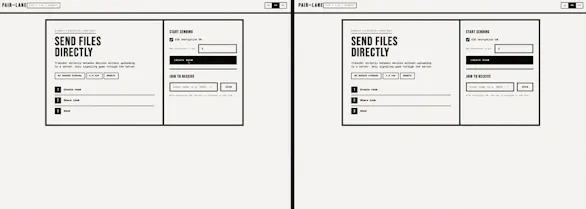


Hey Product Hunters! 👋
I built Pairlane because sending files shouldn’t require sign-ups, uploads, or server-side file storage. Here’s how it works under the hood:
How P2P works:
Files transfer directly between devices via WebRTC DataChannel
The server (Cloudflare Workers + Durable Objects) only handles signaling — no file data passes through
Built with Hono for minimal overhead
Encryption:
AES-GCM encryption is enabled by default (can be disabled with `--no-encrypt`)
The key is stored in the URL fragment (`#k=...`), which is never sent to the server
CLI:
Works across browser ↔ browser, CLI ↔ CLI, or browser ↔ CLI.
Known limitation:
P2P connections may fail in strict NAT or corporate firewall environments. Works best on typical home and office networks.
Open source: https://github.com/kiyo-e/pairlane
Would love your feedback!