Gemini Notebook is brilliant at thinking. Everything around it is friction: copy-pasting URLs, hunting for papers in other tabs, re-typing the same instructions every session, exporting a deck with a watermark. Notebook OS removes that friction: one-click YouTube and academic sources, voice notes straight into a notebook, Skills that make it remember how you work, Studio recipes for decks, reports and quizzes, and watermark-free presenting.
Hey Product Hunt 👋 I'm Hung, the maker of Notebook OS.
Gemini Notebook is one of the best thinking tools I've used, it reasons over my sources instead of the whole internet. But it's a brilliant brain with no operating system around it. Getting material in is manual. It forgets how I work. What it generates stays stuck in a tab.
Notebook OS is that operating system. One Chrome side panel, five layers:
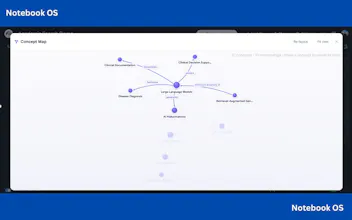
📥 SOURCES — search YouTube and academic databases and add results as native sources. Snip any page or image. Hit record and a voice note lands in your notebook. Import a chat you had somewhere else. 🧠 SKILLS — save how you work as a reusable instruction and apply it to a notebook. It becomes a source, so Gemini Notebook keeps following it through your follow-ups, tomorrow's session, and every artifact you generate. Not a prompt you re-paste — a standing instruction. 15 built in, or write your own in two sentences. 🎛️ STUDIO — recipes that turn a notebook into audio overviews, slide decks, reports, mind maps, concept maps, flashcards and quizzes, in 50+ languages, with the right prompt written for you. 🖥️ OUTPUT — present your decks full-screen and watermark-free. Pull clean transcripts and study notes out of any video. 🗂️ LIBRARY — folders, tags, a visual map of every notebook, and an Artifact Shelf that pins what you make across all of them.
Each one is small on its own. Together they're the difference between a chat box and a workspace.
It's free, no credit card, and everything stays in your own Gemini Notebook account.
I'd love your honest feedback — which layer would you actually use, and what's still missing? 🙏
Report
Building a layer on top of someone else's app means your product breaks on their release schedule, not yours. How tightly is it coupled to the DOM — and when Google ships a redesign, is that a hotfix or a rewrite? I ship a Chrome extension too and the thing I never solved is how users find out it's broken before they leave a one-star review.




Hey Product Hunt 👋 I'm Hung, the maker of Notebook OS.
Gemini Notebook is one of the best thinking tools I've used, it reasons over my sources instead of the whole internet. But it's a brilliant brain with no operating system around it. Getting material in is manual. It forgets how I work. What it generates stays stuck in a tab.
Notebook OS is that operating system. One Chrome side panel, five layers:
📥 SOURCES — search YouTube and academic databases and add results as native sources. Snip any page or image. Hit record and a voice note lands in your notebook. Import a chat you had somewhere else.
🧠 SKILLS — save how you work as a reusable instruction and apply it to a notebook. It becomes a source, so Gemini Notebook keeps following it through your follow-ups, tomorrow's session, and every artifact you generate. Not a prompt you re-paste — a standing instruction. 15 built in, or write your own in two sentences.
🎛️ STUDIO — recipes that turn a notebook into audio overviews, slide decks, reports, mind maps, concept maps, flashcards and quizzes, in 50+ languages, with the right prompt written for you.
🖥️ OUTPUT — present your decks full-screen and watermark-free. Pull clean transcripts and study notes out of any video.
🗂️ LIBRARY — folders, tags, a visual map of every notebook, and an Artifact Shelf that pins what you make across all of them.
Each one is small on its own. Together they're the difference between a chat box and a workspace.
It's free, no credit card, and everything stays in your own Gemini Notebook account.
I'd love your honest feedback — which layer would you actually use, and what's still missing? 🙏
Building a layer on top of someone else's app means your product breaks on their release schedule, not yours. How tightly is it coupled to the DOM — and when Google ships a redesign, is that a hotfix or a rewrite? I ship a Chrome extension too and the thing I never solved is how users find out it's broken before they leave a one-star review.
I've just prepared a PDF version explaining the functions of Notebook OS. Feel free to dive deeper if you're interested: https://drive.google.com/file/d/1zph0AEoULUoOJO1p1z8fnQXc_R66WIGB/view?usp=drive_link