
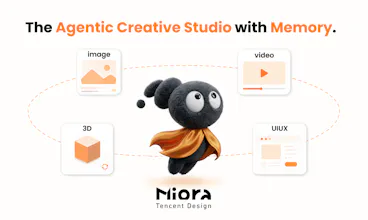
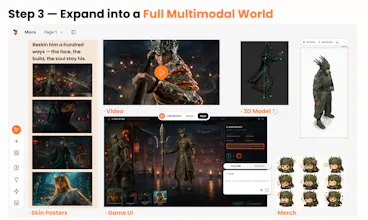
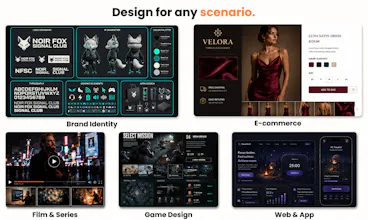
Not another AI image tool. Miora is an Agentic Creative Studio with Memory. Bring one idea, generate multimodal assets on one editable canvas, turn auto-built memory into a reusable Skill, then create more, always true to your taste. One person, a whole creative studio.


Free Options
Launch Team

Framer AI AgentsDesign and publish professional sites with AI
Promoted
@liziyang appreciate the detail on the weighting. one thing I'm curious about beyond the single-session case - if I use Miora from a couple different clients or agents on the same account, could two of them read the same ambiguous weak signal differently and end up nudging a memory in opposite directions before either update crosses the "explicit correction" threshold? or is there a single arbitration step that all signals funnel through regardless of which client produced them
Congrats on the launch!
The editable memory approach is what stands out most to me. Treating brand rules, style, and taboos as something you can inspect and adjust is far more trustworthy than the usual “the AI just gets you” black box — especially for team and client work.
The personal vs project memory split feels like a smart guardrail too. I’ve been exploring AI-assisted workflows and building my own agent skills, so I’m curious how the “Skills you own” part handles boundaries: when you reuse or share a Skill, how do you make sure it carries the workflow without leaking a specific project’s brand rules or context?
Congrats on shipping. Spent a while building in this exact corner, so one angle I'd chase is your Skills feature as a distribution engine, not just a feature. If every public Skill gets its own indexable page, you rank for thousands of long-tail "brand template" searches the way Canva's gallery does, and every user who publishes one pulls in the next. Cheaper and more durable than ads for a tool like this. Might be worth a look if it's not already planned.
Congrats! Turning learned creative preferences into reusable Skills is a smart idea.
@sandy_liusy Thanks! yeah that's the part I'm personally most excited about. The thing you used to re-explain every single time just... becomes a Skill you reuse. Feels obvious in hindsight but it took a while to get there
@sandy_liusy Thanks! Really glad that resonated with you~
@sandy_liusy Thanks Sandy! Exactly. We hope Skills and memory can go beyond reusable instructions and become a way for the Agent to truly learn how you create. The more you work together, the less you need to explain yourself again.
How does Miora decide which memories are worth keeping, and can users approve them before they affect future work?
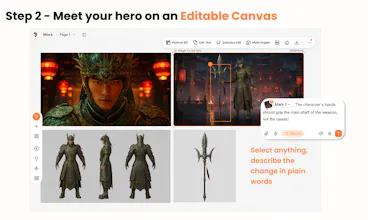
How granular is Selection Edit? Could I change a character's jacket while preserving pose, lighting, and identity?
This positioning is interesting. The memory into a reusable Skill part feels like the real unlock, because most creative tools still make you restate your taste and constraints every session.
I’m curious how much control users get over that memory. Can they edit or prune what Miora thinks their style is, or does it mostly learn passively from the canvas?