The inspiration for Learn AI Labs came from a simple, frustrating observation: general-purpose AI chatbots are generic and uncalibrated for high-stakes, highly structured work.
Whether you are a PhD candidate trying to map funding landscapes and align research with potential supervisors, or a developer trying to simulate multi-agent workflows and explain legacy codebases where generic ChatGPT prompts fail. They lack the structural rigour, academic validation, and deterministic constraints required for high-level research and software engineering.
We wanted to build an unapologetic, utility-first suite of tools. No chat loops, no generic fluff—just raw, high-utility automation engines that execute precise academic and codebase tasks with maximum depth.
We wanted to solve the "productivity friction" experienced by researchers, developers, and educators.
Specifically:
1. Academic Admissions & Funding Bottlenecks: Candidates seeking competitive PhD positions spend weeks manually searching for fully-funded programs, guessing supervisor alignments, and writing Statements of Purpose (SOPs). We automated the matching, the supervisor fit metrics, and the strategic drafting in seconds.
2. Superficial Paper Reviews: Most AI summaries are shallow. We built a robust Research Paper Analyser that runs a simulated four-person peer-review panel, auditing statistical validity, ethical compliance, and structural gap discovery.
3. Developer Cognitive Load: Developers waste hours on repetitive boilerplate (stubs, mock payloads, explanation files, and code typing refactors). We built direct agents to generate modular code explanations, stubs, and ATS-optimized portfolios instantly.
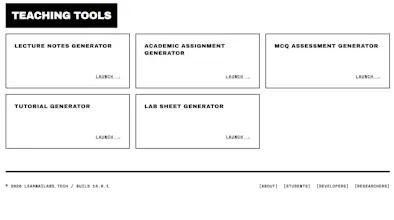
4. Teacher Burnout: Educators spend hours crafting challenge rubrics, MCQ assessments, and laboratory sheets. We engineered tools to automate classroom material creation directly aligned with course criteria.
Our process underwent two major shifts during development:
1. From Single-Prompt Tools to Multi-Agent Pipelines: We initially built simple single-turn generation forms. However, we quickly realised that complex tasks such as a scientific peer-review audit need dialectic tension. We evolved our engine to run multi-agent workflows (e.g., simulating different reviewer personas arguing over a paper's statistical design) before outputting the final report.
2. From Generic Dashboards to High-Contrast Minimalist Utility: In a world of bubbly, bloated SaaS designs, we went completely the other way. We adopted a sleek, raw, high-contrast, minimalist aesthetic. It tells our users immediately what to expect: this is a workspace designed for speed, utility, and heavy-duty automation.
We are thrilled to launch Learn AI Labs on Product Hunt today and would love to hear your feedback on how we can expand these automation pipelines for your research and development workflows!
Report
No reviews yetBe the first to leave a review for Learn AI Labs