Launched this week

Howseen AI
Track how AI recommends your brand, and get cited
164 followers
Track how AI recommends your brand, and get cited
164 followers
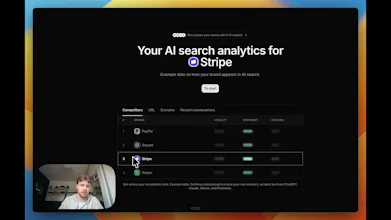
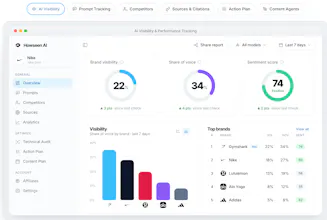
Your buyers now ask ChatGPT, Gemini and Perplexity which tool or brand to buy. Howseen tracks whether AI recommends you or your competitors across ChatGPT, Gemini, Perplexity and Google AI Overviews, finds the exact questions where you're invisible, and generates SEO & GEO-optimized content to get you cited, auto-published to your blog on the highest-impact gaps first. Most tools stop at a score. Howseen closes the loop: measure, then act. Free to see where you stand today.






Howseen AI
Howseen AI
Kill Ping
Howseen AI
@agzee Thanks a lot! Most AI visibility tools stop at the dashboard: they tell you where you're missing. Howseen is built around what you do next:
1. It shows the exact pages AI cites when it recommends your competitors, and gives you a step-by-step playbook to get listed there.
2. It writes the content for the questions where you're absent and publishes it straight to your CMS (Shopify, WordPress, Webflow and more).
3. Every stat in those articles is traced to a real source. Anything unsourced gets removed automatically, so you never publish made-up numbers.
It tracks ChatGPT, Gemini, Perplexity, Google AI Overviews and AI Mode every 3 days, from €79/month per brand, with a white-label version for agencies. What are you using today to see how AI talks about you? :)
Quite interesting. I gave the tool on your homepage a run, and we were first on the Gemini list - but the tool said we weren't named". I want this to be brilliant, but huh?? Screenshotted and PDf'd if anyone from Howseen is interested.
Howseen AI
@stefanie_somers Thank you Stefanie, this is exactly the kind of feedback I need, and I think you caught a real flaw.
The homepage scan is a quick check: it asks Gemini's API two generic questions built from your category, without live search, and it looks for your brand name exactly as we detected it. So if the Gemini app lists you under a slightly different name, or answers a different question, the quick scan can wrongly say "not named". That's on us, not on you.
I'd love the screenshot and PDF: could you DM me here or on LinkedIn? I'll run a proper check on your brand and fix the matching this week.
@raphaelaubryy Good work on that update, I got a completely different result on the last run just now. (And yay! Agentic optimization seems to be working) Thank you for being so responsive.
One real question where a competitor was the answer last month and your customer is now, with the date the post went live in between. I think that before and after would sell it better than any score going up
Dial
@raphaelaubry per-engine, no question. a blended line can go up while the one engine that actually drives your customers stays flat, and you'd never see it. we made that mistake early with call transcripts - averaging sentiment across days hid that one specific flow was tanking. only caught it once we broke it out by flow instead of blending. same logic should hold for engines here.
Howseen AI
@galdayan That's exactly the trap ahah ! A blended score looks fine while the one engine your buyers actually use stays flat. So we made everything per-engine: you can filter the whole dashboard by model, and every KPI, trend and shared report recalculates on that selection. On our own brand the gap is real: ChatGPT mentions us about twice as often as Google AI Overviews, which a single average would completely hide.
Your call transcript example is a great parallel. How did you decide which flow to break out first?
Dial
@raphaelaubryy volume and complaint rate, in that order. we ranked flows by call count first, then looked at which ones had a support ticket or manual escalation attached even when the overall sentiment score looked fine. the mismatch between "sentiment says fine" and "someone actually complained" is what told us the average was lying. if you're doing something similar per-engine, I'd guess citation frequency vs actual click-through or signup attribution would be the equivalent tell.
Howseen AI
@galdayan "sentiment says fine" vs "someone actually complained" is exactly the gap.
Per engine, I think you're right: being cited a lot means little if nobody clicks. Search Console already gives us part of it on the Google side; tying citations to real visits and signups engine by engine is where we're heading next.
Did the mismatch show up more in specific flows, or everywhere?
Dial
timeline over screenshot, honestly. a single screenshot of an AI answer is trivially easy to stage or cherry pick, anyone can screenshot the one good answer out of twenty tries. the same prompt tracked over time with the publish date pinned on it is the thing that's actually hard to fake, because it shows the change happening in response to something you did, not just a good result that might have existed anyway. screenshots are still useful as the "proof" moment inside that timeline, just not as the primary evidence
Howseen AI
@galdayan Fully agree, and it's the best way I've seen it put. One good answer out of twenty tries proves nothing, and anyone who has run the same prompt twice knows it.
That's why Howseen re-runs the same prompts on a schedule instead of taking one snapshot: the curve is the evidence, the screenshot is just the moment you point at.
The piece you and Roger both landed on is the one we're building next: pinning the publish date on that timeline, so you see what moved after you shipped something, not just that it moved.
For Dial, would you trust a timeline more if it showed every engine separately, or one blended line?