Cyber-Physics

Cyber-Physics

First Kinetic Defense Engine to Stop Zero-DayAttacks offline

4 followers

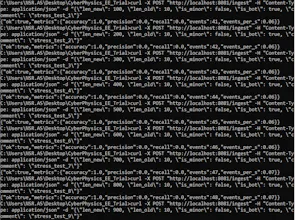
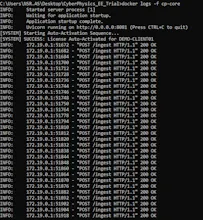
Traditional AI relies on historical patterns, leaving you vulnerable to Zero-Day attacks. Cyber-Physics introduces a new paradigm: Differential Physics Defense.It treats data streams as physical objects with Mass and Momentum. If a request moves 'too fast' or carries 'too much energy', it's blocked instantly (O(1) complexity) — even if it's never been seen before. Features: 100% Offline (GDPR/Sovereignty compliant). Millisecond response time. Plug-and-play with Splunk, QRadar, and EDRs.
Cyber-Physics gallery image
Free Options
Launch Team / Built With
Framer
Framer
Launch websites with enterprise needs at startup speeds.
Promoted

What do you think? …

Munther Kz
Maker
📌
Changing the paradigm from "Pattern Matching" to "Kinetic Defense". Hello Hunters! 👋, I’m Munther, a Cyber-Defense Architect based in Iraq. I built Cyber-Physics out of frustration. Traditional AI security tools require massive datasets, weeks of training, and constant cloud connectivity—yet they still fail against Zero-Day attacks. I asked myself: "What if we treated cyber attacks as physical objects instead of just data patterns?" That’s how Cyber-Physics was born. It’s a deterministic engine that analyzes the Mass (payload size) and Momentum (velocity) of data streams. If a request carries "unnatural kinetic energy," it gets blocked instantly (O(1) complexity)—even if the attack has never been seen before. Why is this different? 100% Offline & Private: Fully Dockerized. No data ever leaves your premise (perfect for GDPR & Data Sovereignty). Zero Training: No learning period. It works out-of-the-box based on physical laws. API-First: Integrates seamlessly with Splunk, QRadar, or your custom stack. We are currently releasing the Enterprise Architecture (v2.2) documentation and looking for early adopters and strategic partners for pilot deployment. I’d love to hear your feedback on the concept of "Kinetic Defense". Let’s discuss in the comments! 👇