Anthropic's open-source Circuit Tracer helps researchers understand LLMs by visualizing internal computations as attribution graphs. Explore on Neuronpedia or use the library. Aims for AI transparency.
We often hear about how large language models are like "black boxes," and understanding how they arrive at their outputs is a huge challenge. Anthropic's new open-source Circuit Tracer tools offer a fascinating step towards peeling back those layers.
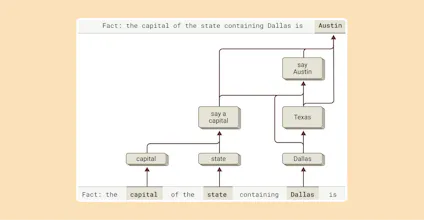
Rather than focusing on building bigger models, this initiative is about developing better tools to see inside the ones we currently use. Researchers and enthusiasts can now generate and explore attribution graphs – which essentially map out parts of a model's internal decision-making process for given prompts on models like Llama 3.2 and Gemma-2. You can even interact by modifying internal features to observe how outputs change.
As AIs get more capable, genuinely understanding their internal reasoning, how they plan, or even when they might be "faking it," is becoming more crucial for building trust, ensuring safety, and responsibly guiding their development.
Report
This is seriously cool, I’m excited to see how researchers will put it to work. Hopefully an even more advanced version someday lets us trace computations in the human brain just as clearly.
Report
Using AI or building with AI really needs AI mindset. It's something I have extensively used and the learning goes on.
Good to see focus coming on this.
Report
Circuit Tracer unlocks AI's black box! 🔓🤖 Visualize attention patterns, track bias, and debug model logic - critical for building trustworthy AI. Anthropic nails transparency again.




Flowtica Scribe
Hi everyone!
We often hear about how large language models are like "black boxes," and understanding how they arrive at their outputs is a huge challenge. Anthropic's new open-source Circuit Tracer tools offer a fascinating step towards peeling back those layers.
Rather than focusing on building bigger models, this initiative is about developing better tools to see inside the ones we currently use. Researchers and enthusiasts can now generate and explore attribution graphs – which essentially map out parts of a model's internal decision-making process for given prompts on models like Llama 3.2 and Gemma-2. You can even interact by modifying internal features to observe how outputs change.
As AIs get more capable, genuinely understanding their internal reasoning, how they plan, or even when they might be "faking it," is becoming more crucial for building trust, ensuring safety, and responsibly guiding their development.
This is seriously cool, I’m excited to see how researchers will put it to work. Hopefully an even more advanced version someday lets us trace computations in the human brain just as clearly.
Using AI or building with AI really needs AI mindset. It's something I have extensively used and the learning goes on.
Good to see focus coming on this.
Circuit Tracer unlocks AI's black box! 🔓🤖 Visualize attention patterns, track bias, and debug model logic - critical for building trustworthy AI. Anthropic nails transparency again.
Clueso
this is such a cool application which i think will help me learn about AI more in depth how ai actually "thinks"
RightNow AI