Data observability that drives action. Detect and resolve data quality incidents faster by viewing data flowing through your systems and acting on them in real-time with Streamdal, the open-source data observability and governance tool.
We're so excited to share the next evolution of Streamdal with PH! Thanks @mwseibel for Hunting us.
Streamdal is an open-source data observability tool that drives action. Data engineering teams will be able to detect and resolve data incidents faster by viewing data flowing through their systems and acting on it in real-time.
We built Streamdal because we've experienced a growing divide between the systems that handle data and the tooling used to detect and resolve incidents. Observing data happens downstream once data is already in data stores, while at the same time detecting and resolving data incidents typically requires you to trace the issue back upstream.
We believe both observability, detection, and resolution should exist upstream.
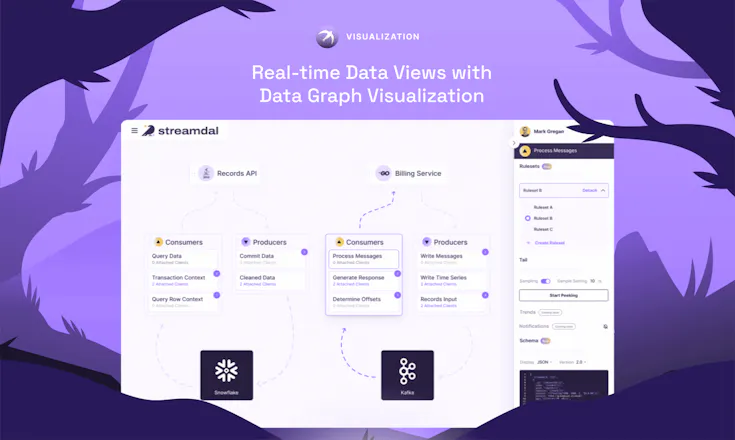
Streamdal helps teams overcome this divide by generating a real-time, dynamic visualization of the data flow: we call it “The Data Graph”. This means teams will get a dynamic bird's-eye view of their producers and consumers as they scale up and down in real-time. From there, they’ll be able to watch a live view of data flowing throughout their system.
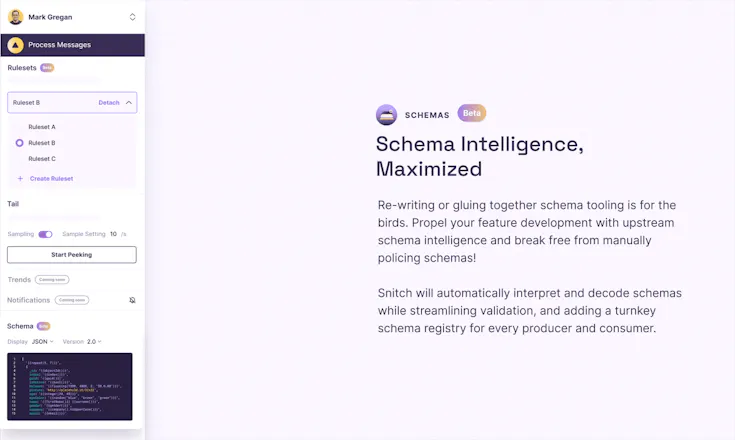
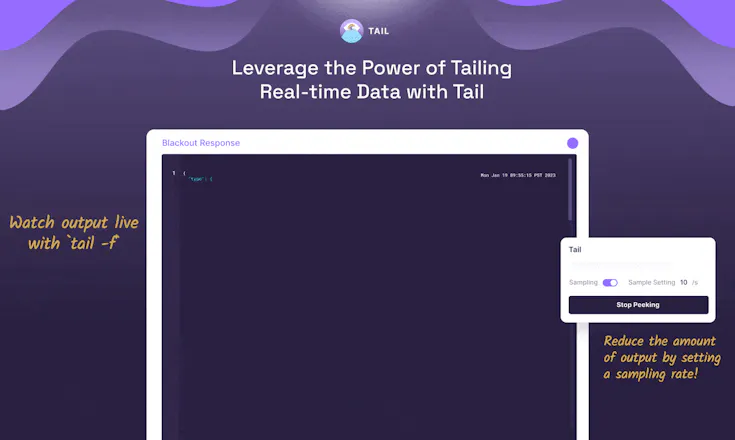
By importing and wrapping a few lines of code with the Streamdal SDK, they’ll be able to detect data incidents the moment they happen. Along with the dynamic data graph, they’ll get throughput metrics, schema inference, and the ability to zoom in and observe real-time data - it's essentially a `tail -f`, but for data and in human readable format.
Today, we're excited to share our open-source product with the PH community! In this beta phase of our launch, we currently have SDK support for Golang, Python and Node.js. The UI and server components can be deployed in containers anywhere: on-prem or in cloud.
Coming very soon is a host of data quality management features allowing you to proactively interact with real-time data, and prevent downstream issues! Think of it as a `firewall` for your data.
We'd love to hear your thoughts, ideas, and feedback. We'll be here to answer questions in the comments.
@ustin cool product! congrats and good luck with the launch!
Report
@ustin Oh boy, your launch is a total game-changer! It's exactly what we've been hoping for. Sending you all the best as your project continues to thrive. Followed you on Twitter because we know greatness when we see it! 🌟🐦
@mwseibel@ustin The ability to detect and resolve data quality incidents in real-time is crucial in a data-driven world. Streamdal's focus on providing visibility into the flow of data through systems and the capability to take immediate action can significantly improve data reliability and integrity
Coooool!
@sentry_co you got it! We actually talk about exactly this in our manifesto - real time observability is not actually real time .. it’s closer to “fairly recent”.
Our approach to this though is not just “make it faster” - it’s about providing a way to expose data in a way that none of our competitors have done yet. Specifically - allowing folks to look at the actual bits that the app is reading or writing.
Or less abstract - our competitors are doing everything via metrics, traces and logs - we are saying “that’s cool, but here’s another angle that may work better”.
Amazing @ustin this is exactly the tool I wish existed years ago when I was running A LOT of Kafka clusters and trying to debug the data was incredibly challenging. Congrats on the launch!
@pete_cheslock Thanks Pete! We have plenty more in store to bridge the gap between streaming and batching systems. Let's catch up sometime soon: will demo all the beta features : )
Congratulations Team Streamdal for your impactful launch on Producthunt! Your open-source tool could revolutionize the way businesses strategize around their data. Having a real-time dashboard to track data incidents is absolutely genius. I do have one suggestion that could help further elevate your tool - consider implementing predictive analytics to anticipate potential data issues before they even occur. A system for alerts on possible future data incidents, might be an interesting and powerful feature worth exploring. Keep innovating!
@lee_fischman no but that is a really clever idea. I have not thought of this! I wonder how you’d define the threshold on how complex of a “correction” can be. Maybe that’s a well-known thing I’m not aware of :) will research!



Streamdal
MindOne
Toofan
Streamdal
Streamdal
DiffSense
Streamdal
Streamdal
Nacho Analytics
Streamdal
Scade.pro
Allma
Streamdal
Crustdata
WhereWeMet.Org
Streamdal