Launching today

Rhem Labs
Health assistant robots for your parents’
54 followers
Health assistant robots for your parents’
54 followers
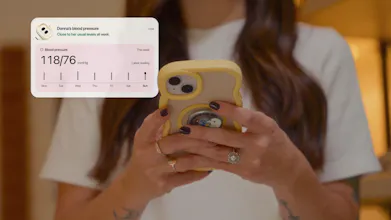
Aging at home has a visibility problem. Small changes in health and routine can go unnoticed for weeks or months, until the first obvious sign is something serious. Rhem is a tabletop robot that helps families see those changes earlier, while giving parents the everyday support they need to stay independent longer. Rhem was designed first for aging parents, but anyone can use it as an extra set of eyes and everyday help at home.




Congrats on the launch! Does this integrate across other smart home features? For example, could you get alerts on the state of the home (lights left on, door unlocked, temperature, etc)?
@jaclyn_iul Thanks Jaclyn! We’re actively working on smart-home integrations, including support for Matter and Zigbee devices. It’s still in development, so we’ll share specific device compatibility as we confirm it. What smart-home setup are you using?
@jacob_shen Amazing. We use Google Home to manage our devices.
I'm very into this idea. Does there always need to be a signal or do some of the functions work locally? I'm thinking about the potential "tech debugging" that might occur where the catch up call becomes tech support lol.
Love that it can also solve for lonliness. Can it play games to help cognitive function as well?
Congrats on the launch y'all
@gabe Thanks Gabe! We offer Local and Cloud versions. Local runs most features on-device; Cloud needs internet for AI, but logging and entertainment still work offline. Online tasks such as browser use and family updates need a connection on either.
The tech-support concern is very real 😂 We can preconfigure Rhem for your parent’s Wi-Fi before shipping so as soon as it is plugged in, it is connected to the web. Once connected, your parent can just ask Rhem how something works and it’ll walk them through it (kind of like heyclicky if you've seen it)
And yes! Our games and cognitive exercises were designed with our senior advisor, who runs three psychiatric hospitals in LA.
the framing is "for your parents" but the person who actually lives with the device every day is the parent, not the adult child who bought it. that's a real tension worth being upfront about - is the data flow something the parent can see and control (what gets shared with the kids, how often, in what detail), or is it set up by default as a dashboard the family checks on them through. "aging at home has a visibility problem" is true, but visibility for the family is also just surveillance from the other end of it, and whether people accept that depends entirely on who holds the controls