
Launching today

RepoLens
Understand any codebase in minutes, not weeks
2 followers
Understand any codebase in minutes, not weeks
2 followers
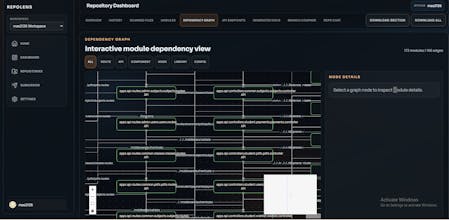
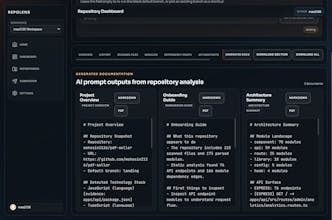
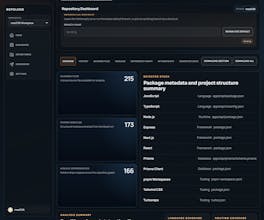
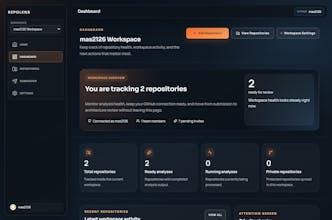
RepoLens Version One helps developers understand unfamiliar codebases faster. Paste a repo URL or connect GitHub, and RepoLens analyzes the project to generate module maps, dependency graphs, API endpoints, architecture summaries, onboarding docs, grounded repo chat, and branch comparison views. It stands out by turning raw repositories into structured, explorable knowledge with answers linked back to real source files so you can verify everything.








I built RepoLens Version One to solve a simple but frustrating problem: understanding an unfamiliar codebase takes too long.
When developers open a new repository, they need more than a file tree. They need to understand the project structure, module relationships, dependency flow, API surface, architecture, documentation, and branch-level changes. RepoLens V1 is designed to make that process faster and clearer.
RepoLens analyzes a repository through a structured pipeline. It clones the repository, scans project files, detects languages and frameworks, parses modules and dependencies, extracts API routes, and generates architecture summaries. It also creates project overview and onboarding documentation, stores structured analysis results for each run, builds semantic chunks from repository content, generates embeddings for retrieval and search, grounds repo chat answers in indexed source files, tracks branch-specific analysis history, compares branches across key architecture signals, and supports exporting reports and comparison results.
What makes RepoLens different is that it does not rely on generic AI output alone. It first builds a structured understanding of the repository, then uses that foundation to provide more reliable, navigable, and verifiable insights.
I would love feedback on the product experience, the branch comparison workflow, and which repository intelligence features would be most valuable for real-world development teams.