
On-Call Health
Catch overload before it burns out your incident responders
115 followers
Catch overload before it burns out your incident responders
115 followers
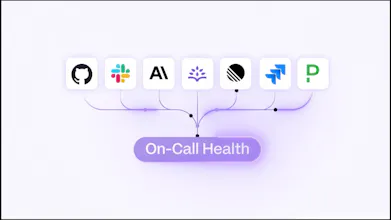
Free, open-source tool that helps spot unsustainable on-call workloads before they become a problem. It pulls signals from tools like Rootly, PagerDuty, GitHub, Linear, and Jira, combines them with self-reported check-ins, and tracks everything against personal and team baselines.


On-Call Health
Hey Product Hunt! I'm Sylvain, Head of AI Labs at Rootly. As a former SRE, I've watched too many friends and co-workers burn out from on-call. The signs are always there: after-hours pages creeping up, weekends disappearing. But there's never been a good way to actually measure it.
That's why we built On-Call Health. It's free, open source, and helps engineering teams spot when on-call is drifting into overload before it's too late.
It works by combining two types of signals:
Observed data from tools your team already uses (Rootly, PagerDuty, Slack, GitHub, Linear, Jira) — incident volume, severity, after-hours activity, task load
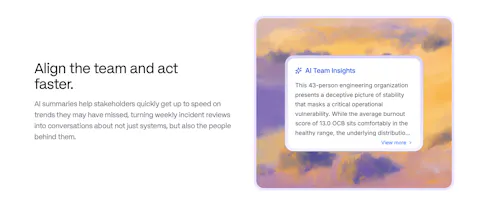
Short self-reported check-ins inspired by Apple Health's State of Mind feature, where responders share how they're actually feeling
Everything is tracked against each person's own baseline over time — not static thresholds, not comparisons between people. Because what's routine for a 10-year SRE veteran might be overwhelming for someone 6 months into their first rotation.
We built this alongside engineering teams at Weights & Biases and Brex, and their feedback shaped the scoring and integrations we prioritized.
You can try it right now at oncallhealth.ai with mock data — no setup, no account required.
It's still early and we'd love your feedback. @spc__01, @hamza_hamza11 and I would love to know what would you want to see next? Issues and PRs are very welcome.
I used to tell myself I was “fine” on call. The incidents weren’t even that bad tbh. It was the slow erosion. The Slack pings during dinner. Not taking my prescribed sleeping pills “just in case.” Planning weekends around a laptop.
By the time I realized I was burned out, it wasn’t because of one big outage that kept me up all night. It was months of invisible load that no dashboard ever showed.
My hope is On-Call Health can surface that slow drift before someone hits the wall, that’s meaningful. SRE burnout rarely looks dramatic from the outside, we've grown used to it. It just looks like someone quietly disengaging. Tools that make that visible are long overdue.
Rootly
Anyone that’s worked at a very fast paced company knows how real pager fatigue and burnout is.
Especially with AI coding assistants accelerating the number of (complex) incidents, measuring this has never been more important.
Traditional methods like just seeing “number of pages” would never be enough to actually understand humans like this does.
Nice work team!
Nice! Congrats on your launch!