
Launching today

NanoClaw
A lightweight alternative to OpenClaw, runs in containers.
51 followers
A lightweight alternative to OpenClaw, runs in containers.
51 followers
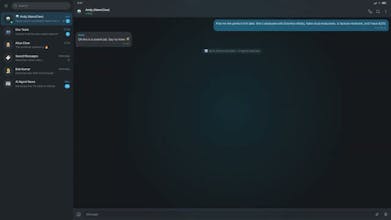
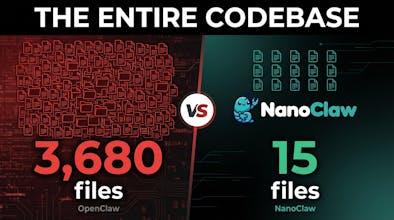
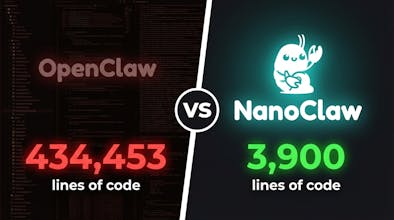
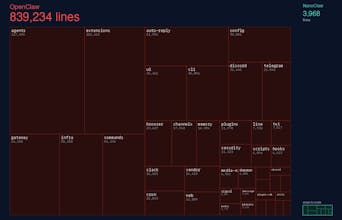
A lightweight alternative to OpenClaw that runs in containers for security. OpenClaw has 400,000 lines of code. NanoClaw does the same thing in 4000. NanoClaw is a personal Claude assistant that runs on WhatsApp and Telegram. It manages your email, researches the web, runs scheduled briefings, and coordinates agent swarms, all from your phone. The difference? Every agent runs inside an isolated Linux container. No ambient access. Secure by default



Hey Product Hunt! I'm Gavriel, creator of NanoClaw.
A couple months ago, my brother Lazer and I were running an AI agency and using Claude Code for everything. Operations, research, sales pipeline, client work. We set up an OpenClaw agent to manage our sales pipeline and it was doing the work of an employee. Honestly, maybe even better. I wanted to set up eight more across the company.
But I couldn't sleep at night. I looked under the hood and found nearly 400,000 lines of code, 70+ dependencies, and every agent running in the same process with shared memory. No real isolation. An agent in your family group chat had the same system access as one connected to your work repo. I wanted to give this thing the keys to our entire business, and there was nothing actually keeping it contained.
So I built NanoClaw over a weekend. The idea was simple: what if you got the same core functionality (WhatsApp messaging, persistent memory, scheduled tasks, web access) but every agent ran inside its own isolated Linux container? OS-level sandboxing, not application-level permission checks. And what if the entire codebase was small enough that you could actually read and audit it?
The whole thing is about 3,900 lines across 15 files. People tell me you can understand the full architecture in about eight minutes.
A few things I'm proud of:
→ Container isolation for every agent session (Apple Container on macOS, Docker on Linux)
→ Agent Swarms: teams of specialized agents that collaborate within your chat
→ A Skills system where the community extends NanoClaw by teaching Claude Code how to modify the codebase, instead of bloating the core with features
→ No config files. You talk to Claude Code and it customizes the software to your exact needs. Every fork is bespoke.
The project has grown to 18,000 GitHub stars and has been covered by The Register, VentureBeat, The New Stack, and CNBC. But what really drives me is the community. Developers are forking NanoClaw and making it their own, adding Telegram, Signal, Discord, email. Exactly the way it was designed to work.
The vision is bigger than a personal assistant. I believe this kind of architecture (minimal, auditable, container-isolated) is how AI agents should run everywhere. It's the orchestration layer that nudges developers toward using solid, secure building blocks instead of reinventing the wheel. We're keeping it open source and building it into a foundation that people can build real products and businesses on top of.
Would love to hear what you think, answer any questions, and hear what you'd build with it. And if you've already been using NanoClaw, tell me about it. I genuinely want to know.
🔗 GitHub: github.com/qwibitai/nanoclaw
🌐 Site: nanoclaw.dev
Overcut
Very cool approach.
Running each agent in its own container with no ambient access is exactly how these systems should be built. As agents start managing real tools and data, security and isolation will matter a lot.
@yuval_hazaz I know, right? When the boundaries are clear everything's easier. This is exactly why we moved from processes to containers to begin with - it's the best abstraction we could find (at the time) for that isolation.
It's not perfect by any means - but I feel a whole lot different than when running process-based claws.
xpander.ai
Love the philosophy here. stripping such strong functionality to a foundational codebase is awesome. 18k stars is a hell of a start - congrats and best of luck with the launch.
@ran_sheinberg Appreciate the comments! I think @gavriel_cohen really did break it apart, this idea of the claw, into the basics - and I love what came out of it and proud to be part of the journey.
There's also a small tidbit that people miss here, which is the bespokeness of each fork of NanoClaw - it's completely different piece of software for anyone, and the ability to keep that reliable is due to the stripping down of the codebase to the bear necessities.
Qodo (formerly CodiumAI)
Looks awesome!!
@dani_avitz1 So does Qodo :)
Postiz
Good Luck!
@nevo_david As a side note, my NanoClaw runs postiz-agent (https://github.com/gitroomhq/postiz-agent) :)
Postiz
@tom_granot2 Now I love this launch a lot more! :D