
Mindspend
Track how you feel about spending, not just the numbers
134 followers
Track how you feel about spending, not just the numbers
134 followers
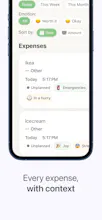
Most budgeting apps track where your money goes. Mindspend tracks how you feel about it. Every purchase gets one of three emotion tags: worth it, okay, or regret. No categories, no bank linking, no complicated setup. Just one simple question after each purchase: how did that feel? After a few weeks, you see your spending patterns through a completely different lens. It's not about restricting yourself. It's about understanding yourself.




Free
Launch Team

Viktor.comAn AI coworker that actually does the work
Promoted
Mindspend
Hello Alex!
I hate the feeling "where did my money go?" and I have noticed when I pay cash/transfer, I am more responsible, while when im paying with credit card im extremely irresponsible. So I was thinking it would be great to be able to track the method of payment, so if i really see a trend with my CC I would start leaving it at home!.
Besides that I would like to add another choice on the feelings like "Needed it" there are some things I hate to pay but its necessary, not like a subcategory but an expense that is a non negotiable in my life and cant be decreased (or changed), for example my student loan monthly fee, rent, insurance , etc. I honestly dont feel at my best paying it, but its a non negotiable.
Mindspend
@carolinahunts Hey thanks! The payment method thing is interesting, heard the same from a few people. Definitely looking into it. For the "Needed it" feeling, I'm trying to keep it simple with just 3 options so it stays quick and you actually do it every time. But you can create buckets for things like rent, student loans, insurance etc, that way those non-negotiables are grouped separately and dont mix with your discretionary spending. Keeps the data clean without adding complexity. Appreciate the feedback!
Curious what happens with "okay" over time - does it tend to drift toward regret or worth it as people use the app longer? That middle category feels like where the most interesting behavioral data would live.
Mindspend
@spunchev That's exactly the kind of question I love, you're thinking about it the right way. Honestly, I don't have enough long-term data yet to say definitively, but my hunch is that 'okay' is where the most interesting shifts happen. It's the category where awareness does the most work, once you see how much of your spending lives there, it either gets reframed as 'actually worth it' or quietly moves to regret. The middle ground is rarely neutral forever. Would love to revisit this in a few months with real data 😄
Sounds like a great idea to solve overspending, and it would be nice for it to sync with budget trackers people already may use (e.g. Notion) for bigger picture budgeting / factoring in necessary spending such as rent and utility bills. How does Mindspend know your transactions, do you have to manually input them?
Mindspend
@ioanamarin Hey thanks! For now its manual input, you log each purchase and tag how it felt and why you bought it. Thats actually intentional, the manual part forces you to think about each purchase for a sec which is kind of the whole point. For the Notion/budget tracker sync, interesting idea. Right now Mindspend is more about the emotional side of spending than traditional budgeting, but I can see how connecting the two would be useful. Going to think about this one. Appreciate the feedback!
I think this will help people like me.. too much headache
Mindspend
@leaphope Haha thats exactly why I built it, traditional budgeting gave me a headache too. Hope it helps!
This is a clean insight. Most budgeting tools try to change behavior by adding friction or guilt. This one builds awareness first, which is actually where lasting change comes from.
It feels especially strong for people who aren't reckless with money but still end up staring at their balance thinking how did this happen? You're not competing with spreadsheets here. You're replacing that guilt loop with pattern recognition, and that's a genuinely different lane.
One angle that might hit harder on the page: lean into the "invisible spending" idea. The small, forgettable purchases that feel harmless in the moment but quietly add up. That's the real villain in this story, and naming it directly gives people something to point at.
Also curious whether you've considered surfacing something like a weekly insight or a "regret percentage" early in the experience. That kind of hook tends to drive both retention and sharing, because it gives people something worth talking about.
I work with a lot of SaaS teams on messaging for behavior driven products, so this kind of positioning is something I find genuinely interesting. Would love to see where you take it.
Hey Alexandru, this app is super good to care about my expenses. I just downloaded and using it. It will save my budgets and how to reduce the money in wrong ways! I am not pro user but still satisfied with the convenient and fast way to save my money in spending. Great Alexandru!