
RunInfra
Describe the AI model you need and get an optimized AI
186 followers
Describe the AI model you need and get an optimized AI
186 followers
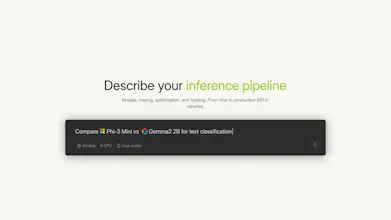
Tell RunInfra what you need and it builds the production API. No dashboards. No config. Describe any open source model or full app in plain language. We optimize it for real: benchmark GPUs, quantize the model, generate custom CUDA kernels with our Forge agent. It runs faster and cheaper than standard hosting. Build voice (speech → AI → speech), doc search, vision, or model routing, all in one chat. Pay per million tokens. Scale to zero. Run managed or on your own GPUs.


Auto-generating custom CUDA kernels is the part that would make me nervous to trust blindly. A kernel can be fast and still be subtly wrong on edge cases, like a numerically unstable softmax or a padding bug that only shows up on odd sequence lengths. What's the testing story before a generated kernel goes into a production API, do you diff outputs against the reference implementation across a range of inputs first?
Building production APIs from plain English and auto kernel optimization feels like the direction a lot of us need. Especially for voice/vision stuff where every ms counts.
How's the Forge agent doing on more complex full-app descriptions so far?
How does the Forge agent actually decide when to write a custom CUDA kernel versus just relying on quantization, and does that choice change the price I pay per million tokens?
How does the custom CUDA kernel generation actually work in practice, does Forge learn from existing kernels or write them from scratch, and what happens if the generated kernel underperforms the standard one at runtime?
how does the per-token pricing actually compare to something like runpod or modal when running something like a 70b quantized model for a few hours a day?