Bring your own brain
gm legends, happy Friday.
Today: the company that already reads a third of the Fortune 500's documents wants to give your AI a memory you own, AI dashboards that live inside your Excel files, and a public arena where AI agents finally have to prove themselves. Plus the forum on why writing it down isn't doing it.
Own your company's AI memory

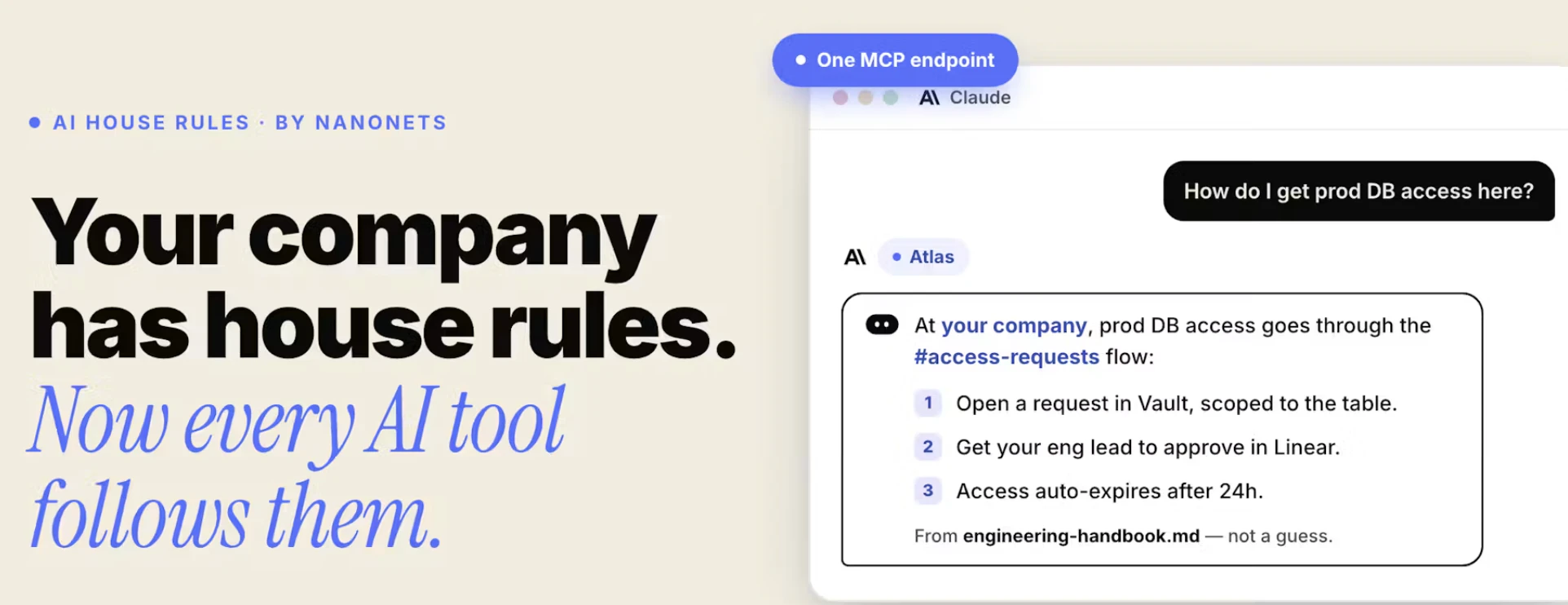
Atlas wants to end the quiet tax of the AI era, re-explaining your company to every new tool: it turns your brand, voice, and processes into a portable context graph any AI can read, built on the document-extraction engine from Nanonets, the eight-year-old company that already pulls structured data out of messy enterprise docs for a third of the Fortune 500.
๐ฅ Our Take: Nanonets isn't a hype startup. It's spent eight years getting the world's best at one boring thing: pulling clean data out of the invoices and contracts companies run on, which a third of the Fortune 500 pays for. Atlas turns that engine on your own files and builds a context graph any AI can read, which is exactly why the dozen "company context" wrappers can't and Nanonets can. Today nobody's really asking for it: Claude and ChatGPT already remember you for free, and "own your context, take it anywhere" is a principle, not a pain. But the company that knows your whole company is the next thing worth owning, Glean is worth billions on a slice of it, and the team that's read everyone's documents for a decade starts that race ahead. Bullish on the team, even if the market's a beat early.
AI dashboards inside your Excel

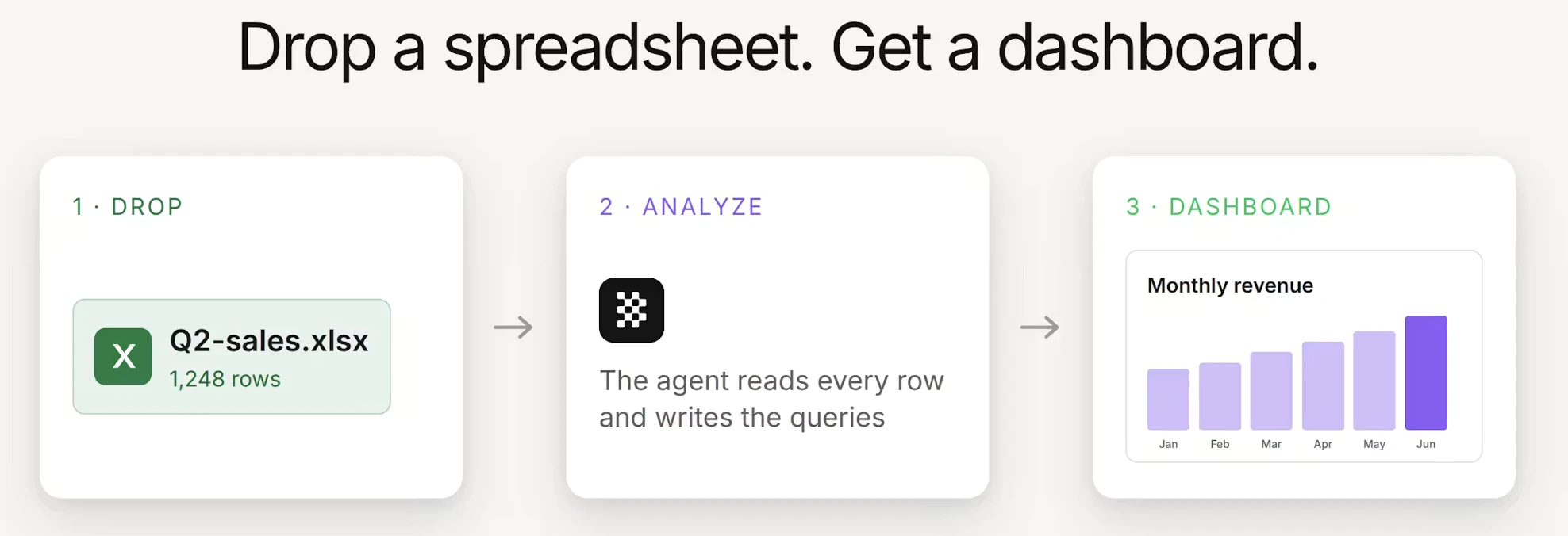
Basedash for Excel comes from Max Musing, who built Basedash to give startups a slick dashboard on top of their database, and now takes the same trick to spreadsheets: drop in an .xlsx and an AI analyst reads every row, builds live dashboards, answers "what's driving the Q2 jump?", and exports the numbers back to Excel when you need them.
๐ฅ Our Take: Every BI tool spent a decade trying to pull people out of Excel, and nobody left. Basedash gave up that fight and went into the file: drop an .xlsx in, its AI builds you a live dashboard, answers questions, hands the numbers back, no migrating anywhere. It's good at it because clean dashboards on messy data is what Basedash has always done, back to when it was an admin panel for startups, and right now it beats Excel's own Copilot. Then you remember whose file it is: Microsoft's, where Copilot is free, going to the billion people already there, with all the time in the world to catch up. Being better today, where the data already lives, is real and worth using. Just don't expect that edge to outlast the company that owns the file.
Are you really still typing?

Full disclosure: Wispr Flow is the AI dictation tool most of us at Product Hunt (use we still have a few holdout typers, what romantics). Hold a key, talk, and clean text drops straight into whatever app you're already in โ Slack, email, Notion, your IDE, wherever your cursor lives. No switching windows. No copy-paste ritual. Just say the thing โ yes, you can whisper it โ and even your most run-on sentences will be turned into polished writing at 4x the speed of typing.
Let your AI lock you out

LockIn MCP comes from Mil Hoornaert, who got fed up with focus apps so fiddly you've already opened a new tab and lost two hours before you finish setting them up: you lock yourself out with a single MCP command or one line of text, and it edits your Mac's hosts file directly to wall off the sites, no dashboard, no sliders, no easy bypass.
๐ฅ Our Take: I never stick with focus apps because the setup is its own distraction, by the time I've picked my sites, I'm already on the thing I meant to block. This s a little different: tell your AI to lock you in, or type one line, and it edits your hosts file and the sites are gone. It won't beat willpower, a hosts edit is trivial to undo, and you could do this yourself in a text editor, so on its own it's a script with nice packaging. But the MCP angle is the new part: your coding agent can lock you out inside a workflow, like the commenter who wanted social blocked until a build passed, which no standalone blocker can do. Worth a try, even if the real version of this ends up baked into the agent, not its own app.
Writing it down isn't doing it
Kirito (@kirito_takahashi) asked a question that quietly indicts most of us: what do you actually want your notes app to DO after you've written something? We capture constantly and act on almost none of it.
The thread didn't really argue, it confessed. Person after person described the same trap: the note pile is a graveyard, and writing something down feels like progress when it isn't.
Two lines stuck. Varun (@varun1jan): "The thing I forget most isn't information. It's intent. Six months later I understand the words but not why I saved them." And the sharpest, from @dmb_dmb: "Writing the note makes me feel like I've handled the task. I haven't. The note becomes a proxy for the action instead of a path to it."
Good thread if your notes app is where good ideas go to be politely forgotten.
Daily Top Products


Monday through Friday
Our ultra-fast Daily: Three takes on new products. Yesterdayโs top ten launches. Thatโs it.