Google vs. Airtable
When your product raises $185 million and is celebrated among makers, big tech notices.
Google’s in-house incubator Area 120, launched Tables last week, a tool for collaboration, workflow, and automation.
This new Google tool is drawing some direct comparisons with the no-code giant Airtable, which recently upgraded its new platform with Sync, Marketplace, Apps, and Automation while raising $185M. We wrote about this in more detail.
Google positions Tables as a project management tool to get teams on the same page (and the same virtual table) with bots, automation, and seamless integration to other Google products like Sheets, Groups, and Contacts.
While there are many productivity tools in the market and many adopting a Kanban board approach, Trello, Monday.com, Asana to name just a few, Google has an advantage of tapping into its existing user base of millions of users already invested in Google’s ecosystem (Gmail, Drive, Docs).
The product was launched in a Google-like freemium fashion.
You can use Tables for free, with support for up to 100 tables and 1,000 rows. The paid plan includes a 3-month trial, starts from $10/month/user giving you up to 1,000 tables and 10,000 rows/table.
Would you switch to Tables?
Google’s in-house incubator Area 120, launched Tables last week, a tool for collaboration, workflow, and automation.
This new Google tool is drawing some direct comparisons with the no-code giant Airtable, which recently upgraded its new platform with Sync, Marketplace, Apps, and Automation while raising $185M. We wrote about this in more detail.
Google positions Tables as a project management tool to get teams on the same page (and the same virtual table) with bots, automation, and seamless integration to other Google products like Sheets, Groups, and Contacts.
While there are many productivity tools in the market and many adopting a Kanban board approach, Trello, Monday.com, Asana to name just a few, Google has an advantage of tapping into its existing user base of millions of users already invested in Google’s ecosystem (Gmail, Drive, Docs).
The product was launched in a Google-like freemium fashion.
You can use Tables for free, with support for up to 100 tables and 1,000 rows. The paid plan includes a 3-month trial, starts from $10/month/user giving you up to 1,000 tables and 10,000 rows/table.
Would you switch to Tables?
Highlight
Snapchat made disappearing photos a thing.
This tool wants to make disappearing URLs and self-destructing messages cool as well.
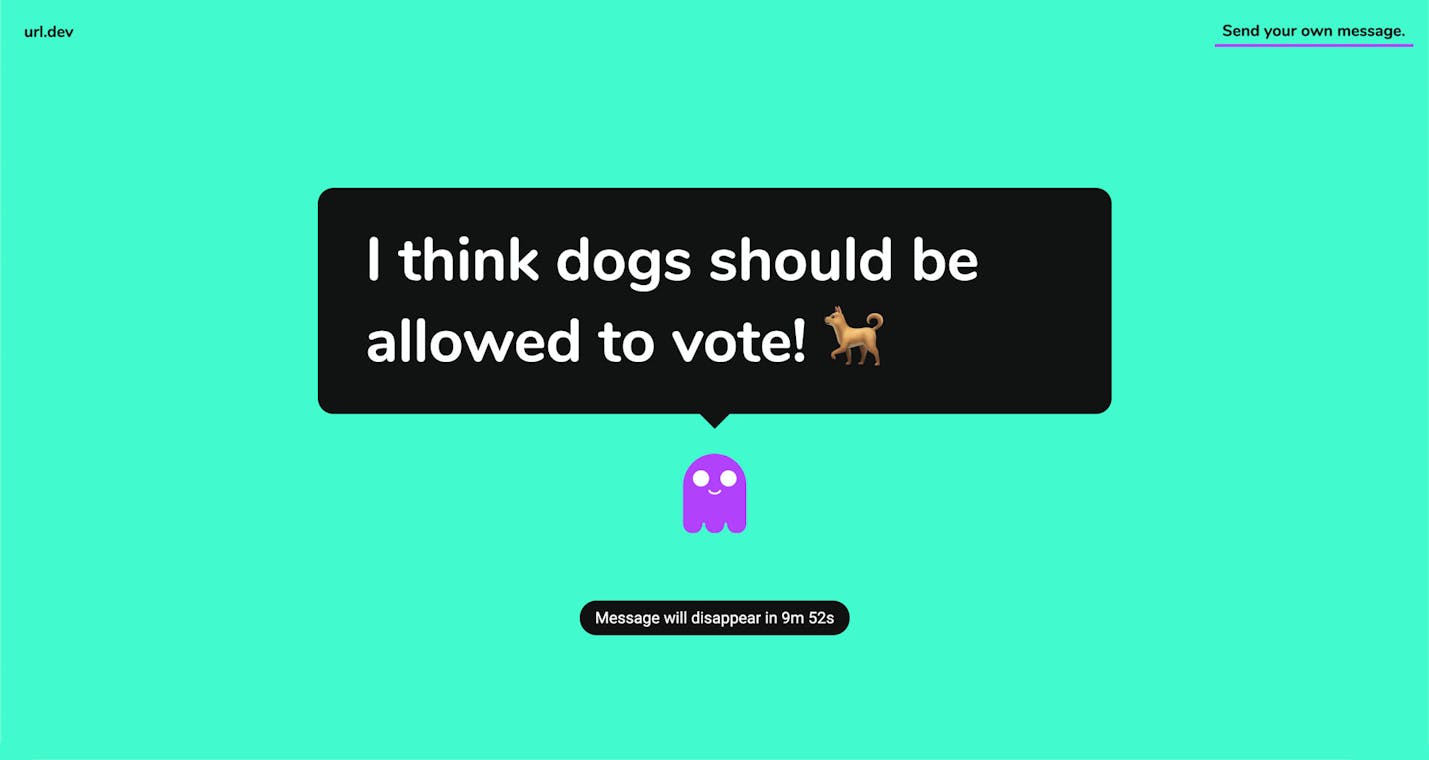
This tool wants to make disappearing URLs and self-destructing messages cool as well.
Ad
We asked 34 customers what Viktor does for them. Not one said chatbot.
They kept using words like colleague, coworker, team member. One CEO called it the glue holding their e-commerce business together, which is a lot, but also… you see why. It lives in Slack and plugs into 3,000+ tools, so instead of jumping between tabs, you just ask for the thing. Pull Stripe against HubSpot, check Sentry alerts, spin up a campaign brief, build a landing page, send a report upstairs. It all happens there.
It has already hit top 5 on Product Hunt with 130 comments, is SOC 2 certified, and your data does not train models.One user said it was the first time AI felt like a real coworker, which is either exciting or slightly concerning depending on your week.

The Roundup
Every Sunday
Everything you missed this past week on Product Hunt: Top products, spicy community discourse, key trends on the site, and long-form pieces we’ve recently published.