The first half of the year flew by, and I found myself struggling with a fragmented writing process. I was using Notion, but jumping between research and writing felt clunky. Plus, Notion started to feel too "all-in-one" and wasn't as nimble as I needed for focused writing.
We ve just rolled out a brand new update for Mindly, your second brain for macOS, and this one s a big step forward in making capturing and organizing your thoughts even smoother.
If you re a PM juggling roadmap pressure, tight timelines, and zero dev bandwidth, you ve probably wished for a faster way to test and learn.
Trickle is a no-code, AI-powered tool that lets you build landing pages, interactive prototypes, and feedback systems all with a built-in database and analytics dashboard, so you can track what matters without extra setup.
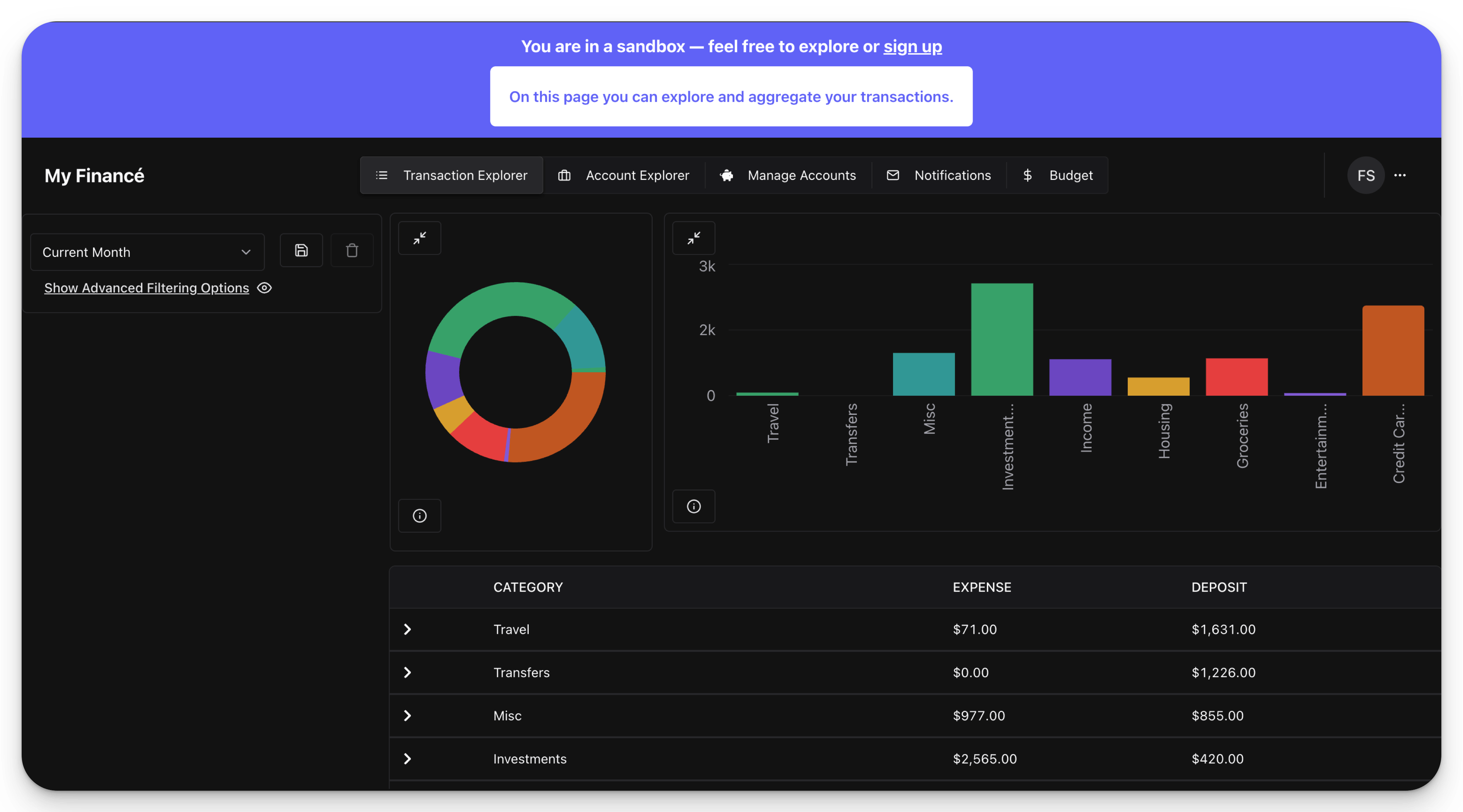
I have been (slowly) building My Financ . I shipped some features over the past few months that felt interesting to share, so I build a sandbox that runs an almost-fully-featured version of the app (here) with dummy data. you can go in there, click around, and see what the feature set looks like:
is this confusing? on intuition i feel like people hate guided product 'tours' so have strayed away from this, but maybe it isn't clear the steps you would have to take as a user to actually get the app into this state? any feedback welcome :) I realize that for a situation where you are linking your bank accounts to a website the polish and trust needs to meet a pretty high bar, so the main goal of this effort was to make it easier for a user to understand whats behind the onboarding.
After gathering early feedback on how the platform was being used, I noticed something interesting: users are expecting more proactive agents rather than reactive.
Therefore Automations have just been added to the platform so now you can have your API-integrated Agent take actions on your behalf in the background, working on autopilot, in an hourly, daily, or weekly cadence.
I recently booted up a new macbook and spent about an hour trying (unsuccessfully) to get docker desktop to work reliably. On my previous macbook, about once a day docker desktop would become unresponsive, and the only way i could get it to reopen was to restart my entire machine. So this is a tribute to orbstack, which afiact is a full drop in replacement. To be honest i havent thought about it once since i installed it, and that is amazing :)
If you re launching a desktop app (Windows, macOS, or Linux), how do you prefer to distribute it? Some devs publish to official app stores like Microsoft Store, Mac App Store, or Snap/Flatpak. Others skip that entirely and just provide executable downloads directly from their website. Each route has pros and cons: App stores can build trust, offer updates, and sometimes bring in new users. But they also come with submission processes, review delays, and platform restrictions. Direct downloads give you full control and faster iteration, but some users might hesitate to install an app from a website, especially if it s not open source or well-known. I m building a cross-platform app and thinking carefully about this. Curious to hear from others: What do you prefer when launching or downloading desktop software?
Any lessons learned from doing it one way or the other? Would love to hear your take. Especially if you ve had to balance visibility, user trust, and update flow.
First off, a massive thank you to everyone who upvoted KeyFlow on our launch day and to our growing community of 92 followers! Your support means the world to us. We're thrilled with the launch and excited to be live on TinyLaunch today as well!
For those of you who downloaded the free macOS version of KeyFlow, we'd love to hear about your experience so far. Your feedback is valuable as we continue to refine the plugin and make it the best it can be.
I recently started a small project, something I thought I could finish over a weekend just to fix an annoying part of my workflow. But a few days in, it hit me: the thing I was building wasn t just solving a small problem... it was opening up a whole new way to work. What started as a utility tool is now turning into something a lot more ambitious. And honestly? Kinda intimidating. So I m curious, have you ever built something with a small goal in mind only to realize halfway through that it had way more potential than you expected? How did you handle that shift? Did you lean into it, or keep it small on purpose? Would love to hear how others have navigated this. Always fascinating how big ideas sneak up on us through small projects.
Hi everybody, thanks for a successful launch of FaiPact AI Contract Analysis!
We're looking for feedback to improve our product. If you'd like to try it out for free, email me at john@actualization.ai and I'll send you a secret link. All we ask in return is honest feedback on the experience within a day or two after you've tried it. We'll send you the full report and analysis of your contract COMPLETELY FREE after you fill out a quick survey.
Hey everyone! Just wanted to share a quick update from the Trickle team.
We ve been heads-down refining the product over the past few weeks, and today we re excited to roll out Trickle 1.5 a major UI and UX upgrade aimed at making the building experience cleaner, faster, and more intuitive.