Canvas Tarps

Canvas Tarps

14 points

Forums

Hanafi

8mo ago

What's your wildest 'things that don't scale' move that actually worked?

Not looking for the usual "DM people on LinkedIn" or "personalized cold emails"

I want the weird stuff you tried that had insane results.

I'll start: We sent 50 pizzas with custom packaging to super specific people in our target persona.

Result: 95% called us back and hopped on a call.

Ian Tirta

9mo ago

I built a 3-hour audiobook streaming platform.  Part 1. Here's how i build it.

Here s the twist though:
I m not a designer. I m not even a developer.
No bootcamp, no CS degree, no I learned HTML when I was 12 story.

I Built an Audiobook Platform in 3 Hours Here s Why
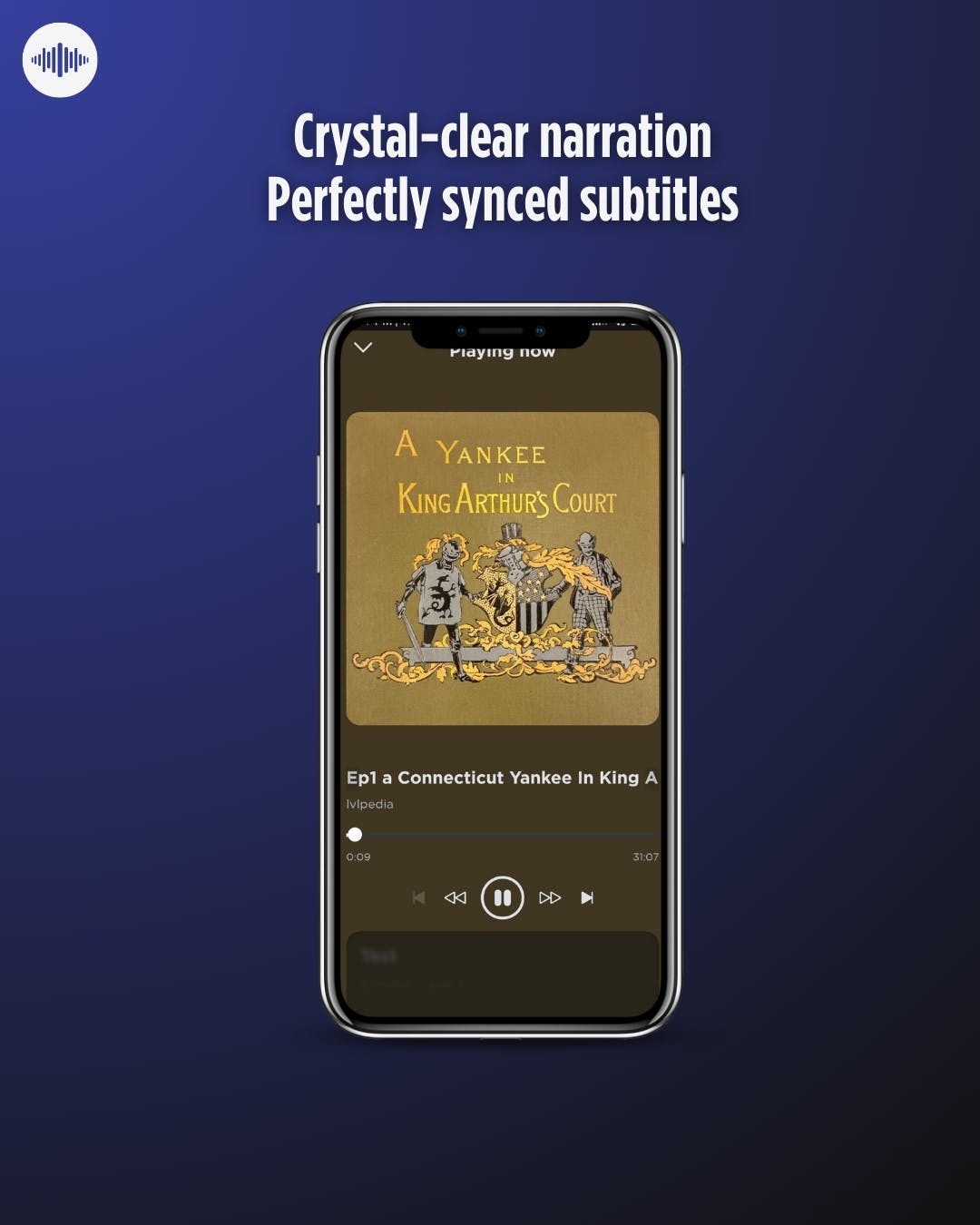
Cursorp/cursorimbud

9mo ago

Designers using Cursor, where are you all? 😇

Hello, PH!
I m a designer who boldly switched from Framer, which I had been loyal to for two years, to Cursor recently. This has been the best decision I ve made this year. The biggest reason is that the cost savings have been truly dramatic.
Cost comparison:
Framer:
Even the mini version costs $15 per month ($180 annually), and running 3 sites would cost $540 a year (if I had created with Framer, it would have added another $180, totaling $720).
Cursor:
Just $120 for an annual subscription! Unlimited projects possible. And there are no hidden costs or additional feature fees at all. The Cursor subscription fee covers everything. (I feel like I m advertising now;;;)
Besides the cost, here are the other benefits of Cursor for designers:
- Anything is possible beyond the features offered by Framer.
- No need for complicated tutorials or studying; you can use it right away.
- You can implement everything you imagine just with prompts.
I think I ll continue using Cursor, so I d love to connect with other designers. Is there a group for designers using Cursor?? I want to share good tips with designers who use Cursor!

Will getting 500 users in 2030 be as hard as getting a full stack app built in 2010?

I am truly blown away by these AI coding assistants. I have messed around with v0 and now am playing with Lovable. This feels like it should be illegal. I'm essentially coding full stack apps without having any knowledge of programming. Yes, there is a small gap on the deploying front but my guess is this will be solved for quickly.

My main question is where does this trend lead to? I don't believe that everyone will be able to program in a year, but potentially anyone with agency will be able to. I am having a hard time visualizing that, but if true, does that mean the golden goose is going to be on the marketing/distribution side? Will it be 10x harder to get users than it is today? Will getting 500 users in 2030 be as hard as getting a full stack app up in 2010, because every "idea guy" can now build? How will investors evaluate talent? Or big companies? Or am I totally off base here?

Ashish Parmar

11mo ago

We're Launching Foodiv.com on Product Hunt tomorrow!

We re super excited to announce that Foodiv.com is launching on Product Hunt in just a few hours! What is Foodiv.com? It s a commission-free online ordering system that empowers restaurants to launch their own website, mobile app, and QR-based ordering system all in one place! No hefty commissions, no middlemen just a seamless way for restaurants to take control of their online orders. Why We Built This? Many restaurants struggle with high commission fees from third-party apps, making it hard to stay profitable. We wanted to create a simple, affordable, and powerful solution that lets restaurants own their branding, customers, and revenue without paying a cut to middlemen. If you're passionate about the food industry, startups, or just love seeing innovative solutions, we d appreciate you checking out our launch. Drop a comment below if you re excited, and we ll notify you the moment we go live! Let s make this big!
Nick Anisimov

12mo ago

Subscription or one-time payment. Which should a startup choose?

There was a lot of talk in 2023 and 2024 about startups using a one-time payment model, but earlier this year, I started to see founders going back to subscriptions. What do you think?
André J

12mo ago

How I built an AI wrapper SaaS in 1 day

Introduction: Thanks to state-of-the-art AI models, coding has transformed into a conversational process. By simply defining your project's constraints, a back-and-forth dialogue with the AI can take you from idea to product in just one day without AI, this could take one to two weeks of trial and error. Planing: Before starting the project, I sought to identify the problem I wanted to solve. With the Babel project (github*com/eonist/babel), I aimed to use AI to translate localization strings for iPhone apps. I needed to localize my app soon, and the only alternative was to pay $150+ to services like Localise*com. How hard could it be? Famous last words (But not this time. ) Identifying the Problem: - High Cost: Existing solutions like Localise*com are priced at $150+ per month. - Dependency on Third Parties: Relying on external providers can be risky they may increase prices, shut down, or change their services unexpectedly. - Lack of Free Online Hosting: Other solutions exist, but they don't offer free cloud-based translation hosting. - Quality Concerns: Language translation is complex, and human translators still outperform even the best AI models. Identifying the Solution: - OpenAI's GPT-4 is affordable, costing as little as $0.01 to $1.00 for multiple language translations. - We can trigger OpenAI to update translations whenever needed by creating an automated workflow with GitHub Actions. - Hosting the project in a GitHub repository allows users to fork it and integrate it into their own app projects using their own OpenAI API key. - The latest OpenAI models offer near-human translation quality, verified in various translation benchmarks. Defining the Agentic Flow: To build the agentic flow, I first researched the necessary components using PPLx.ai here are the steps I needed to accomplish my AI wrapper app: 1. Read the English version into a list. 2. Send this list to OpenAI and request translations into the required languages. 3. Store the returned data in language files. 4. Perform basic testing with a unit test to ensure the translations have the correct format. 5. As a bonus, notify a Slack channel when the translations are finished, including a receipt from OpenAI detailing the cost of the batch job. The Coding Part - I asked PPLX*ai with the prompt: "In GitHub Actions, how do I perform steps 1, 2, 3, 4, and 5 one after the other?" - Then I stored the returned answers as issues in my Babel project. - Next, I started to copy and paste the code into Cursor. - Once all five parts were copied over, I began asking Cursor to improve the code. I didn't even upload to GitHub; I wanted to get my bearings first and understand how everything worked. - I'm not a native Python coder, nor am I familiar with GitHub Action YAML format or JavaScript. However, I knew how to articulate what I wanted to achieve in the five steps for my agentic AI flow. - I then started to ask Cursor and O1 to comment on each part of the code and kept asking the AI if there was anything I could add or improve upon. - The comments helped the AI understand my intent. - If I didn't understand something, I went back to PPLX*ai and asked about concepts I didn't fully grasp. After a few hours, I had the five steps coded up in five different GitHub Action workflows. - Then I took a long break before uploading the project with GitHub Desktop and began debugging errors. - GitHub Actions immediately reported errors in the code, starting from the first step. - So I copied the error and pasted it into Cursor and O1, asking them to solve the issue. - O1 would then provide new code that I copied over and uploaded to GitHub. - This process continued for a few hours, clearing one step after another, and soon enough, all five steps were complete. Shipping: With the code working as intended you upload English text and receive translations in multiple languages it was time to wrap up the project. I created a README.md document outlining how it could be used. The final step was to announce the project to the world by making a social media post on LinkedIn. The launch of my first AI wrapper went exceptionally well. I posted it late on a Sunday, and by Wednesday, more than 14,000 people had viewed the LinkedIn post. During this project, using O1 cost me approximately $50 $100 for 10 12 hours of non-stop coding. However, with DeepSeek R1, which rivals O1, the cost should now be reduced to $5 $10. Utilizing deluxe models is essential for this kind of high-level coding.
Ben Griese

12mo ago

SF Demo Night is tonight!

This evening we have our Demo Night in San Francisco, and our team is stoked to see some amazing products in action later on! If you're in SF - come out and say hi!
Here's the event: https://lu.ma/demos