We see several new tools launching every week, and many do a great job at telling us whaere our sites stand in the AI search tools like chatGPT, Gemini, Grok, Claude, etc. The best of them give us... WORK TO DO Yes, they are good at telling us what to fix, what to build, where to publish, what's missing, right - because we don7t already have enough to do...? I genuinely want to know if I'm wrong, but I know of nothing but MentionFox.com that actually trains the LLMs to actively promote our products over competitors' offerings. Do you? Please do share in the comments. Yes, we are prepared to prove it.
Claude just shared this with me. "unrestricted push" - cannot get that to work. Anyone have workarounds? Trying to get my claude/claude code productivity up, so I have Claude tasking claude code, and using the newly-updated desktop app.
AI agents are increasingly making real decisions in businesses. They qualify leads, respond to customers, analyze data, and sometimes trigger actions that affect revenue or customer experience. As these systems move from suggesting to actually deciding, mistakes become inevitable.
When that happens, responsibility becomes unclear. The user configured the system, the company built the product, and the underlying models often come from another provider. If an AI agent makes the wrong call and it impacts a customer or revenue, where should accountability actually sit?
Curious how others are thinking about this. Who should be responsible in such cases, and are there any legal guidelines or draft regulations emerging around this?
I am seeing this with Lovable, Verdent, Replit: I am clear, RAG my prompts, clean them with Claude Opus 4.6, find that with tough problems, they'll tell me something is fixed or done, and it isn't. Not even close. And I'm burning costly credits, making no progress. I'd love to learn what others are doing. I'm building a multi-agent tool that integrates with 25+ LCNC sites and also IDEs, and yes, there are tough problems with the tool's awareness of what a user is doing in a console or fields in a browser window. I'd apprecaite it if the nocode platform simplay told me, "no can do," rather than trying one thing after another, staying stuck, and costling me $100 or more per day to keep failing. Thanks, in advance, for your suggestions!
I know it isn't just me because I have a number of LCNC friends who, like me, won't even open Stripe before first opening ChatGPT or something similar to guide me through the maze that is Stripe. Here's me, having just downloaded Claude Cowork, really doubtful that it is going to make any difference with the seven stuck projects I have in Stripe...
RedUp: pay for tokens for what you need: full-stack Reddit posting, scheduling, analytics platform (and API) — built for creators, marketers, agencies, developers who want power without risking bans (or building fragile bots).
**What You Can Do With RedUp**
* Smart Reddit Scheduling, subreddit discovery, post-spinning (variations per subreddit to meet their audience and rules)
* Schedule posts across multiple subreddits
* Post at optimal times per subreddit
* Avoid spam patterns/risky behavior
New AI models pop up every week. Some developer tools like @Cursor, @Zed, and @Kilo Code let you choose between different models, while more opinionated products like @Amp and @Tonkotsu default to 1 model.
Curious what the community recommends for coding tasks? Any preferences?
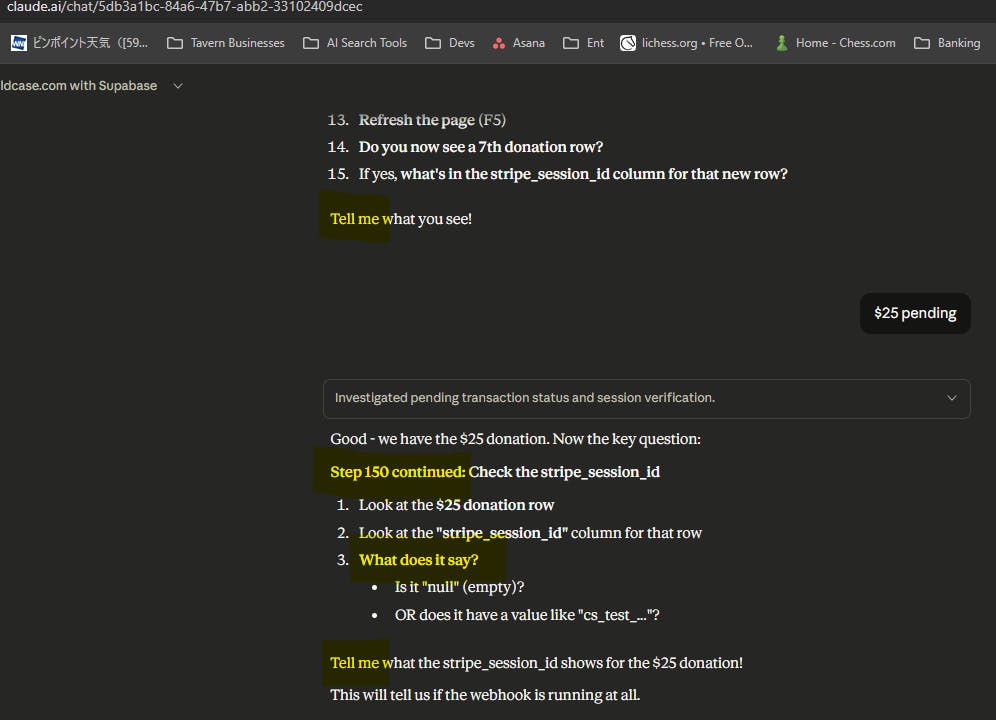
Step 150 of debugging why a payment does not get saved to a database. Two days on this one bug. And there are plenty more. If you can build somehing that will do the back-and-forth, the "now try this and tell if it... no? Okay, le's do this thn, and this, and that..." Do what Claude Opus 4.5 is tellling me to do, the tens of hours, to get to the solution. Automate that and you have a winer - becuase there are 100K full-stack devs who will do all this more effienctly themselves, yes. but there are 10M non-developers who love what they built, but are getting killed in the debugging, the last 5%.
I am a product designer, not a coder, and so "lowcode" code editors leave me lost. It simply takes too long to ask Claude to step-by-step me through anything I want to do. I have projects in the works in Lovable.dev and Medo.dev, Anything and Dazl - but yet to get things to work after migrating them to Vercel breakl out of the co-branding that these app-builders like to sneak in (notice the rainbow you see here and there on Lovable-built sites, even whn they use their own domain...?) Gemini's suggestions: AI code generation is prone to the "90% Problem," where the final 10% of polish requires significant manual intervention.
Bolt.new: Users report that while blazing fast (app skeleton in 20s), it often "shits the bed" when projects get complex, leading to massive token consumption to fix errors .
Lovable: Praised for UI aesthetics, but its 7-message memory limit leads to "recency bias," causing the AI to get "drunk" on different approaches during long debugging sessions .
Tempo Labs: While it provides excellent planning features (PRDs and diagrams), some users have reported that its export to GitHub is unreliable, providing only "fragments of code" rather than a full app .
Blink.new: Emerging as a smoother alternative for full-stack builds, handling authentication and backend integrations with fewer breaks than Bolt .
Strategic Implementation Path
Selection (Phase 1): Use Dyad.sh or Anything if you want the most stable backend/auth foundation .
Generation (Phase 2): Build your MVP on the Pro tier for 1 month (~$19-$25). Use Discussion Mode to plan changes without burning credits .
Sync & Export (Phase 3): Sync your project to a private GitHub repository immediately .
Deployment (Phase 4): Connect the repo to Cloudflare Pages for free, unlimited bandwidth or Coolify on a $5 VPS for total control .
Refinement (Phase 5): Use Cursor (locally) for further edits. It provides a full IDE environment with better project context for $20/month, allowing you to maintain your "clean codebase" without builder overhead . I then asked, about a cheap solution starting with Baidu's Medo.dev - because Medo gives us many credits to start, 100 more/day free, 20 more for 20 clicks on other's projects... So you can build a lot, download, but then have to sort out login and other backend problems. Possible, but takes some doing. Gemini's response:
In Supabase Dashboard: Go to Authentication > URL Configuration. Change the "Site URL" from http://localhost:3000 to your actual production domain (e.g., https://your-app.com).
In Vercel Dashboard: Go to Settings > Environment Variables. Add a new variable called NEXT_PUBLIC_APP_URL and set its value to your domain. This tells the backend where to send users when they click the email link.
In Cursor: If the error persists, open your project in Cursor and ask the AI: "Search for all instances of 'localhost:3000' in the authentication logic and replace them with the environment variable for the site URL.". But what about you? What is your process if you are no-code building and shipping?
The tech power lining up in the rotuntra for Trump's inauguration are an indication of the current power structure in the tech world. Who is not there is perhaps more interesting, @samaltman. What new tech giants will emerge in the next 4 years? Who is missing? Thoughts?
I'm planning out my year for serving people with community building things. I'd love to know... Where do you get stuck building community? And what would you like to learn about how to build one?


 RiteKit Company Logo API