At a time when everyone allows themselves to build any solution using AI, it is difficult to differentiate themselves, and makers are betting on more aggressive distribution.
Some differentiate themselves with good tech support, some build their personal brand as a founder, and some pay influencers.
Hello everyone, I m one of the founders of Deeptracker. Today, Deeptracker will officially launch! Before that, I d like to share some of the core features so you can get the best experience once we go live:
AI-Generated Strategies The system automatically creates personalized tracking strategies for you.
Entity & Event Deep Tracking Go beyond the surface to truly understand market structures and filter out unnecessary noise.
Real-Time Alerts Get notified instantly when major events happen, so you can make faster decisions.
A Stanford study recently found that 41% of YC startups focus on automating tasks that customers actually prefer to do manually a trend I personally won t endorse.
In my view, this percentage is likely even greater outside of YC and highlights a common blind spot fueled by Silicon Valley hype.
Quick but exciting update Lovable.dev, the platform we actually built Lovaround with, is now officially supporting us
It feels amazing to have the very tool that made this possible now helping us grow the community.
This also means we can keep all premium features free for everyone, making it easier than ever to pin yourself, find fellow builders, and start collaborating.
I ve seen founders spend weeks (sometimes months) polishing logos, color palettes, and taglines before they ve written a single line of code or spoken to a customer.
On the other hand, I ve also seen startups whose brand presence got them credibility, early press, and investor meetings even before launch.
On Twitter, I ve come across founders whose business was acquired at 18, which means they had to start even earlier. In some cases, it was at 16.
I ve also read about 14-year-olds building their first startup, and in some instances, even 10-year-olds. (At that point, I started to wonder whether it was truly the child s initiative or if the parent was creating the image of a successful founder at the child s expense.)
Everywhere I look, people say build in public to grow your product and audience. Sounds great except when you re starting from zero and literally nobody cares yet. From what I ve figured out, it s less about getting likes right now and more about leaving a trail, progress updates, decisions you ve made, even mistakes. Most of it will get ignored in the moment, but it builds a record that people can stumble on later. Also, public doesn t have to mean blasting it to Twitter. It could be small niche communities, Reddit threads like this, or a tiny newsletter. Basically, don t measure it by immediate engagement. Think of it as planting seeds for your future self. Anyone here actually started with no audience and made build in public work? What did you do?
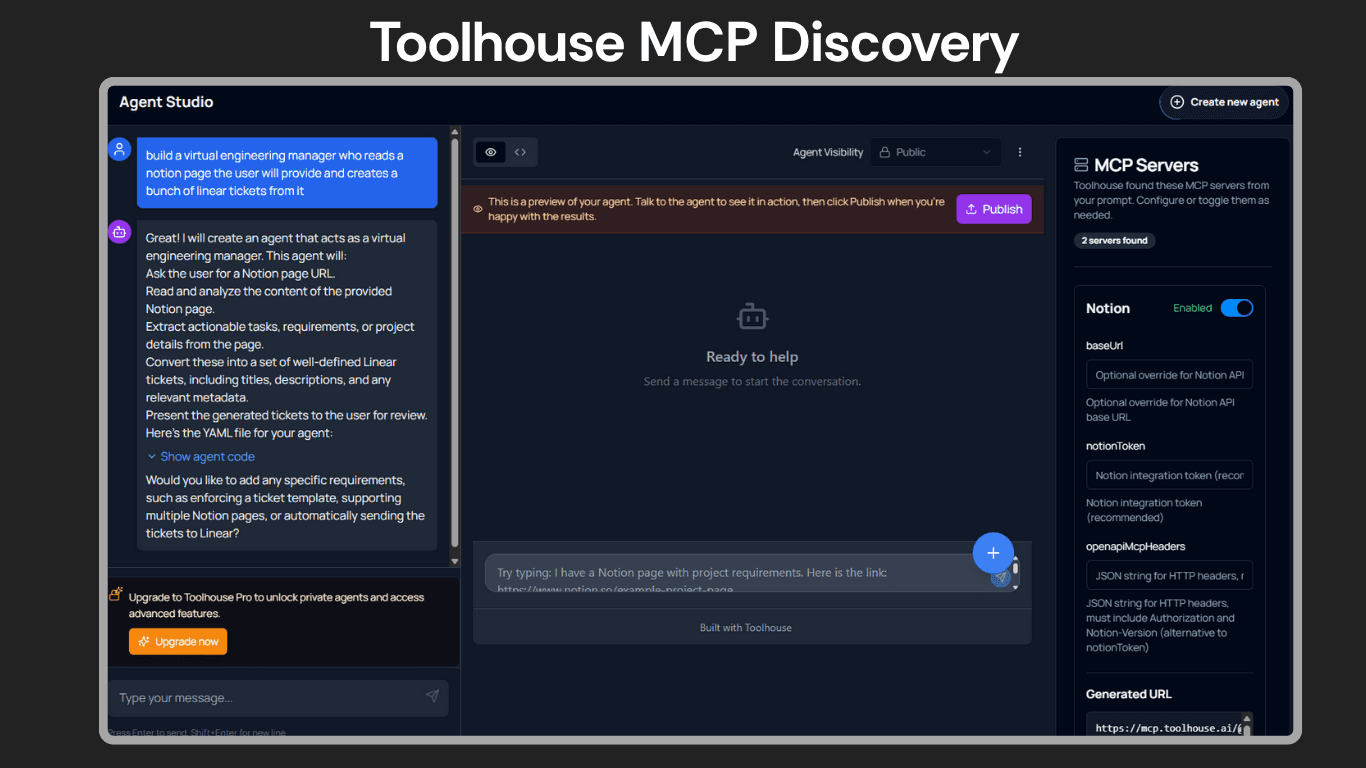
We re thrilled to announce MCP Discovery, the newest upgrade to Toolhouse that makes connecting your agents to any Model Context Protocol (MCP) server as easy as writing your idea.
Tired of wasting time and money on courses that don t deliver? CourseCorrect scans the web to match you with the perfect course, based on your skill level, experience, and career goals. Get insights on job demand, salary growth, and the skills that actually move the needle.
No pay-to-play - We don t take money to promote courses.
Outcomes > marketing - We prioritize real learner data (completion rates, reviews, career impact).
We re the team behind Deeptracker the world s first native AI investment research platform. We help you spot real market signals before the noise drowns them out.
ICYMI: OpenAI posted a cryptic tweet yesterday, announcing a livestream for today at 10am PT. The cryptic part? They swapped the S for a 5 , which, of course, set off a wave of GPT-5 speculation. But this is OpenAI, and at this point, GPT-5 rumors feel like a monthly tradition.
Lately there s been a growing wave of skepticism around VCs, Y Combinator, and accelerators in general. And to be fair: I get it.
We now live in an age where almost everything you need to learn can be found online. The gatekeepers are fewer, the knowledge is everywhere, and solo builders have never been more empowered.
In a time when big corporations are overpaying for their job offers just to steal the best talent from another big company, and in an era where everyone can build their own startup, there will always be room for people who prefer to join a team and work on something (in the future) big.
On Product Hunt, I can see many people launching their products using "vibe-coding tools" like @Lovable , @bolt.new , or@Replit
I reckon many people who created something with them are usually developers who didn't have enough time for building a side idea before, but with AI, they could make it happen.