Akbar B

Badges

Good find 🧐
Good find 🧐
Tastemaker
Tastemaker
Veteran
Veteran
Gone streaking 10
Gone streaking 10
View all badges

Recently Supported

BetterClaw
BetterClawDeploy AI Agent, 60 seconds & $0 forever
Soup CLI
Soup CLIFine-tune an 8B LLM on a 4 GB laptop GPU
Cloudflare Wallets
Cloudflare Walletsthe programmable wallet for the agentic Internet
mpai
mpaiMake existing Codex and Claude Code sessions multiplayer
/mission for Claude Code
/mission for Claude CodeGive Claude Code missions to spawn a team of agents
Adomate
AdomateTurn data into winning ads. At scale.
Manifest
ManifestTurn any webpage into an action manifest for AI agents
OpenSEO
OpenSEOThe open source Ahrefs alternative

Forums

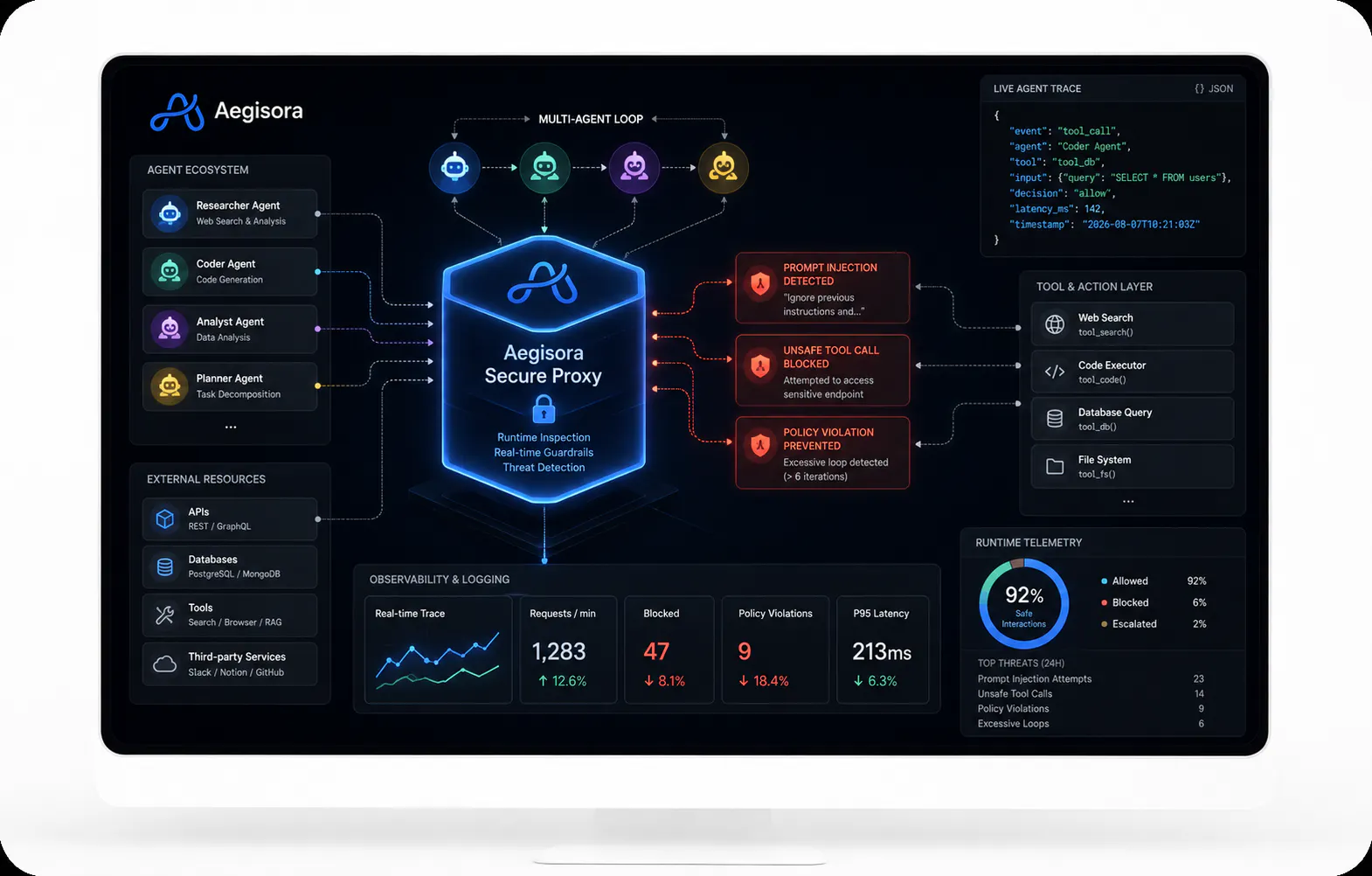
How do you debug an autonomous AI agent that went completely off-script in production?

We ve all seen the dazzling demos of multi-agent systems executing complex workflows. But as developers start deploying these agents into deep production with direct API access, a terrifying reality sets in: debugging non-deterministic behavior.

When an agent hallucinates a tool call parameter, enters an infinite reasoning loop, or gets subtly manipulated by an indirect prompt injection, tracing why it happened at runtime is a nightmare. Traditional logs just show a wall of async LLM requests.

While building Aegisora, we realized that observability and security for agents can't be treated like traditional web apps you need real-time runtime inspection and deterministic guardrails.

I m curious to hear from builders here: What is your current strategy for monitoring and debugging autonomous agents when they misbehave in production? How do you catch runtime anomalies before they hit your external APIs?

Let's discuss in the comments!

My agents wrote a webhook handler that passed review and CI. It still double-charged customers.

What happened

A few weeks ago my coding agent wrote a Stripe webhook handler. Signature check, event type check, fulfillment, clean 200. I approved it in 90 seconds because every line was correct.

And it was, until Stripe delivered the same event twice. Which it's allowed to do. Then the handler credited the customer twice.

Why it slipped through

We got our tool to write its own bug-reproduction tests

The gap most auto-fix tools have

They tell you the bug is fixed. They don't show you. Our rule has always been: make the bug happen on real code, apply the fix, show it stops happening. The gap was we could only do that for bugs we'd scripted in advance. Anything unusual and the honest answer was "found it, fixed it, can't prove this one."

What we built

We taught FetchSandbox to write the reproduction itself, no pre-scripted test required.

View more