Xnata is a supply-backed commerce platform that helps you launch and run a product business. It starts with vetted China-based categories, suppliers, and terms, then gives you prepared product data to assemble a catalog and publish a branded web storefront. You manage customers, orders, and integrations in a single workspace. The initial focus spans tea, tableware, and fabric, with expansion planned by vertical and country so operations grow alongside proven demand.
A founder who wants to import goods from China rarely starts with a storefront problem. The difficult work begins much earlier.
Before selling anything, the founder has to choose a product, find and check a supplier, agree on samples and quantities, control quality and production deadlines, and calculate shipping, customs, and landed cost.
Much of this work is still done manually through spreadsheets, chats, documents, and people who know whom to call. Only after enough of it has been resolved does the founder choose a sales model and channel: wholesale B2B, a local store, a Shopify site, Amazon, regional marketplaces, or an independent storefront.
This is the hypothesis behind Xnata. I'm developing it as a platform that connects sourcing and operational decisions with the sales layer, instead of treating the website as the beginning of the business.
I'm building Xnata alone. Its dozens of services and modules are at different stages: some already work, some are being expanded, and others are still being created. They cover catalogs, suppliers, procurement, inventory, orders, payments, logistics, customs, customer communication, messaging channels, and search.
AI is a future layer. I want it to analyze sales and operations, flag delays, unusual costs, or weak margins, and automate routine steps when the data is reliable. I don't want to add a chatbot just to call the platform AI-powered.
The longer-term idea is that someone can choose a product category, compare supplier data, source from China, buy locally, or combine both, and then select a B2B or B2C model. Before money moves, Xnata should show what was checked, which supplier terms were confirmed, how the final cost was calculated, and what risks remain. A "verified" badge alone says very little.
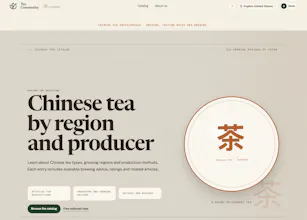
Chinese tea is the first case for testing this model, not the limit of Xnata. tea.community is a growing wiki storefront for exploring Chinese tea and sending business requests. I'm adding content and functions with input from the community. Vietnam, Japan, India, and other tea origins may follow later.
tea.express is the second storefront and is still in development. The plan is to make it the commercial layer with visible prices, group buying, and direct ordering. Both storefronts use the shared Xnata platform and continue to evolve.
The full sourcing-to-sales workflow isn't automated yet. Tea requests, price lists, quantities, and delivery options are still handled directly. Those manual cases show me which parts should become product modules and which decisions still require a person.
Because I'm building Xnata alone, real cases matter most. I'm open to tea orders, pilot cases for other goods, product contributors, and conversations with potential investors. If you work with China, I'd like to know where the process creates the most risk or wasted time.