Local-first translation engine in Rust for manga, manhwa, and manhua. It captures raw web chapters via browser extension, cleans bubbles using neural inpainting, and translates with local LLMs (Ollama, LM Studio) or cloud APIs with sliding context and theme glossaries. Streams finished chapters over local Wi-Fi to Mihon and Tachiyomi on Android. Runs from a single standalone binary.
Hey Product Hunt community!
I built XianScan because I was tired of the hassle of trying to read untranslated raw manga, manhwa, and manhua. Existing tools either plaster clunky text boxes over the artwork, require complicated Python environments, or charge expensive cloud subscription fees.
XianScan is a free and 100% open-source local server built in Rust that connects your browser directly to your mobile reader.
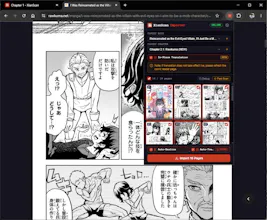
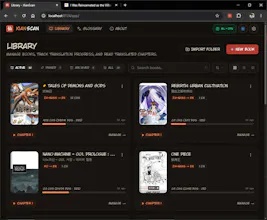
The end-to-end flow gives you three flexible ways to interact. First, using our browser extension, you can browse any raw chapter online, and the engine translates panels in the background to replace the raw comic panels directly on the live webpage. Second, you have a local Web UI Studio built with SvelteKit where you can manage your library, inspect pages, tweak translations, and read with a clean continuous strip viewer. Third, finished chapters stream directly over your home Wi-Fi into Mihon or any Tachiyomi fork on Android, so you can read comfortably on your phone or tablet.
Under the hood, everything compiles into a single standalone executable file with zero Python or Conda dependencies. It cleans dialogue bubbles using LaMa neural inpainting without harming background art, slices long vertical strips at natural panel gaps, and tracks sliding dialogue memory across panels so character names and pronouns never get scrambled. It also extracts and reuses unique lore terms as you read, with built-in theme glossaries for cultivation, murim, leveling systems, and fantasy.
It runs locally on normal laptop CPUs with optional GPU acceleration, and works offline with local LLMs (Ollama, LM Studio, Custom OpenAI endpoints) or cloud APIs.
Since this is our first public beta release, please expect a few rough edges! I would love to get your thoughts, hear your feedback on the UI and architecture, and answer any questions. Thank you for checking it out!