
x1
Lovable for iPhone apps go from idea to App Store
938 followers
Lovable for iPhone apps go from idea to App Store
938 followers
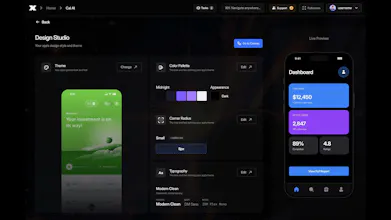
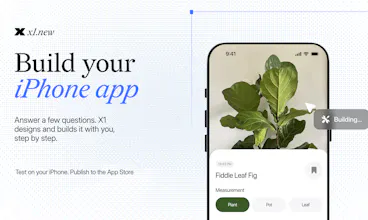
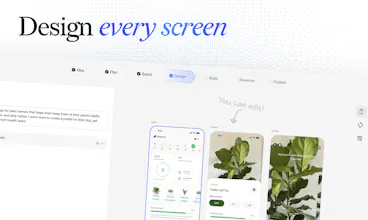
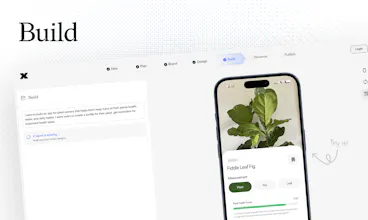
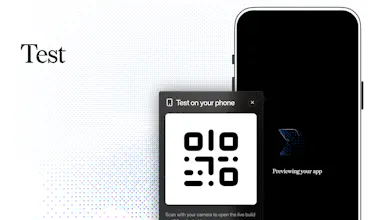
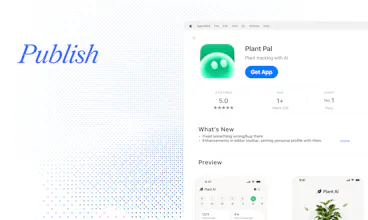
X1 is an AI app builder that takes you from an idea to an iPhone app you can publish on the App Store. Instead of trying to generate the entire app from one prompt, X1 guides you step by step. It asks focused questions, designs each screen for you to review and edit, then builds the app in stages. Preview and test it on your iPhone as you go. When it’s ready, X1 prepares your App Store listing, screenshots, and submission. No coding required.
Free Options
Launch Team

Customer.ioAutomate Messaging Everywhere — Startups Get 12 Months Free
Promoted
Hey Product Hunt 👋
X1 is an AI app builder that takes you from an idea to an iPhone app ready for the App Store.
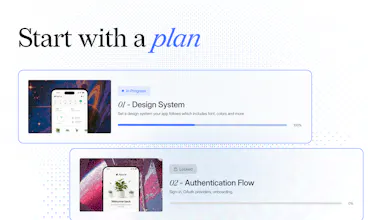
Most AI app builders try to generate the entire app from one prompt. X1 guides you through it step by step. It asks focused questions, creates a plan for the whole app, designs each screen for you to review and edit, then builds the app in stages so you can test it on your iPhone as you go.
X1 also remembers the decisions behind your app. If you change something later, it updates the screens, flows, and features that depend on it instead of treating every request like a brand-new prompt.
When you’re ready to ship, X1 prepares your App Store listing, screenshots, and submission through your Apple Developer account.
I built X1 because AI could generate an impressive first demo, but I still had no clear path to something I trusted enough to ship. The first version was easy. Keeping the whole app coherent as it evolved was the hard part.
You can build a working prototype free at x1.new. No coding or credit card required.
If you try it, tell me what you’re building and where X1 gets confused, makes a bad assumption, or slows you down. Brutal feedback is more useful than polite feedback. I’ll be here all day.
@manil_lakabi1 Congrats on the launch, Manil. Question: Why only iPhone apps, not Android? :)
@rohanrecommends Honestly, because we care a lot more about whether someone can build a successful app than whether X1 can technically support every platform.
iPhone is just a much better place to start if the goal is helping people actually make money. App Store users spend dramatically more than Android users, despite Android having way more downloads.
We also wanted to do one thing and do it really well.
Building for iOS lets us obsess over the design quality, subscriptions, testing, App Store submission, etc. instead of being mediocre across 5 different platforms.
Android will come, but iPhone first is very intentional :)
@manil_lakabi1 The part about remembering decisions and updating dependent screens is the one that stands out. Congrats on the launch! 💪
@jurgen_pergega Appreciate it 🙏 that was honestly the biggest pain for me too.
You’d get the app 80% there, make one “small” change, and suddenly 3 other parts would stop making sense because the model forgot why they were built that way in the first place.
We’re definitely not perfect yet, but getting that right is a huge part of what we’re trying to solve.
@manil_lakabi1 🚀
@khalid_zitouni Thanks for your support!!
@manil_lakabi1 Congrats on the launch, wish you all the best and much success. I am curious, though, what do you see as your advantage over using something like Lovable’s iPhone app, Replit, or Claude/Codex remotely? Genuinely curious, really trying to understand.
@mogabr Yeah totally fair question. I think the easiest way to explain it is with the house analogy.
Lovable/Replit/Claude/Codex are all getting insanely good at being the construction crew. You tell them what to build and they can execute extremely fast.
X1 is more opinionated about what happens before and around that execution. We ask the questions, create the blueprint, break the app into smaller scoped pieces, design each part, then build + test against the same plan.
That mattered a lot to me personally because I got pretty far with Cursor/Claude and eventually had hundreds of files, conflicting plans, and no idea what was actually finished or what would break if I changed something.
So the bet with X1 isn’t “our model writes better code.” It’s that AI works best when you give it a well-defined problem, the right context, and a way to verify the result. We’re trying to productize that whole process for people who don’t already know how to do it themselves.
@manil_lakabi1 Very nice, and I appreciate the detailed, thoughtful answer! Like I said, I wish you all the best and much success, will definitely try it out.
Congrats on the launch! 🚀
Could X1 handle a complete MVP from idea to App Store without any coding?
@angelo_bram That's exactly what x1 is built for!
You bring the idea, X1 plans it out, designs the screens, builds each part and lets you test it on your iPhone as you go. Once your happy with your MVP, it preps the App Store listing, creates glamorous screenshots and submits the app to the app store through your Apple Developer account. No code needed on your end.
The more thoughtful you are answering its questions along the way, the better the MVP comes out. It's less "type one prompt and walk away" and more you steering while it does the heavy lifting.
@angelo_bram Ive wondering the same, What difference between Codex or claude code then?
So Nice congrats on the launch Guys!
@angelo_bram @maksym_shcherbakov1 Codex and Claude Code are insanely good. The problem I ran into wasn’t code generation.
I used Cursor + coding agents for months and eventually had hundreds of files, half-built features, conflicting Markdown docs, and genuinely no idea what was finished or what I should build next lol.
I was generating software faster than I could keep track of it.
That’s the gap X1 is trying to solve. We give the models smaller, well-defined jobs, but also keep the product decisions, designs, milestones, and what’s already been built in one living plan.
So Codex / Claude Code are incredible tools for writing code. X1 is trying to give you the path from “I have an idea” to “this is actually in the App Store.”
Love how simple the onboarding is. May attempt to build my next app on here. Is there a Figma MCP?
@techterra Appreciate it 🙏 would love to see what you build.
We’re actually beta testing Figma MCP right now. The idea is to let people bring Figma into the workflow without losing the product context / plan X1 is already building around.
Not fully rolled out yet, but definitely coming.
Looks cool! I like the approach of not doing a one-shot prompt and instead going step-by-step. Do you guys also handle payments?
@salte37 Yep, payments are part of the build.
The important part for us is not just slapping a paywall on at the end. X1 treats payments/subscriptions like any other product decision, so it thinks through who pays, when they pay, what gets unlocked, what happens on cancel/downgrade, and how the rest of the app should react.
Basically: monetization is part of the blueprint, not a bolt-on.
Nice congrats on launch. Curious how you guys are better than other app builders like replit?
@essam_sleiman Yeah, Replit is probably the closest comparison.
The main difference is that X1 is built around how a strong engineer would actually use AI: on well-defined, scoped problems with the right context.
So instead of asking the model to build your whole app and then iterating through chat, X1 breaks the app down, works through the important decisions for each part, designs it, then builds and tests that piece before moving on.
Replit gives you a very capable AI builder. X1 is more opinionated about the process around that builder.
Congrats guys! What would you estimate the median time to be to go from first prompt to a playable game? I've always wanted to re-create Restaurant City (from the 2010 facebook era) and play it on my phone when I'm on the bus or something.
@boris_skurikhin This would actually be a sick test case lol.
For something like Restaurant City, I’d estimate around a week to go from the first prompt to a genuinely playable version on your phone. You’d probably have something basic much sooner, but a week feels realistic once you include the actual game logic + iteration.
If you build it, please send it to me lol. I want to see this.
Congrats! 👏 quick question : What was the hardest type of app you’ve built with X1 so far?
@rivendell_chorro Thanks! 🙏 The ones that really push it are the apps doing heavy lifting on the device itself, like a sports app that takes an uploaded video and runs detection on it, tracking every joint frame by frame to break down someone's mechanics.
Or the live ones, think a fleet platform pulling real time GPS off a bunch of drivers, optimizing routes across dozens of stops and firing geofence alerts as vehicles move. That stuff stacks a lot of hard problems into one app, on device vision or live data, a real processing pipeline, and a web of integrations behind it that all has to stay in sync and still feel seamless to the user.
Getting those to come together through the step by step build instead of one giant prompt has been easily the most satisfying part so far 💪