
Tencent WorkBuddy is an AI agent built for everyday office work. Make a request. Guide your AI expert team. Bring in a second opinion. Get sharpened, ready-to-use results.





Free Options
Launch Team

Framer AI AgentsDesign and publish professional sites with AI
Promoted
Interesting idea! I'm pretty set with using Claude Code for everything, and I think most people by now use what they are used to. How will you convince users to switch and try WorkBuddy instead of what they are used to?
Also cool logo, here's a free static QR code that goes to your website that I made for you to use if you want:
@mjohnson42 Ha, thanks for the QR code, that's a genuinely kind thing to do. And I'm not going to try to pull you off something that already works for you, that's usually a losing pitch anyway. The people we're really built for aren't devs living in the terminal, it's the folks next to them doing business work: reports, decks, research, analysis. Different job than writing code. So it's less "switch your daily driver" and more "when you've got a work deliverable to produce and don't want to babysit it step by step, this is worth a look." If that day comes, I'd love to hear what you think.
The "finished files in your folders, not trapped in chat" line is the strongest part for me. That last mile is where a lot of AI tools still feel unfinished.
Curious how much control users have over the final deliverable format. Can someone define a preferred structure or template once and have future expert teams follow it?
@sergbmw Thanks, that line is basically the whole reason we built this, so glad it landed. On control: you steer the format in your brief, so you can ask for a PDF, a 9-slide deck, a specific section structure, whatever you need, and the experts build to that.
And for the "define it once and reuse it" part, that's exactly what our Skill system is for. You can save a preferred structure or template as a Skill, describe it once in plain language (literally something like "I want the report in this format, save it as a Skill"), and future runs just follow it. So you're not re-specifying the format every time. You can still tweak it on the fly for a one-off, or let the saved template drive it by default. The goal is that the last mile lands in your format, not a generic one.
@sherina_chen That control model is much clearer now. Having the structure live in the brief feels like the right place for it, because it keeps the output tied to intent rather than adding another settings layer. Curious whether teams can save reusable briefs/templates for recurring deliverables.
Tencent's name on this raises an immediate data question for anyone considering it for actual office work. Where is the processing happening, what data residency options exist, and is there an enterprise tier with clear answers to those questions before someone puts sensitive work documents through it?
@ansari_adin Fair question. Tasks run in an isolated sandbox and you control what it can touch, so you keep full ownership of your data. On the enterprise side it runs on Tencent Cloud's infrastructure, which covers permission management, runtime auditing, and compliance support. For data residency specifics, happy to connect you with the team directly since it does vary by region and use case.
@sherina_chen "Tencent Cloud's infrastructure with compliance support" covers a wide range depending on which certifications are actually in scope. SOC 2, ISO 27001, and GDPR are very different compliance postures and not all of them are covered by Tencent Cloud's existing certs depending on the region. Is there a trust page or compliance overview that lists which certifications WorkBuddy itself holds, separate from what Tencent Cloud offers underneath?
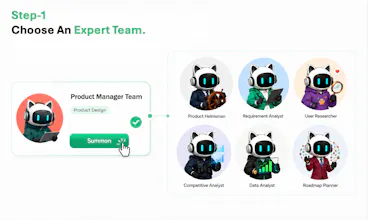
@luki_notlowkey Right now it's user-driven. In the same chat you switch between experts on the fly, and if you summon an Expert Team the specialists collaborate directly so you don't hand-assign each piece. You can also build your own if none fit. Smart recommendations are on the roadmap, but for now you're the one calling the shots.
Congrats on the launch. The part I'm most curious about is data boundaries rather than the synthesis logic - if I spin up a team with a research expert and a legal expert on the same brief, do they see each other's full working context and any files I uploaded, or is each expert scoped to only what it needs for its part? Multi-agent setups are great until one expert quietly has more access than the task calling it actually required.
@galdayan Access is something you grant, not something that's open by default. Tasks run sandboxed, and reaching your files needs your explicit permission, so nothing gets touched unless you've said so.
Have been kicking the tires on this one today and the multi-agent setup is honestly pretty clever. Got a messy brief turned into a clean summary and follow-up email in one go. Curious how it handles more technical docs.
@yiitwcuf That summary-plus-email-in-one-go flow is the sweet spot. Technical docs hold up better than you'd think since you can pull in an expert tuned for it, though I'd still skim the output on really dense specs. Let me know what you throw at it.
@sherina_chen Congrats to the entire team on this success. Looking forward to see how impactful the product will be as time goes on. how does your product deal with agents working cross function? in a situation where 2 different agents could possibly do different task but have 2 identical task they can both do, which of the agents will take up the task?
I hope you do understand my question?
@adebowale_adeseye Thanks! Good question, I get what you mean. It doesn't work like a dispatcher auto assigning the task to one agent behind your back. You're the one who picks which expert to bring in, and when you summon the expert team for something, they actually work together rather than compete for it, each one contributing where it's strongest and handing off to the next. So it's less "which agent grabs the task" and more "the right ones collaborate on it." You stay in the driver's seat the whole way.
@sherina_chen cool!