
Vouqis
Know if your MCP server actually works
9 followers
Know if your MCP server actually works
9 followers
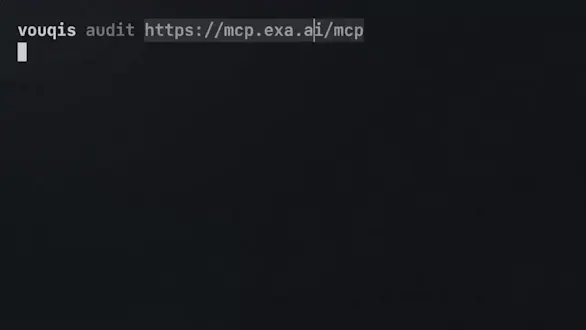
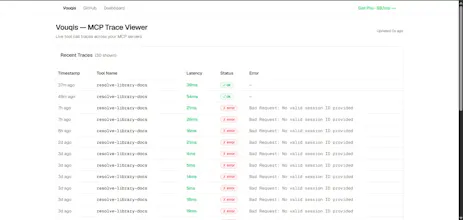
Vouqis audits MCP servers before they reach production. One CLI command tests every tool call, measures latency, surfaces errors, and logs 90 days of trace history — with replay built in. Ship AI agents knowing your MCP layer is actually safe.


@sairam_suraj_pattisapu This is the real bottleneck. But how do we handle auth-heavy servers without storing customer credentials on the runner? If the probe itself fails due to token expiration, is that a server failure or an environment configuration issue? We need to draw a hard line on what constitutes a protocol error vs an environment error.
@eliya_taylor The five-probe approach makes a lot of sense. I'm curious how the CI gate handles custom weights. Some production environments care more about latency thresholds than error diversity. Can teams adjust these scoring weights inside their workflow files today?
As Taylor mentioned, the real insight is that “HTTP 200” does not mean MCP success. The product addresses a painful and increasingly common issue: AI agents fail silently while infrastructure dashboards still look healthy. Its strongest positioning advantage is protocol-level trust scoring powered by deterministic probes, giving teams visibility into failures traditional observability tools completely miss.
@reddi_bhuvanesh The silent empty array failure is the trickiest one to catch. If a server returns an empty list because a database query genuinely found nothing, that is structurally valid. How does a deterministic probe tell the difference between a true empty state and a silent error without knowing the database state? False positives will break builds in CI for the wrong reasons.
Most agents fail silently at the protocol layer. Standard infrastructure monitoring tracks transport-layer availability, but it fails to catch malformed schema definitions or corrupted payloads. When an LLM receives a valid HTTP transport envelope containing polluted data, it processes the error as a successful tool execution and behaves unpredictably.
@reddi_bhuvanesh Yes thats what most Engineers miss and regret it later after it reaches to the user