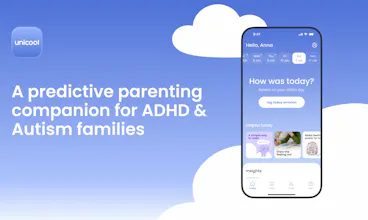
Unicool helps families with ADHD and autism spot patterns before a meltdown hits. It learns each child’s signals like sleep or sensory load and suggests expert-backed next steps and practical support. Developed with a child clinical psychologist.
No reviews yetBe the first to leave a review for Unicool
Maker
📌
Hello hunters and makers!
Quick origin story: we started out building a product for families with neurodivergent kids, backed by a co-founder with a PhD in child clinical psychology and two others who'd launched products before (and had their own ADHD along for the ride). Then we did the boldest and most logical thing a startup led by people with ADHD could do: we pivoted.
If you're raising a kid with autism or ADHD (or honestly, just raising a very emotional kid) you know the meltdown feeling. You'd do anything to make it happen less.
But Unicool isn't a meltdown "off switch." Think of it more like borrowed time (24 hours of it) so you walk into the hard moments a little steadier, instead of piecing together what happened after the fact.
It works by catching the stuff that usually slides by unnoticed: sleep, little disruptions, the quiet lead-up to a rough day. Under 30 seconds a day, and patterns start showing up where you used to just see chaos.
We built this because we lived it. Now we're going to help you live it a little easier too.
Please share with families who would appreciate the app like that.
Report
Maker
Designing the UI for this mobile app has been a uniquely meaningful challenge. We're building for parents who are often already stretched thin by the demands of raising a neurodivergent child, and that reality shaped nearly every decision we made.
Take the visual style, for instance: we wanted to blend the clean, trustworthy feel of a typical Health Tech app with warmer, more childlike touches but without letting them dominate. After all, this is an app made for parents. We also kept in mind that people often open the app in the middle of rising stress, so we designed every part of the experience, from onboarding to tracking and other features, to feel calm, spacious, and easy to navigate even when someone's hands are full and their mind is racing.
Above all, we wanted the app to feel like a source of encouragement: a quiet reminder that the user is doing better than they think, and that they're learning to understand their child more deeply every day.
I would really appreciate your feedback.
Report
Sending this to my sister who’s a special ed teacher — she’s going to want to recommend this to half her class’s parents.
Report
Maker
@aslan_karsanov Thank you very much! yes, it is an excellent tool for connecting the parent, teacher, and child.
Report
Finally something that doesn’t make me feel like I’m failing as a parent. The tone of the app is so much kinder than most of what’s out there.
Report
Maker
@tamara_kudzieva2 We strive to support the parent throughout their journey and help them find the right path for themselves and their child.
Report
Team, thank you!! Thank you for thinking about the parents and children that have a lot on their shoulders! This is something that I waited to appear on the market. It is great that you in some way gamify the tracking process ( as I am ADHD myself, and it is difficult to be organised ) and have a support under your hand all the time.
Brilliant idea and execution!! You are doing a great job!
Report
Maker
@nastia_smoroda Thank you, Nastia! A lot of our team members are neurodivergent people, we understand you!
Report
Looks like one of the better applications of technology lately. I happen to have a couple of acquaintances going through the neurodivergence journey with their kids. Will pass this along.
Report
Maker
@spectrum8k Thank you, Herman, we will be happy to help
Report
Maker
As a product builder, you learn to ask one question: what's the one thing that would actually solve users' real problem?
Before releasing our app, we talked to as many parents as we could and spent hours in forums, just listening. Three needs kept coming up for parents raising children with autism and ADHD:
Caring for a child with special needs, it's hard to see the full picture on your own.
Meltdowns are hard on the whole family, but catching early signs helps everyone cope better than just reacting.
And in this world, you need evidence for everything: to be taken seriously by schools and doctors, to get a diagnosis, to secure support.
Those needs shaped Unicool's core features:
The most user-friendly diary that catches what usually gets lost: sleep, small upsets, the quiet build-up before a hard day. Drawing on our own experience as both individuals, parents and professionals in neurodiversity, we broke common patterns down into triggers, situations, and strategies you simply assemble like building blocks, logging your day in 2-3 minutes. Missing something? Add it, and we'll take it from there.
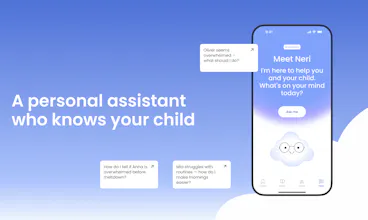
Practical advice exactly when you need it, including Neri, our AI assistant, there to talk through the hard days with you.
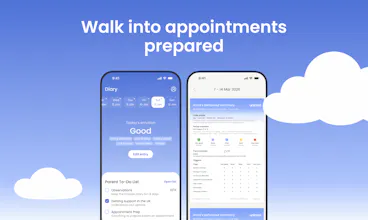
And everything you've logged becomes something real to bring to a doctor, a school, or an EHCP application: not "it's been a hard week," but an actual picture built over time.
This isn't abstract for me. I grew up neurodivergent, and there were days it felt like the world simply wasn't built for how my mind worked; and I watched my family struggle right alongside me, trying to help without a map. We didn't build this team by accident.




Hello hunters and makers!
Quick origin story: we started out building a product for families with neurodivergent kids, backed by a co-founder with a PhD in child clinical psychology and two others who'd launched products before (and had their own ADHD along for the ride). Then we did the boldest and most logical thing a startup led by people with ADHD could do: we pivoted.
If you're raising a kid with autism or ADHD (or honestly, just raising a very emotional kid) you know the meltdown feeling. You'd do anything to make it happen less.
But Unicool isn't a meltdown "off switch." Think of it more like borrowed time (24 hours of it) so you walk into the hard moments a little steadier, instead of piecing together what happened after the fact.
It works by catching the stuff that usually slides by unnoticed: sleep, little disruptions, the quiet lead-up to a rough day. Under 30 seconds a day, and patterns start showing up where you used to just see chaos.
We built this because we lived it. Now we're going to help you live it a little easier too.
Please share with families who would appreciate the app like that.
Designing the UI for this mobile app has been a uniquely meaningful challenge. We're building for parents who are often already stretched thin by the demands of raising a neurodivergent child, and that reality shaped nearly every decision we made.
Take the visual style, for instance: we wanted to blend the clean, trustworthy feel of a typical Health Tech app with warmer, more childlike touches but without letting them dominate. After all, this is an app made for parents. We also kept in mind that people often open the app in the middle of rising stress, so we designed every part of the experience, from onboarding to tracking and other features, to feel calm, spacious, and easy to navigate even when someone's hands are full and their mind is racing.
Above all, we wanted the app to feel like a source of encouragement: a quiet reminder that the user is doing better than they think, and that they're learning to understand their child more deeply every day.
I would really appreciate your feedback.
Sending this to my sister who’s a special ed teacher — she’s going to want to recommend this to half her class’s parents.
@aslan_karsanov Thank you very much! yes, it is an excellent tool for connecting the parent, teacher, and child.
Finally something that doesn’t make me feel like I’m failing as a parent. The tone of the app is so much kinder than most of what’s out there.
@tamara_kudzieva2 We strive to support the parent throughout their journey and help them find the right path for themselves and their child.
Team, thank you!! Thank you for thinking about the parents and children that have a lot on their shoulders! This is something that I waited to appear on the market. It is great that you in some way gamify the tracking process ( as I am ADHD myself, and it is difficult to be organised ) and have a support under your hand all the time.
Brilliant idea and execution!! You are doing a great job!
@nastia_smoroda Thank you, Nastia! A lot of our team members are neurodivergent people, we understand you!
Looks like one of the better applications of technology lately. I happen to have a couple of acquaintances going through the neurodivergence journey with their kids. Will pass this along.
@spectrum8k Thank you, Herman, we will be happy to help
As a product builder, you learn to ask one question: what's the one thing that would actually solve users' real problem?
Before releasing our app, we talked to as many parents as we could and spent hours in forums, just listening. Three needs kept coming up for parents raising children with autism and ADHD:
Caring for a child with special needs, it's hard to see the full picture on your own.
Meltdowns are hard on the whole family, but catching early signs helps everyone cope better than just reacting.
And in this world, you need evidence for everything: to be taken seriously by schools and doctors, to get a diagnosis, to secure support.
Those needs shaped Unicool's core features:
The most user-friendly diary that catches what usually gets lost: sleep, small upsets, the quiet build-up before a hard day. Drawing on our own experience as both individuals, parents and professionals in neurodiversity, we broke common patterns down into triggers, situations, and strategies you simply assemble like building blocks, logging your day in 2-3 minutes. Missing something? Add it, and we'll take it from there.
Practical advice exactly when you need it, including Neri, our AI assistant, there to talk through the hard days with you.
And everything you've logged becomes something real to bring to a doctor, a school, or an EHCP application: not "it's been a hard week," but an actual picture built over time.
This isn't abstract for me. I grew up neurodivergent, and there were days it felt like the world simply wasn't built for how my mind worked; and I watched my family struggle right alongside me, trying to help without a map. We didn't build this team by accident.
I'd love to hear what you think.