
Trusta
The shared receipt for every deal you make
8 followers
The shared receipt for every deal you make
8 followers
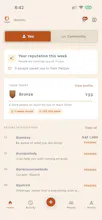
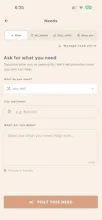
Trusta is reputation infrastructure for global informal economy in the age or AI — the shared receipt for every deal you make. Two people seal an agreement, both confirm, and it becomes a permanent, verifiable record anchored on a public blockchain. Over time these sealed deals build a portable trust score you own and can share anywhere — a QR profile, a PDF receipt, a public handle. Proof of who keeps their word, for the millions who trade on nothing but it.






How does this actually hold up if one party disputes what was agreed to after sealing the deal — is there any dispute process or does the record stay locked no matter what?
@nazlcan1396490 Great question. The sealed deal record stays locked because its purpose is to preserve exactly what both parties agreed to at the time. If one party later disputes the agreement, Trusta does not rewrite or delete the original record. Instead, the deal can be marked as disputed, and a dispute record is opened on top of the original sealed agreement. Both parties can then add supporting notes, proof of work, delivery evidence, payment evidence, messages, or any other relevant context. If the matter is resolved, the resolution is added as a new linked record, such as “resolved,” “cancelled,” “amended,” or “completed.” So the original agreement remains tamper-evident, while the dispute and outcome are also recorded transparently. The blockchain layer is used to prove the integrity of the record, not to prevent real-world disputes from being documented and resolved.
How does the trust score stay portable and private at the same time, especially if I want to show it to a landlord but not to a random lender checking my wallet history?
@sedefreyha51464 The trust score is portable because you control how and where you share it, but it stays private because the underlying activity is not exposed publicly. Trusta does not require a landlord, lender, or anyone else to browse your wallet history to understand your reputation. Instead, your verified Trusta record is built from sealed deals, completed work, reviews, and dispute outcomes stored privately in the app, with only cryptographic proofs anchored on Bantu.
When you want to show it to a landlord, you can generate a secure share link or QR code that reveals only the information you choose — for example your trust score, completed deals, reviews, and verification status. That link can be time-limited, revocable, and scoped for that landlord. A random lender or third party cannot simply inspect your wallet and see your full history, because private deal details, names, amounts, messages, documents, and counterparties are not stored publicly on-chain.
So the principle is selective disclosure: your reputation travels with you, but access to the details depends on your consent. The blockchain proves the integrity of the record; it does not turn your private life into a public ledger.
Finally tried sealing a deal with a friend and the QR profile idea actually feels useful, not gimmicky. Blockchain stuff usually goes over my head but the receipt flow was dead simple to follow.
Sealed a test deal with a friend and the blockchain confirmation popped up fast, which was reassuring. The trust score idea is genuinely useful for freelancers like me who deal with new clients often.
Sealed a quick deal with a friend and seeing the trust score build up felt surprisingly real, not gimmicky. The QR profile export is a nice touch for sharing.