
TronTrace
AML screening for USDT-TRC20 · $0.10 · No KYC
6 followers
AML screening for USDT-TRC20 · $0.10 · No KYC
6 followers
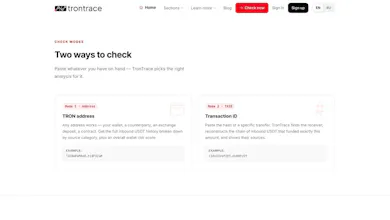
Exchanges freeze USDT based on transaction history — not just your wallet. One contaminated address 3 hops back = frozen funds. No warning. TronTrace checks any USDT-TRC20 address or TXID against AML databases, Tether blacklist, OFAC/SDN list and 12+ exchange risk profiles. Risk score (0-100) + PDF report in 60 seconds. $0.10 per check · No KYC · 3 free checks to start




How are you keeping your AML and blacklist data fresh, since Tether updates the official blacklist in chunks and there is often a lag before it shows up in third party tools?
@serdarkara21102 Great question — this is exactly the kind of detail
that matters in production.
We pull the Tether blacklist directly from the
on-chain contract (TRC-20), not from third-party
aggregators. This means we see updates as soon as
they're confirmed on-chain — typically within one
block (~1 seconds after Tether broadcasts the freeze).
For sanctions lists (OFAC, EU, UN and others) we
update on a daily basis, cross-referencing multiple
sources to catch discrepancies.
The lag issue you're describing is real for tools
that rely on indexed APIs or weekly data dumps.
We intentionally built around on-chain reads for
exactly this reason.
Happy to go deeper on the architecture if you're
curious 👇
Ran my main wallet through TronTrace and was relieved to see a clean score, but I also checked an old address I used years ago and it flagged something at hop 2 that I never would have caught on my own. Super useful for anyone moving serious USDT.
@yaar58863951762 Yaşar, this is exactly the scenario we built
TronTrace for — thank you for sharing it.
The hop 2 flag is the tricky one. Most people
assume AML risk only comes from who sent you
USDT directly. But exchanges look back through
the chain, and a contaminated address 2-3 hops
back can still trigger a freeze on your deposit.
The fact that you caught it on an old address
before moving funds is the whole point.
Glad it was useful 🙏
ran a check on a wallet i had doubts about and the 3-hop trace caught a flagged address i never would have spotted manually. the pdf report was clear enough to actually share with a client.
@asl5756949768 Aslı, thank you — this is exactly the workflow
we had in mind.
The 3-hop trace catching what manual review
misses is the core value. And the PDF being
share-ready with a client is the whole point
of that feature — compliance teams and
counterparties need something they can
actually open and read, not a raw JSON export.
Glad it held up in a real situation 🙏