
swain.
your open source local AI security lead. one command.
12 followers
your open source local AI security lead. one command.
12 followers
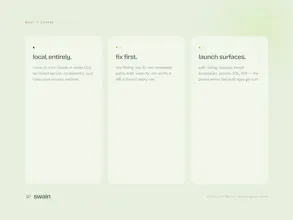
the machines write the code now. swain watches what they write. one command before you ship, local AI security review using the claude and codex CLIs you already have. no new accounts. no SaaS. no dashboard. catches auth bugs, billing bypasses, hardcoded secrets, SQL injection, XSS. ends with one thing: the exact issue blocking your launch and the exact command to fix it. nothing the machine writes passes unseen.



swain uses a fixed severity ladder: launch-risk → high → medium → ok. anything that could get you breached on day one (billing bypasses, auth holes, hardcoded secrets) sits at the top.
if two findings share the same severity, it goes by category, billing and auth before XSS before tenant isolation, because that's roughly the order a motivated attacker works in.
How does swain decide what to prioritize when it finds multiple potential problems?