
Superagent by i10X
AI Chief of Staff: Runs your work, 100+ tools built-in
103 followers
AI Chief of Staff: Runs your work, 100+ tools built-in
103 followers
What's different about Superagent: Most AI agents launching today either hijack your browser to act autonomously, or are single-purpose tools that need you to bring your own API keys. Superagent is built differently - it's your AI Chief of Staff, 100+ tools already connected. It runs real work end-to-end (prospecting incl. built-in enrichment, decks, SEO, workflows) and checks in with you before anything irreversible. Around 75% cheaper than the frontier-model route. 150,000+ existing users.

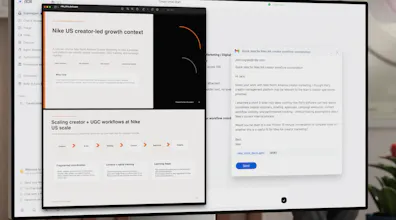


Hey Product Hunt 👋 Patrick here, co-founder of i10X.
In the last 5 months we've seen Claude, Openclaw, Perplexity, and others all ship autonomous agents that take over your browser, click for you, and tell you what they did after. We watched that wave land and made a different call.
Superagent is your AI Chief of Staff. It runs real work end-to-end across 100+ built-in APIs and tools (prospecting with real enrichment data, deck generation, SEO, workflows). No keys to bring for the most common tasks. No 5 subscriptions to stack. No "go set up an Apollo account first." You just press go.
Three design calls we made:
1. The tools have to already be on. A Chief of Staff doesn't ask you to provision software before starting work.
2. Simple requests shouldn't cost tens of dollars. The industry is quietly moving heavy workloads onto metered token billing, and people are getting wrecked. We went the opposite way - smart routing, cached context, flat predictable pricing. Result: ~50-75% cheaper on core jobs like prospecting or deck generation.
3. It checks in before anything irreversible. Autonomy is easy to demo and hard to trust. Superagent asks before it sends, deletes, or spends.
150,000+ people already use i10X - Superagent is our next chapter.
🎁 For the PH community: use code producthunt for 50% off your 1st month.
We'll be here all day answering everything. Let us know: what's the one task you'd delegate off to a Chief of Staff right now if you had one? We'll run the best suggestions live in the comments today. 👇
@patrick_linden1 I love the super agent!
the dry-run and audit-log requests above are the right questions for individual actions, but the thing I'd want answered first is at the platform level, not the per-action level. "100+ tools already connected, no keys to bring" means i10X itself is holding standing, pre-authorized access into a huge slice of 150,000+ users' accounts (email, CRM, calendar) at once. the irreversible-action check-in protects against the agent doing something dumb, but it doesn't protect against i10X's own infrastructure getting breached and someone else driving all those connections. what does the security posture look like on that side, not the agent-behavior side
@galdayan this is exactly the right question - and I agree with the distinction. Confirmation before irreversible actions protects against agent behavior risk, but platform-level security is a separate and even more important layer.
At i10X, we think about this as two trust models:
What the agent is allowed to do
How the underlying connected accounts, tokens, permissions, and infrastructure are secured
The confirmation step is only one part of the story. On the platform side, the key principles are scoped access, secure token handling, isolation between users/workspaces, auditability, permission revocation, monitoring, and minimizing what any agent can access by default. We’re not asking users to blindly trust “autonomy.” We’re building this with the assumption that trust has to be earned at the infrastructure layer.
@patrick_linden1 That's the framing I was hoping to hear - trust earned at the infrastructure layer, not assumed. One follow-up on the isolation piece specifically: is that enforced by workspace-scoped credentials per connection, or is there any shared service in the middle (a queue, a logging pipeline, an orchestration layer) that touches multiple workspaces' tokens at once? That's usually where this kind of thing breaks down in practice - not the isolation model on paper, but one shared component that ends up with plaintext access to more than one workspace's data at a time.
@galdayan Thanks for the question! The infrastructure is shared, so this isn’t full workspace-level isolation. Each superagent is tied to one user and can only see that user’s data. Credentials sit behind a separate security proxy, which checks access, keeps its own audit trail, and never passes raw tokens to the core system. So the isolation is logical, not physical, with an extra security layer around credentials and permissions.
Huge congrats👏 on hitting the launch @patrick_linden1 using the code producthunt is a total steal to stress-test this engine. if the tool compiles an executive brief, does it use semantic RAG parsing or pass the raw string logs to the models?
all the best for the launch
@vikramp7470 Thanks for the kind words! 🙌
Short answer: not raw logs. We structure the execution context first, pull out what actually matters from the run, and only then hand it to the model to write the brief. So it's closer to semantic processing than string dumping.
Сurious what you think once you've had a play with it
Love that it asks before doing anything irreversible, that builds real trust. One thing I'd love to see is a simple "audit log" view showing every action an agent took across the day, so I can review outcomes and tweak my instructions without digging through chat history.
@hayrunnisadlec Thanks for your feedback! Being able to quickly see what the agent did and adjust instructions from there would be super useful. Adding it to our list!
Congrats on the launch! The Chief of Staff positioning really makes sense. One feature I'd love is proactive outcome tracking show me what's completed, what's blocked, and what actually needs my attention instead of just reporting activity. That would make it much easier to trust and manage.
@paras_singh9 Thanks Paras! This feature is on the roadmap. Happy to ping you when we ship an early version if you're up for testing it :)
The "checks in before doing anything irreversible" thing is honestly underrated, feels way less risky than letting an agent loose on my accounts. Setup was painless too, basically connected my stack in a couple minutes.
@sedahykex4z Thanks Seda! That balance between autonomy and control was really important to us. Superagent should handle the work, but you should always have the final say before anything consequential happens. Would love to hear what you connected first and which workflow you’re trying. :)
The fact that it pauses for confirmation before any irreversible action is a really thoughtful touch, especially for something running 100+ tools on your behalf. Feels like the team actually thought about the trust problem instead of just shipping autonomy for the sake of it.
@sebahatf2bz exactly. That kind of restraint is often underrated in AI today, especially when an agent can touch so many tools at once.