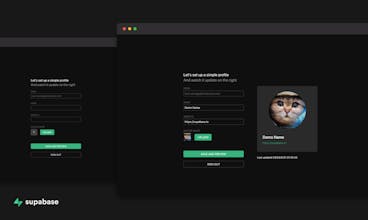
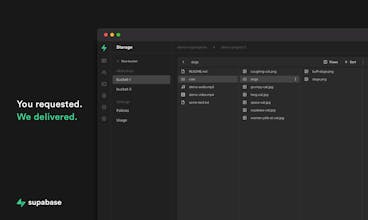
Supabase is an open-source backend-as-a-service that provides real-time databases, authentication, and API services. It enables developers to build and scale applications quickly without managing server infrastructure.
One recurring issue we ve been seeing with Supabase setups is not the database itself, but how credentials are managed across environments. The common pattern looks something like:
credentials stored in .env files or secrets managers
multiple environments (dev, staging, prod)
manual propagation or duplication across those environments
It works, but over time it seems easy for things to drift:
a key gets rotated in one environment but not others
a redeploy misses an env var
credentials get misconfigured during setup or migration
There's never been a better time to build. AI tools, smaller teams, faster product cycles.
Last year, @Supabase surveyed over 2,000 startup founders and builders to uncover what's powering modern startups: tech stacks, GTM, and approach to AI. [1]
Many things have changed since then, and they want to know what building at startups looks like in 2026.
Reviewers mostly see Supabase as a fast, practical way to stand up a real backend with Postgres, auth, storage, realtime features, and edge functions in one place. They repeatedly praise the developer experience, clean UI, solid docs, and the fact that it feels open and portable rather than locked in. Founders of products like CatDoes and ClawSecure say it has been reliable and easy to scale, though some users note rough edges around edge-function cold starts, docs discoverability, auth UX, and free-tier or pricing limits.
Supabase gives us a real Postgres database with zero friction. We get instant auth, real-time subscriptions, and edge functions without surrendering control or getting locked into a black-box. It’s open-source, SQL-native, and developer-first — exactly what we need to stay fast and flexible.
Supabase gives us the flexibility and transparency Firebase lacks. It's open-source, Postgres-based, and developer-friendly, perfect for spinning up auth, databases, and edge functions fast. GoCodeo relies on Supabase to handle real-world backend logic cleanly, without reinventing the stack.
Game-changing for us as an early-stage startup. Their PostgreSQL backend with real-time capabilities gave us enterprise-grade infrastructure without the enterprise overhead. The auth system and auto-generated APIs meant we could focus on building core features instead of reinventing wheels.