Subsig
Build Reputation. Turn Human Signals into AI Visibility.
4.7•12 reviews•6 followers
Build Reputation. Turn Human Signals into AI Visibility.
4.7•12 reviews•6 followers

6 followers
6 followers


Subsig is fantastic because it solves a problem most companies don’t even realize they have yet—how their brand is actually perceived in the age of AI-driven discovery.
Instead of relying on scattered reviews or guesswork, it brings everything into one clear, actionable view. What makes it stand out is how it connects reputation data with real AI visibility insights, so you don’t just see feedback—you understand its impact on how AI systems and customers perceive your brand.
It feels less like a traditional analytics tool and more like a smart layer that helps you stay ahead in how trust and visibility are formed today. That shift is what makes it truly valuable.
Subsig already does a great job of unifying reputation signals and AI visibility insights, but there’s still room to make it even more powerful.
One key improvement could be deeper automation and recommendations—so instead of just showing gaps or insights, the platform could actively suggest exact actions (like which platforms to prioritize, what content changes would improve AI visibility, or which competitors to target next).
Another area is integrations. Expanding native connections with more tools like CRM systems, marketing automation platforms, and additional review/social networks would make it easier for teams to act directly from Subsig without switching tools.
It could also benefit from more real-time alerting and historical trend analysis, helping users clearly understand how their AI visibility evolves over time and what specific actions caused changes.
Overall, these improvements would make Subsig not just an insight platform, but a full execution layer for AI-era brand growth.
We considered a few alternatives in the reputation and SEO/analytics space, including traditional review management tools and early AI visibility trackers.
Most of them either focus only on reviews (like G2, Trustpilot, or reputation platforms) or only on SEO-style metrics that don’t reflect how AI systems actually recommend brands.
We chose Subsig because it connects both worlds—reputation data and AI discovery signals—in one place. Instead of just showing reviews or mentions in isolation, it helps us understand how those signals influence visibility in AI answers like ChatGPT, Gemini, Claude, and Perplexity.
Other tools felt fragmented or too focused on legacy search, while Subsig is built specifically for the shift toward AI-driven discovery. That future focus is what made the decision clear for us.
Subsig is fantastic because it brings everything you need for brand monitoring into one, easy-to-use platform. From keyword tracking to sentiment analysis to real-time alerts, it removes the manual guesswork of staying on top of what's being said about a brand online. The interface is good enough that you're not fighting the tool to get value out of it you can set things up quickly and start seeing meaningful insights almost immediately. It strikes a strong balance between being powerful enough for serious brand monitoring needs and simple enough that it doesn't require a steep learning curve to use effectively.
Some of the navigation paths aren't as discoverable as they could be, so new users may need a little trial and error to find certain settings or menu options. The onboarding process, while solid overall, could benefit from clearer in-app guidance or tooltips to flatten that initial learning curve even further. Additionally, more customization options for alerts and reporting would help tailor the tool even more closely to specific brand monitoring needs. None of these can make not use subsig, but addressing them would make an already strong product feel even more refined.
Before settling on Subsig, I looked at a few other brand monitoring tools on the market to compare features like keyword tracking, analysis, and pricing. While there are other solid options out there, Subsig stood out for its ease of use and how quickly I was able to get meaningful insights without a complicated setup process. Ultimately, the combination of straightforward onboarding and a clear, well-organized dashboard made it the better fit for what I was looking for.
Subsig is simple to use, through Subsig, one can easily access useful data analytics for one's own brand from across different platforms and websites. One can tract daily, weekly, or monthly analytics to compare the ratings.
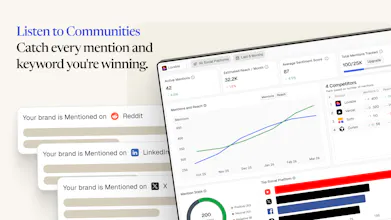
The dashboard features useful analytics for one's own brand Overview page in the Social Platforms Tab which helps track the improvement on mentions, reach, and sentiments which are what matters. Such analytics can be tracked and compared within a certain timeframe to monitor changes and improvements. Competitors analytics can also be shown upon customization of which competitor's analytics to show. Percentages are also shown which could help address comparisons of mentions, reach, and sentiments between other competitors mentions. And speaking of mentions, number of mentions for one's own brand are also included, which also indicates its sentiment on whether how many of those are positive, neutral, or negative. There is also a Mention's page to track social conversations where one's own brand are mentioned. it also includes the excerpt of each mention and can filter mentions per platform. There are also other filter options to choose between Irrelevant or Relevant, as well as Quality Scores. Aside from Mentions, one can also view Industry insights and Competitor Insights.
Also, with regard to reviews, there is a Review Platform tab wherein Subsig dashboard also has an Overview page which shows the summary from a Review Velocity graph for one's own brand's ratings received depending on a particular date. Number of reviews per month are tracked to show how many reviews are there in a month, how many of those reviews are a 5-star, 4-star, etcetera, and what the average rating is. It can show the review platforms where those reviews are from and the review count per platform. There is also an analytic which shows other competitors total number of reviews as well as the percentage of their average ratings in comparison with one's own brand. A dedicated Reviews tab compiles the reviews of one's own brand from different review platforms, which can also be filtered per review platform. There is also a Mention's page to track social conversations where one's own brand are mentioned. Notification frequency can also be customized to be notified of a new review instantly or per hour, not just for one's own brand but with competitors as well.
The Notifications tab is quite useful as well. Notification frequency can be customized to be notified of a new review instantly or per hour, not just for one's own brand but with competitors as well. One can choose to be notified from specific channels, brands, and platforms, as well as customize which filter keywords, content type, and sentiments to apply.
I commend the user-friendly interface as it is easy to understand and customize how to navigate Subsig to tailor-fit the needed analytics. There is this feature of creating a new workspace, and as simple as entering the website of a workspace which in this case is a one's own brand or company website, Subsig will scan where to detect one's own brand and suggest or customize useful keywords to tract mentions of one's own brand from across different Review Platforms and Social Platforms.
Having a People tab for the sole purpose of adding team members from one's own brand or organization can have more potential by adding more features, although it still does contribute to the ease of access of everyone added to view the analytics.
Overall, Subsig is recommendable for making one's own business analytics on mentions, reach, sentiments, and reviews across different platforms, tracked. Analytics are now easily managed trough Subsig without the hassle of manually tracking every platform or websites the old-fashioned way. It saves time and gives real time results without needing to manually search through the web just to compile the needed data for the analytics.