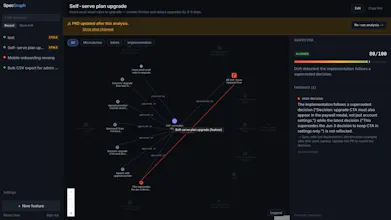
SpecGraph detects drift between product intent — product requirements documents, Slack summaries, meeting notes — and what actually shipped, one feature at a time.
No reviews yetBe the first to leave a review for SpecGraph
Maker
📌
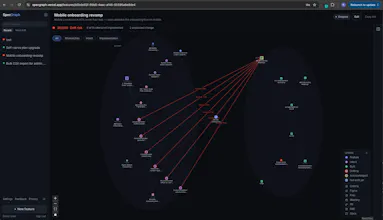
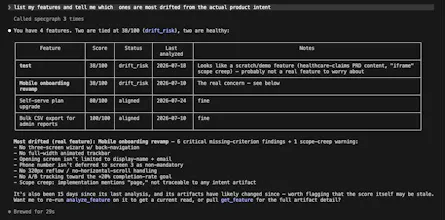
We kept shipping PRs that technically closed the ticket but drifted from what the PRD or the Slack thread actually said — and nobody noticed until QA or a customer did. SpecGraph pastes product intent (PRD, meeting notes, acceptance criteria) next to implementation artifacts (ticket, PR description, changed files) and builds a provenance graph between them, scoring drift 0-100 with concrete mismatch findings and source excerpts. It runs as an MCP server too, so Claude can flag "the PRD changed after this was last analyzed" mid-task, unprompted. Would love your feedback!
Report
Really useful concept for keeping teams honest about what actually shipped. One thing I'd love to see is a timeline view that shows how spec drift evolved over a feature's lifecycle, so you can pinpoint which meeting or Slack thread first introduced the gap. That would make retros so much easier.
We just shipped it: features now have a Timeline view (right next to the drift graph) that plots the whole lifecycle in order — every artifact you add, every analysis run with its score, every decision you log. Click any point on it and the inspector shows you the detail; for a finding specifically, it traces back to the exact artifact that introduced it — a PRD, a meeting note, a Slack thread, whatever it was — with a "first seen here" tag on the analysis where it first showed up.
So for a retro you can now literally click the point where the score dropped and see "this came from the June 15 design review notes" instead of re-reading three weeks of history to reconstruct it.
Screenshot attached — that's a real run showing 5 findings all traced back to the acceptance-criteria doc that introduced them. Would love to hear if it holds up for your actual retro flow once you get a chance to try it.
Report
The way SpecGraph scopes drift detection down to a single feature at a time is really thoughtful, keeps the signal clear instead of drowning you in vague whole-product diffs.



Really useful concept for keeping teams honest about what actually shipped. One thing I'd love to see is a timeline view that shows how spec drift evolved over a feature's lifecycle, so you can pinpoint which meeting or Slack thread first introduced the gap. That would make retros so much easier.
@laszlocravensworth — thanks for this, it was exactly the right call.
We just shipped it: features now have a Timeline view (right next to the drift graph) that plots the whole lifecycle in order — every artifact you add, every analysis run with its score, every decision you log. Click any point on it and the inspector shows you the detail; for a finding specifically, it traces back to the exact artifact that introduced it — a PRD, a meeting note, a Slack thread, whatever it was — with a "first seen here" tag on the analysis where it first showed up.
So for a retro you can now literally click the point where the score dropped and see "this came from the June 15 design review notes" instead of re-reading three weeks of history to reconstruct it.
Screenshot attached — that's a real run showing 5 findings all traced back to the acceptance-criteria doc that introduced them. Would love to hear if it holds up for your actual retro flow once you get a chance to try it.
The way SpecGraph scopes drift detection down to a single feature at a time is really thoughtful, keeps the signal clear instead of drowning you in vague whole-product diffs.