pyq

pyq

Helping developers easily build features powered by AI

65 followers

Pyq makes it easy for developers to build features powered by AI. We’ve identified specific engineering tasks AI solves well and created simple APIs that any dev can use within 5 minutes, allowing devs to moderate content, transcribe sales calls and more!
pyq gallery image
pyq gallery image
pyq gallery image
pyq gallery image
Free Options
Launch Team
AssemblyAI
AssemblyAI
Build voice AI apps with a single API
Promoted

What do you think? …

Emily Dorsey
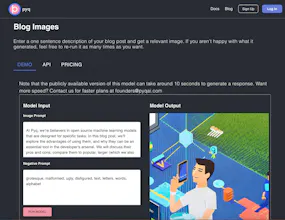
Hello all - I'm Emily, co-founder CTO of pyq! Thanks so much for stopping by and taking a look at what we've built. So why did you build this? 🤔 We built Pyq because it took too long to build features that were powered by AI at our previous jobs. A lot of people want to get started using AI, but struggle because of the difficulties involved in managing infrastructure, finding the right model and learning how to call it. There are many interesting and useful models in places like Github or Hugging Face, as well as specific applications of popular models like OpenAI’s GPT, but they require a decent amount of work/knowledge to get working in your app. What does pyq do? 🚀 We identify use cases of various AI models and provide straightforward APIs tailored to those use cases. We use both open-source models and popular providers such as OpenAI. This allows for easy and fast integration into apps. Rather than starting with the model, experimenting to see if it can actually do what you want it to, learning about deployment and serving, developers can just make a POST call to start using AI. We have a prepaid, usage-based pricing model. Every model has a “spot price” - the cost of 1 second of compute. This is available on each model’s page in our ‘Zoo.’ If you have a custom modell, we will give you your initial price manually and adjust it up or down over time depending on your needs. How does it work? ⚙️ We provide straightforward APIs tailored to those use cases. We use both open-source models and popular providers such as OpenAI. This allows for easy and fast integration into apps. Rather than starting with the model, experimenting to see if it can actually do what you want it to, learning about deployment and serving, developers can just make a POST call to start using AI. You can also deploy a custom model with us if you have one in mind! Please try it out and ask questions below!
Paul Sobiecki
Hey! I wonder whether it could work for projects like mine. Do you have case studies?
Emily Dorsey
@pausx Hello Paul, thanks for commenting! We'd love to chat about a potential case study - please reach out at founders@pyqai.com!
Tanish Ganeriwal
very interesting product
Yuheng Wang
Awesome work! This looks super cool
Jessie jessie
So cool! Congratulations on launching pyp!
Tornike Phkhovelishvili
Congrats on the launch! Can you overview the technology used behind pyq? I see a lot of different use cases, but who do you think can benefit from pyq the most?
Emily Dorsey
@tornike_phkhovelishvili Thanks so much! Under the hood, we serve our models with FastAPI, containerize them, and then deploy them to our clusters. Depending on the model, we choose different machines - some require GPUs, most are decent on CPU. We then expose access to the model via a POST call through our cloud app. We also track various metrics to allow users to monitor their usage. We're expecting smaller development teams that are interested in AI but can't quite make the initial investment to benefit the most from pyq - we've seen the most traction with our image generation offerings, but text tagging as well has been popular!
Paul Rusyn
Congratulations on the launch! Let's connect on Twitter. If you have a question about design, feel free to contact me.
12
Next
Last