Predictive AI

Predictive AI

Image and Video Enhancement and Analysis Platform

154 followers

Image and Video Enhancement and Analysis Platform. Suite of transformative based AI going beyond current market capabilities, allowing for advanced image and video enhancement and analysis. Already used in courts for defendant early release and prosecution.
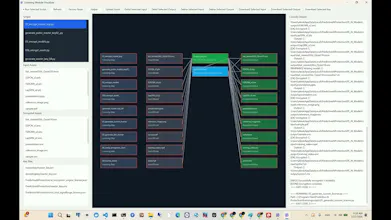
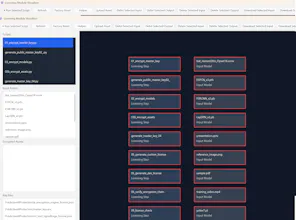
Predictive AI gallery image
Free Options
Launch Team
Threedium
Threedium
Image or Text to 3D Model
Promoted

What do you think? …

Alexander Friedrich Borschel
We discovered the product we built after a lady was run over late at night and received community service despite being the victim when the person who ran her over claimed she had assaulted him when she requested his identification. So we developed unbiased technology to enable better legal outcomes, but soon realized the enhancement technology we had seen in film and movies since the 90s and CSI media didn't actually exist save in extremely primitive and crude forms. So we developed a dynamic, context aware AI based system that can intelligently upscale (up to x32-x64) that can repair at the top level down to the individual pixel for high fidelity transformation to enable observational insights and operations. We are proud to be the first company to deploy AI ethically for legal and judicial end use, and have found because of our technology's unbiased nature, it has dramatic applications in a wide range of industries that make use of imaging and videos, from security and healthcare with MRI and X-rays, to satellites, defense and even maritime and underwater investigations and analysis while still being relevant for traditional film and media. We welcome you in joining us transform the future.
Mykyta Semenov 🇺🇦🇳🇱

Interesting idea! And where else can this be applied besides courts?

Pankaj Thakur

@mykyta_semenov_ Predictive AI can be used anywhere, with no limits on industry, purpose, or sector. Any place that depends on photos or videos can benefit from clearer visuals.

The idea is simple. Better clarity leads to better decisions, and Predictive AI gives you both. Have you tried it yet? Claim your code from here. We look forward to your feedback.

Mykyta Semenov 🇺🇦🇳🇱

@pankajvnt No, I just watched the video. I don’t have a need for this, but I really liked the idea itself. I think your service could be interesting to large platforms that work with photos and videos, like Instagram. Have you thought about reaching out to them and selling your idea as a ready-made technology?

Weird Nerd

@aborschel @pankajvnt Really smooth UI for Predictive Equations fast, simple, and genuinely helpful for breaking down complex or unclear video evidence for court cases. The interface is clean, the explanations are clear, and it feels practical enough to use daily.

I suggest you add a few real-world example templates or a quick “starter guide” to help new users unlock its full value immediately. Also work on the marketing, so more people can find the project

Viktor Shumylo

Super interesting approach. Making messy visuals usable again feels incredibly valuable. Do you support batch processing?

Alexander Friedrich Borschel

@vik_sh 
Absolutely — we support full batch processing.


On our platform, every image is processed as an individual job, and jobs are automatically grouped into a batch when you upload multiple files. That means you can drag-and-drop an entire folder or large set of images, and the system will handle them in parallel: each image gets its own job record (for tracking, credits, and telemetry), but they all run under the same batch so you can monitor the whole set together.


We also expose the same batching behavior through our API, so you can send multiple files programmatically and get structured job + batch IDs back for tracking or automation.


If you're processing high volumes or need workflow integration, happy to walk you through the API or set you up with a pilot.

Fernando Scharnick

@pankajvnt That’s a powerful use case, enhancement tools are common, but reliably doing it at a level trusted in legal settings is a completely different bar. The fact that it’s already being used in courts for both early release and prosecution says a lot about the tech’s rigor.

Curious how you handle chain-of-custody and auditability. Do you provide transparent logs or a forensic trail for how an image/video was enhanced so it can stand up under scrutiny?

Alexander Friedrich Borschel

@pankajvnt  @fernando_scharnick Currently in the final output filename we include how it was enhanced, we are adding shortly additional similar authorship for external parties to source where the output came from (Predictive AI) but also what model was used. We hope once implemented that will become a standard for AI outputs.

Fernando Scharnick

@pankajvnt  @aborschel  That’s a great direction, having clear authorship + model attribution baked right into the output is exactly the kind of transparency standards the space needs. Once that lands, it’ll make audits and external verification so much smoother. Excited to see it become the norm!

Vlad Matskevich

Video enhancement for legal cases? That's powerful use case! ⚖️

What's the quality improvement you typically see? Can it work with really low-res footage?

Alexander Friedrich Borschel

@mskyow Hi there, the quality improvement can be anywhere from 20% to as much as 90% enhancement depending on type of noise or data loss. Some models perform better than others, some in combination with others to get even further.

Generally I would say you can expect to see anywhere from 33%+ depending on level of damage to the original media. Noise is entirely eliminated, most types of blur though this changes depending on the sensor.

It actually works better with low resolution! It can work on as much as 8k, but at that point you're really talking more about DPI than resolution, though both increase the perceptual quality of the output.

Viraj Mahajan

Hey, @aborschel. Just checked out Predictive AI, and this is genuinely impressive work. Video enhancement tools usually focus on surface-level fixes, but your approach of combining detail restoration, deblurring, denoising, recoloring, and harmonizing under one ecosystem feels far more aligned with real investigative workflows. The fact that your models are already being used in legal settings adds a whole different layer of seriousness to the platform.

The interface looks intuitive for non-technical users, but the underlying capability to upscale inputs from x2 to x8 puts your engine in a very different bracket.

I also like the clarity of the mission on your website. You are positioning machine vision not as an editing tool but as a way to help people perceive reality with sharper accuracy.

I am curious about one thing from a technical standpoint. When you process low-resolution or noisy footage, how are you balancing hallucination control with aggressive enhancement? Are you relying on a confidence mapping layer during reconstruction, or do you use a constraint-based approach to prevent over-generation in legal use cases?

Looking forward to learning more about your model architecture as you scale. Great launch today, and congratulations to the entire team.

Alexander Friedrich Borschel

@virajmahajan22 Love the insight! The models we use per their architecture do not introduce changes via content- it is possible because of how deblur works that removing the distortion can cause minor coloration changes on the green scale, but apart from this very mild effect there is no method to introduce hallucinations. What is possible with our Ai is they may fail to understand what they are improving, in which case you just don't get the output. A one in several million possibility.

Regarding reconstruction layers - we don't use any of what you mentioned, allowing our AI to remain lightweight. We use a chain of deterministic reconstruction layers that preserve pixel-level fidelity and suppress hallucination. There is no GAN architecture involved is another way to put it, so there is a near 0 chance of any additional details that aren't already present being introduced.

12
Next
Last