
Cerebion Rivet
Post-quantum vulnerability detection platform
23 followers
Post-quantum vulnerability detection platform
23 followers
Quantum computers will break RSA, ECC, and Diffie-Hellman, while weakening symmetric cryptography and hashing algorithms like AES and SHA-2. Adversaries are already harvesting encrypted data today to decrypt once quantum computers become practical. Cerebion Rivet helps organizations identify quantum-vulnerable cryptography across source code, certificates, network infrastructure, and binaries from a single platform with recommended NIST PQC replacements. Supports fully offline analysis.


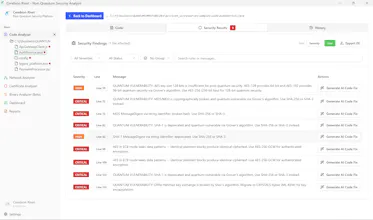


My team built Cerebion Rivet after realizing most security teams have little visibility into which cryptographic algorithms in their environments will become vulnerable in the quantum era.
The “harvest now, decrypt later” problem is already here. Adversaries can capture encrypted traffic today and decrypt it once sufficiently powerful quantum computers arrive. NIST has already finalized its first post-quantum cryptography standards, and organizations are beginning to inventory where vulnerable cryptography exists across their environments.
One of the biggest challenges was building a platform that gives security teams a unified view of quantum risk across source code, certificates, network infrastructure, and binaries. Most tools only analyze one layer, leaving organizations with fragmented visibility. The core technology is currently patent pending.
Cerebion Rivet can run completely offline, so sensitive code and binaries never leave your environment.
I would love feedback from anyone thinking about post-quantum cryptography migration, crypto inventory, or quantum readiness.
With NIST finally locking in the PQC standards (ML-KEM, etc.), the transition feels real now. Does Rivet suggest specific replacements based on the performance constraints of the original environment? For example, if it's an embedded system with low RAM?