Polyglotta started as a multilingual translator, but it s becoming something broader: a language-first AI companion for people who think across languages. Instead of translating A B , Polyglotta is built around seeing meaning across many languages at once so you can notice what shifts, what stays, and what gets lost in between.
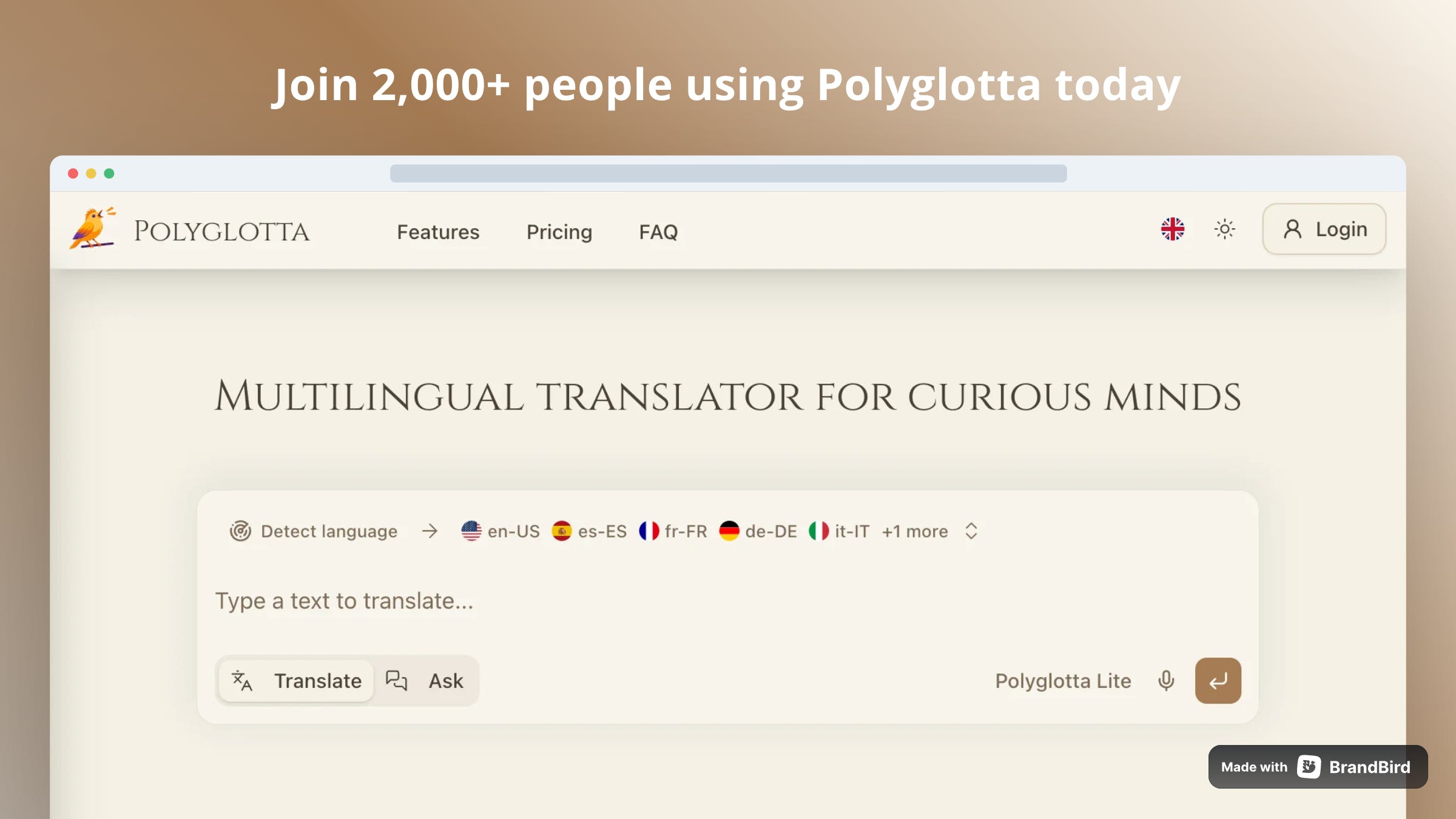
Here s what s new (and why it matters): You can now translate across a bigger set of languages, with an experience designed for multilingual context rather than one-pair-at-a-time translation. Polyglotta supports 70+ languages, multilingual context, and custom-optimized AI models aimed at more accurate, context-aware results.
There s also a clearer split between two ways of using the app: Translate mode for fast multi-target translations, and Ask mode when you want help understanding what s going on (explanations, examples, nuance).
Audio is a first-class feature now, too. Membership includes high-quality audio pronunciations, so you can read, hear, and internalize phrases not just copy/paste them.
Probably the most Polyglotta change: translations aren t treated as final answers. Each translation can become a place to refine meaning with real people threads for feedback, context, and improvements so the app gets smarter through collective input. If something feels off, the workflow is simple: downvote, comment, and help steer it toward something more natural.
And if you want to go deeper with others, the community space is set up like a collaborative workshop: share feedback, spot weird translations, test ideas, and learn from each other s language insights.
If you haven t tried Polyglotta in a while, the easiest way to feel the change is: pick a phrase you care about, translate it into a handful of languages, then switch to Ask mode and interrogate the why behind the differences.


