Ourbase isn't replacing our observability stack - it helps us navigate the application-error layer above it, the one that drags you out of flow state when developing.
One of the least enjoyable jobs.
One that, due to the noise-to-value ratio, most of the time goes unattended.
How is it doing that for us?
Takes application errors directly from our system tracking
Triages them to remove a lot of noise
Creates an MR/PR and notifies us on Slack only when there's already a fix candidate: less friction to take these on :)
With more than 50 incident MRs opened so far, many already merged (and a handful closed because there was already a fix from our side), we've started to perceive that value.
To evaluate the tool we addressed internally a metric "human-free clean rate", to measure if a MR hitting our Slack channel was actually ready to review or required "human cleanup".
The reason that ratio keeps improving on our side is that Ourbase lets us shape the agent's context - we push a per-service custom context via their API pointing at our shared library, our test conventions, our architecture standards, and our lint/mypy gates. So the first PR doesn't show up "code-shaped" - it shows up Landbot-shaped.
The flywheel that closes the loop: when a pipeline fails or our internal review bot flags something, we kick our own validation-loop agent inside the Ourbase incident chat with the same custom context and same repo access:
Failing tests
Unresolved threads
Lint issues
Get fixed in-place before a human even opens the MR. Per-service severity threshold + auto-PR toggle let us calibrate noise per repo.
In conclusion: promising tech, real value already in the workflow today, and an API surface honest enough that we built tooling around it.
PS: the team behind this product is awesome - shipping features that show they're listening to their users.




There's a lot of AI out there right now that wants to act on your behalf. Agentic solutions, that claim to automagically merge PRs and deploy the fix with little or no human needed.
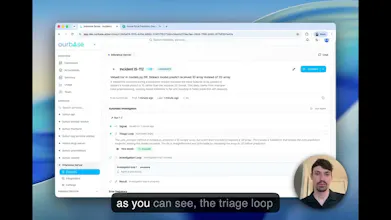
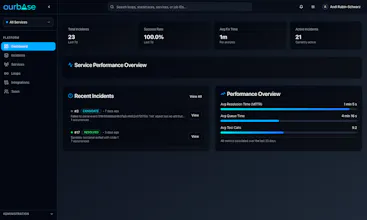
We look at things differently. We take a realistic stance on the usage of AI. Recent advances in natural language processing have unlocked possibilities that once seemed out of reach, yet we recognize AI as a powerful enabler within our technology stack, not a universal solution or substitute. Here's what Bohun does when an alert fires:
-Reads the stacktrace
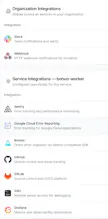
-Pulls the relevant source files from your GitHub/GitLab repo
-Classifies severity (critical / high / medium / low / noise)
-Correlates errors across services using trace IDs
-If required, opens a PR with a proposed fix + full context
-Pings your Slack with the incident summary and PR link It hands you all the context.
You review and decide what ships. Bohun never merges without you. When building this solution, we wanted to make sure the integration was stupidly simple and that it did not disrupt existing workflows.
We have bootstrapped OurBase with the conviction of using AI to make us breathe easier at work and to level the playing field and make agentic solutions accessible to all.
@yumi_joh Looks very interesting! I'll be putting you in touch with another friend who may need something like this.
I have a question though -- does this only need to be used by large engineering teams?
@yumi_joh @sharan_grandigae Thanks Sharan! Not at all, it's built to support engineering orgs of all sizes. We're using it ourselves and I'd consider us a rather lean engineering and product team.
@yumi_joh GitHub Copilot its doing same things , and even Claude does the things
@yumi_joh @muralidharan27 We love Claude! They're great tools, my way of engineering has changed drastically and I'm using our MCP with Claude Code and Cursor heavily. The difference is surface and context: GH Copilot and Claude help you write code in your editor with development context. We operate on your live production telemetry, take an incident from alert to root cause to proposed PR. The value of Bohun isn't generating code, it's grounding the agent in your system's real context and creating a data layer via telemetry, incident history, runbooks, release candidate tracking etc. which a general coding agent doesn't have
I think several of my customers could use this.
Can I put them in contact with you?
Many Thanks
@gemma_diaz_arenas Music to our ears. Please have them reach out to: yumi@ourbase.ai
Interesting Concept. With the right integration/data could I get a report that cluster errors by clients, or to pull information of the client being affected into that Slack channel?
@horacionunez In theory yes it's doable but I'd like to learn a little more before confirming. Feel free to shoot me an email at yumi@ourbase.ai to do proper discovery.
Congrats on the launch!
Keeping the final call with the engineer instead of auto-merging feels like the right move. And a Slack ping with the incident summary and PR link... pure gold at 3am!
@marc_sg Thanks for the kind words Marc! Keeping engineers in the loop has been a guiding principle in our core design. We've seen the most success helping eng orgs go deeper, not just faster. One way that's improved their workflow drastically is noise reduction. We're cutting pings by ~70%, so what triggers is actually worth investigating.
That's a super cool idea with many applications for my projects. I will be a user for sure!
@cousy14 Fabulous! Sign up and activate your free trial: https://app.ourbase.ai/signup