
OnLeash
AI agents act fast. OnLeash decides what gets through.
5 followers
AI agents act fast. OnLeash decides what gets through.
5 followers
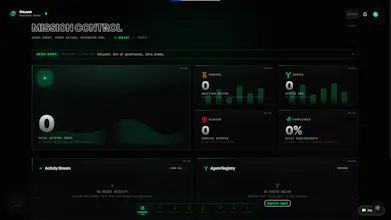
An AI agent can call an API, run a command, or change a system before anyone sees the log. OnLeash creates the checkpoint before execution: safe actions proceed, unsafe ones stop, and uncertain ones wait for human approval. Governed decisions leave signed, verifiable records—giving teams control before the action and evidence after it. Now open as a manually approved research beta.


A dry-run or simulation mode would be huge here, letting teams preview exactly what an agent is about to do across a chain of API calls before any single execution happens. Would make policy tuning way less nerve-wracking during onboarding.
@kevsertekue1qw It is more accurate than you might think. Indeed, we employ “Ghost Mode,” which allows us to conduct the required actions in a virtual environment prior to actual execution, whether in single or multiple steps.
Currently, the process of reviewing actions is based on risk assessment (for instance, the power of the action, escalation patterns, flagged actions/command variations, and so on) rather than the comparison of command representations. Thus, the desired aim is to create a visual user-friendly format that will let users check the chain of commands during onboarding and easily approve or reject it.
We would like to know your opinion on what the term “preview” can entail for the onboarding process you have created. For instance, are we talking about a list of estimated actions being performed, or command-response pairs being displayed in the form that would allow us to make the right decisions in regard to this innovation?
Checkpoint approvals sound great, but consider adding a simulated "dry-run" mode that shows what would change before any approval gate fires. That way humans can see the diff or command output and make faster decisions instead of just trusting a yes/no prompt.
@alparslanclnj Excellent intuition! There is actually already a system in place, we just haven't figured out how to showcase it effectively.
It's called Ghost Mode. High-risk activities can be performed in a test environment: the user will think that the activity is happening for real, but all of the changes will be recorded instead of executed. Instead of giving consent, you would have a chance to see the scope of the activity (how many resources would be affected) as well as indicators of particular events (such as rights escalation, etc.).
We don't have a clear visual difference feature in the approval interface; right now information is presented in a different way. Thank you for highlighting the exact area for improvement!