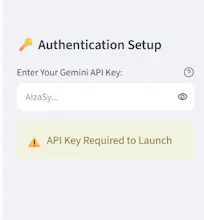
Stop wasting hours writing social copy. The Multi-Agent Content Engine uses CrewAI & Gemini 3.1 Flash-Lite to orchestrate a sequential workspace of specialized agents: 🕵️♂️ Researcher: Extracts core insights & buyer personas. ✍️ Copywriter: Structures X threads, LinkedIn posts, & IG captions. 🧼 Editor: Polishes sentence flow. This is an open-source, Bring-Your-Own-Key storefront built with Streamlit. Paste your Gemini API key in the sidebar to run full campaigns for free!
No reviews yetBe the first to leave a review for Multi-Agent Content Engine
Maker
📌
Hey Product Hunt community! 👋
I’m Mohith, the creator of the Multi-Agent Content Engine.
I built this tool because I was frustrated with standard LLM prompts when trying to draft marketing content. Traditional single-prompt architectures often mix up context, produce bloated text, or fail to capture the unique nuances of different social platforms.
To solve this, I built a sequential multi-agent assembly line using CrewAI and Google’s Gemini 3.1 Flash-Lite. Instead of one prompt doing everything, the workload is broken down into specialized roles:
1️⃣ A Lead Researcher who extracts core insights and analyzes target audiences.
2️⃣ A Social Media Copywriter who translates those insights into native platform layouts (X threads, structured LinkedIn posts, and Instagram descriptions).
3️⃣ A Chief Brand Editor who audits line breaks, formatting, and scannability.
To keep it 100% open-source and free for the community, I designed the storefront layout using Streamlit with a Bring-Your-Own-Key (BYOK) system. Your API key stays securely inside your browser's session state memory, running entirely on your own quota with $0 cloud markup.
I’ve also optimized the backend with an automated headless browser pipeline using GitHub Actions to ensure the hosting container stays hot and never hits a hibernation wall when you need it!
I would love to get your honest feedback:
1. How do you feel about the output quality compared to standard ChatGPT or Claude prompts?
2. Are there any specific marketing platforms or custom brand-voice features you'd like to see added next?
The code is fully open-source, so feel free to fork the repository, play with the agent parameters, or drop a star!
Thank you so much for the support! 🚀
Report
💎 Pixel perfection
the sequential handoff between the researcher, copywriter, and editor agents is genuinely clever, it actually feels like a tiny production line rather than just one model doing everything. love that it is open source too, easy to tinker with.
Report
Maker
@zilansakao0spr Thank you! A "tiny production line" is exactly the mental model I had when building this.
Traditional prompt engineering treats LLMs like single generalists who have to wear every hat at once. By breaking the workflow down into an assembly line, each agent gets to be a highly specialized expert. The Researcher doesn't have to worry about writing catchy hooks, and the Copywriter doesn't have to worry about parsing raw data constraints. They just focus on their core job before passing the baton down the line.
Making it open source was a no-brainer for that exact reason. Agentic workflows are incredibly fun to tinker with. If you want to modify the brand tone, tweak the cross-platform formatting rules, or even add a 4th agent to the production line (like an SEO analyst), you can just fork the repo and swap out the task files!
Thanks for the support, and let me know if you end up custom-tinkering with the agent prompts!
Report
💡 Bright idea
honestly this looks pretty cool, the multi-agent setup is a neat approach. one thing that would help a lot is adding a memory or style profile per brand, so the copywriter agent doesn't reset to generic voice every time you start a new session. basically let users save their tone guidelines, key phrases, and past examples, then the agents reference that before generating. would make repeat runs way more consistent.
Report
Maker
@meryematesm8ti Thank you so much! I really appreciate the feedback, and you hit the nail on the head.
One of the biggest challenges with agentic content generation is maintaining a highly consistent, non-generic brand voice across separate execution runs. Right now, starting a fresh session means the Writer agent relies entirely on its baseline system prompt instructions.
Adding a "Brand Style Profile" is a brilliant next step. Technically, because this is a Bring-Your-Own-Key app, we could implement this cleanly on the frontend without needing a heavy database setup:
1. Brand Profile Builder (UI): A simple configuration tab in the Streamlit sidebar where users can input their tone guidelines, key brand phrases, and 2-3 past high-performing examples.
2. JSON Import/Export: Users could save their profile locally as a lightweight JSON file and simply upload it at the start of a new session.
3. CrewAI Knowledge Injector: We can dynamically inject this profile directly into the Writer Agent's "context" or search memory layer during the task initialization phase.
I’m definitely adding this to the development roadmap. Thank you for the awesome suggestion. It’s exactly the kind of workflow optimization this engine needs! 🚀
Report
💎 Pixel perfection
Really like how clean the agent handoff is in the flow, basically each step knows exactly when to hand off to the next instead of dumping everything into one prompt. Also the BYOK setup in the sidebar is a nice touch for anyone who actually wants to tinker without paying for yet another subscription.
Getting the sequential handoff right was one of the core engineering focuses for this project. When you try to bundle research, platform-specific formatting, and editing constraints into a single prompt window, the LLM often suffers from context fragmentation. It might nail the research but completely ignore the character limits or structural layout requirements of a specific social platform.
By utilizing CrewAI to isolate the tasks sequentially, the Copywriter agent doesn't even begin until it receives a clean, structured research payload from the Researcher agent. Then, the Editor agent acts as a final human-in-the-loop style gatekeeper to polish the formatting before it hits the UI.
And I'm glad the BYOK (Bring-Your-Own-Key) approach resonates! I wanted to build something that hackers, developers, and creators could actually build workflows around without hitting a paywall or a recurring subscription fee on day one.
Thanks for taking the time to test it out and look under the hood!
the sequential handoff between the researcher, copywriter, and editor agents is genuinely clever, it actually feels like a tiny production line rather than just one model doing everything. love that it is open source too, easy to tinker with.
@zilansakao0spr Thank you! A "tiny production line" is exactly the mental model I had when building this.
Traditional prompt engineering treats LLMs like single generalists who have to wear every hat at once. By breaking the workflow down into an assembly line, each agent gets to be a highly specialized expert. The Researcher doesn't have to worry about writing catchy hooks, and the Copywriter doesn't have to worry about parsing raw data constraints. They just focus on their core job before passing the baton down the line.
Making it open source was a no-brainer for that exact reason. Agentic workflows are incredibly fun to tinker with. If you want to modify the brand tone, tweak the cross-platform formatting rules, or even add a 4th agent to the production line (like an SEO analyst), you can just fork the repo and swap out the task files!
Thanks for the support, and let me know if you end up custom-tinkering with the agent prompts!
honestly this looks pretty cool, the multi-agent setup is a neat approach. one thing that would help a lot is adding a memory or style profile per brand, so the copywriter agent doesn't reset to generic voice every time you start a new session. basically let users save their tone guidelines, key phrases, and past examples, then the agents reference that before generating. would make repeat runs way more consistent.
@meryematesm8ti Thank you so much! I really appreciate the feedback, and you hit the nail on the head.
One of the biggest challenges with agentic content generation is maintaining a highly consistent, non-generic brand voice across separate execution runs. Right now, starting a fresh session means the Writer agent relies entirely on its baseline system prompt instructions.
Adding a "Brand Style Profile" is a brilliant next step. Technically, because this is a Bring-Your-Own-Key app, we could implement this cleanly on the frontend without needing a heavy database setup:
1. Brand Profile Builder (UI): A simple configuration tab in the Streamlit sidebar where users can input their tone guidelines, key brand phrases, and 2-3 past high-performing examples.
2. JSON Import/Export: Users could save their profile locally as a lightweight JSON file and simply upload it at the start of a new session.
3. CrewAI Knowledge Injector: We can dynamically inject this profile directly into the Writer Agent's "context" or search memory layer during the task initialization phase.
I’m definitely adding this to the development roadmap. Thank you for the awesome suggestion. It’s exactly the kind of workflow optimization this engine needs! 🚀
Really like how clean the agent handoff is in the flow, basically each step knows exactly when to hand off to the next instead of dumping everything into one prompt. Also the BYOK setup in the sidebar is a nice touch for anyone who actually wants to tinker without paying for yet another subscription.
@hikmetjocl Thank you! That means a lot.
Getting the sequential handoff right was one of the core engineering focuses for this project. When you try to bundle research, platform-specific formatting, and editing constraints into a single prompt window, the LLM often suffers from context fragmentation. It might nail the research but completely ignore the character limits or structural layout requirements of a specific social platform.
By utilizing CrewAI to isolate the tasks sequentially, the Copywriter agent doesn't even begin until it receives a clean, structured research payload from the Researcher agent. Then, the Editor agent acts as a final human-in-the-loop style gatekeeper to polish the formatting before it hits the UI.
And I'm glad the BYOK (Bring-Your-Own-Key) approach resonates! I wanted to build something that hackers, developers, and creators could actually build workflows around without hitting a paywall or a recurring subscription fee on day one.
Thanks for taking the time to test it out and look under the hood!