Because Mochi’s core ingestion layer operates strictly through a standard client-side script tag, it remains structurally vulnerable to browser-level ad-blocking. If a security-conscious developer or privacy-focused buyer visits your site with aggressive content blockers engaged, the tracking script can be dropped entirely before it boots. When this occurs, the user's initial traffic footprint is completely lost; if they eventually convert, the backend Stripe webhook will still trigger correctly, but it will surface inside your dashboard as unclassified, orphaned revenue with zero structural channel history.
Additionally, the zero-configuration layout is deeply coupled with Stripe's ecosystem. If your application handles monetization through alternative merchant-of-record networks (such as Paddle, Lemon Squeezy, or specialized regional payment gates), the seamless automated mapping breaks down, shifting the data engineering burden back onto you to pipe custom events manually. Finally, tracking multi-touch attribution funnels—such as a user who discovers your product on a mobile device via social media but completes the final transaction days later on a desktop browser—can stress the boundaries of simplified cookie tracking frameworks.


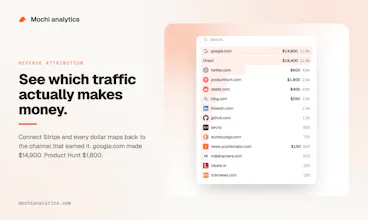



the "which visit became money" pitch sounds great until you hit the reality that most B2B and even a lot of DTC purchases aren't single-touch - someone finds you on reddit, forgets, comes back via google two weeks later, then buys after an email. mapping the dollar to "the channel that earned it" as one line kind of implies last-touch or first-touch under the hood, which is the same oversimplification every attribution tool eventually gets called out for. is this last-touch, or actually multi-touch weighted?
different question from the attribution model debate above - what happens when a Stripe charge gets refunded or charged back after Mochi has already credited it to a channel? does the dashboard retroactively pull that revenue back out, or does the channel just keep the credit for money that didn't actually stick? for subscription products especially, day-1 revenue and month-3 churned revenue can tell very different stories about which channel is actually worth the spend.
How does Mochi handle attribution when a customer signs up via organic search but only converts after clicking a retargeting ad weeks later?
I like the shift from "who visited" to "what actually made money." That's a much more useful question for founders.
One thing I'm curious about: attribution is getting noisier every year with AI assistants, dark social, and cross-device journeys. How does Mochi decide when a revenue source is genuinely responsible versus just being the last visible touchpoint? That distinction seems like where the real value is.
Congrats on the launch! 🚀
Congrats on the launch. I live in PostHog for my own product and honestly most dashboards go unopened until something feels wrong. What makes Mochi get opened on a normal day when nothing is on fire? That habit gap always felt like the real competitor, more than other analytics tools.
Finally connected Stripe and instantly saw which Reddit thread actually drove sales instead of just traffic. Heatmaps in the same view is a really nice touch.