
Fuser is a node-based canvas for creative work, built for exploration and iteration across every model and modality. Fuser acts as a creative harness—the orchestration layer that connects your ideas, models, and outputs into one working ecosystem. Try it today.
This is the 2nd launch from Fuser. View more

Fuser Apps
Launched this week
You can now build apps directly in Fuser—no code required.
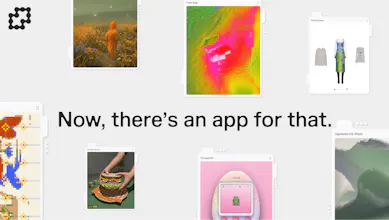
Fuser is an end-to-end creative engine. Make images, video, sound, 3D and more on canvas. Your references, generations, media and data can become something your app reads, responds to, and evolves from.
Prompt, generate, edit, and ship in one click. Go live in minutes.
Try it now: app generations are free for the next month on fuser.studio 💙



Free Options
Launch Team

The multiplayer aspect sounds promising. How do permissions work when multiple people edit the same project?
Fuser
@ranjan_kumar45 only one person can be editing a node at a time. Multiplayer on the canvas is supported through a teams plan, so you only have to consider this when you have multiple people in a workspace. That said, each project is private by default when first created, even in a teams workspace. If you decide to share the project with the rest of your team, they do have the ability to make changes to an app if you are not actively editing it. But there is built in versioning control. We are adding fine-grain version control based on user-specific roles and access.
Documentation.AI
How portable are projects? Can users export or self-host apps if they eventually outgrow the platform?
Fuser
@roopreddy Yes, you can download the bundle and move it elsewhere as needed
Fuser
Hi PH! Hirad here, co-founder and CTO.
We've all got a graveyard of ideas that never left the deck. An interactive concept that never got past the render. A microsite the studio scoped and quietly shelved. The experiential thing the whole room loved in the pitch, killed by a build timeline nobody could afford.
The ideas were never the problem. The distance between "this should exist" and "this is live and someone can actually touch it" was — everything between the concept and the build, where the good ones quietly die.
Fuser Apps is us closing that distance. You describe the thing you wish existed and it goes live — a real link you can put in front of a client or a room, from your phone, before the idea gets cold.
We've put more real (and more gloriously weird) little things into people's hands in the past week than in the years before it, because the cost of actually making one dropped to basically nothing.
Go make something and put it in front of someone. Then come break it and tell us what's missing — we're here all day.
P.S. @chrismessina hunted us — thank you, truly.
Spent a few minutes dragging nodes around and genuinely liked how fast it felt to wire up different models side by side. The canvas stays smooth even when you stack a dozen connections, which is rare.
Fuser
@ensar33961 Hey Ensar! So glad you appreciate these details, and tried it out for yourself. Our team are professional artists, designers, educators, and engineers. So we know first-hand how important it is to optimize for performance and control when trying to ship an idea to completion. Please let us know if you make any creative work, and feel free to share any feature requests with us.
Can teams collaborate on the same canvas simultaneously, similar to Figma or multiplayer whiteboards?
Fuser
@himani_sah1 Yes! You can learn more about that here.
Nas.com
Can published apps connect to external APIs and databases without custom backend code?
Fuser
@nuseir_yassin1 Every app can be SSR'ed so you can add your keys to the backend code. We are adding a secret manager very soon
Makes sense on the recovery side. The bit I keep poking at is latency more than bad output. A node that took 6-8s while I was iterating felt totally fine, but on an end user's tap that same wait kills the whole thing. When we shipped agent stuff the move that saved us was memoizing node outputs by input hash, so repeat inputs came back instant and only cold ones actually hit the model. Does a published Fuser app cache node results per input, or does every interaction re-run the graph live?