Fascinating! What about stuff like Xrays/imaging? Typically on lower end health plans they aren't covered at all and seems like a major gap for most people on an ACA health plan.
@allany888 Hey Allan, we do some imaging in-house (mostly ultrasound) and working on getting more integrated as we grow. The way I think about it, every time we send you out for something is a failure mode because we couldn't do it ourselves and had to send you back into the legacy system. So the goal is definitely to keep expanding scope until that needs to happen less and less often. Thanks for the Q!
@ilyaabyzov@allany888 what's the target price point your team is aiming to hit? For now, it's nearly as expensive as purchasing a second insurance plan.
@nkbuduma@allany888 For sure. Tough to say right now, but in an ideal world primary care is free. How close we get to that remains to be seen. When I started at Uber in July '12 I inherited a very expensive black car business and we were able to do a lot to take the price down massively via tech and operational efficiencies over time.
What kinds of measurements do the body scanners and wearables make? Do you have metrics on how much time (and as proxy) that measurement automation saves?
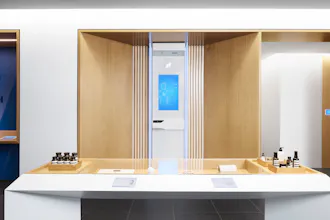
@nkbuduma The scanner takes standard vital signs (pulse oximetry, pulse, temperature via thermal camera, etc.) as well as some newer measures of heart health like pulse wave height a la the new Withings scale. The wearables can do everything from blood glucose to blood pressure and heart arrhythmia.
@adrianaoun first, congrats on the launch! I had a couple of questions:
1) You compare Forward to a health membership and are charging monthly. In my head, I'm equating this to an Equinox gym membership. Do you anticipate your patients having multiple touchpoints during a month with Forward?
2) What would the typical first month/year look like for a Forward member?
3) Building medical devices is hard and proving they are accurate takes data and time. What's your strategy for building custom hardware at Forward (e.g., body scanner)? Are you getting regulatory approvals?
Thanks for tackling this problem, and I'm hoping your model becomes successful!
@kunalslab@adrianaoun Hey Kunal! I'm one of the cofounders at Forward. Thanks for the Qs.
1) Yes, definitely expecting multiple touchpoints in both directions. With our early test members, we see a lot of inbound via the app since we intentionally tried to make it as frictionless as possible to ask questions and follow-ups (think iMessage or Slack, but you're in a chat with a whole team of people who are your doctor + care team). We also reach out proactively based on what we know about you and the data that's coming back via Apple Health, etc. For example, if you have high cholesterol, we know that and will reach out from a nurse/nutritionist who can help advise you on diet change, but it's even better if we're feeding data into our system from something like a wifi scale so we can attach a metric to that goal and create alert triggers for your team to intervene if something doesn't look right.
2) The experience starts with what we call the "baseline", which is sort of like our version of an executive health screen where we proactively elicit everything that we can instrument about you and your health using the scanner, genetic testing, blood testing, etc. @leila_c did a great job describing it here: https://medium.com/@leilajanah/t... and we build off that baseline to manage your health after that via the app and the physical location.
3) Custom hardware is obviously tough and expensive, but we didn't see anything like that body scanner that we could have deployed off the shelf, so we built our own. I sort of think about it as a hardware platform for health sensors that will evolve over time. All the sensors in it are FDA approved
@adrianaoun@ilyaabyzov@robert_sebastian I thought this was an awesome service, so I wanted to try it out, but wasn't sure the price tag was right for me. I visited your guys' site though (gorgeous) and I asked the care team about the pricing before my baseline visit, and they told me that I should get the baseline visit before making a decision. So I did.
After the baseline visit and some thinking on my end about my budget (recent Stanford grad here), I decided I couldn't afford the $1800 price tag, so I asked for a refund. The manager then called me and said that I would get no refund whatsoever. I spent over 20 minutes on the line with him just trying to get a pro-rated refund of some sort, but even that was not possible. He then said that he had sole decision-making power over this and ended our conversation.
Was pretty surprised, since I expected better customer service, not something straight out of Comcast's playbook.
Please help?
This is very cool. Are you avoiding regulations such as Meaningful Use, MACRA, etc, by not taking in Payors/Medicare? Also, how are you able to cover your costs for such a low membership fee? Having worked in healthcare for some time now, 24/7 medical advice and guidance are not at all cheap to deliver. Especially when you have physicians, mid-levels, etc. This is radical and difficult to comprehend!
Report
I'm curious how you're measuring your success? The trend in healthcare seems to be to minimize hospital visits and services, focusing on better outcomes instead. For the price, how do you see balancing patients wanting to get their money's worth (which might mean more visits and services) with better health outcomes (which might mean less visits and services).
Report
So, the oversimplified goal here is to replace primary care, and to some extent traditional "urgent" care, with an all-in-one proactive solution? But, the care team would still work with traditional specialists, surgeons, etc. in cases of oncology or a burst appendix or what-have-you for things that fall outside of the specialties and capabilities of the facility/team?
Weloop
Forward
Remedy
Forward
Remedy
Forward
SlidesUp API
Forward
ShareTube
Forward