
FluentDB
The AI database client for Mac
465 followers
The AI database client for Mac
465 followers
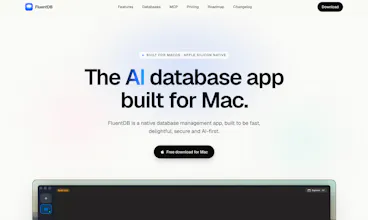
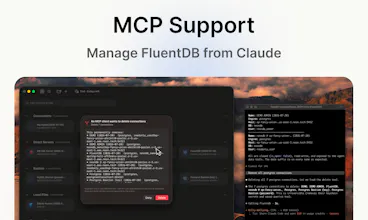
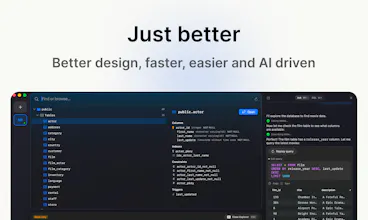
FluentDB is an AI-powered database client for macOS. It supports PostgreSQL, MySQL, SQLite, SQL Server, with more coming soon. Built for speed, simplicity, and security, it works with Anthropic and OpenAI using your own API keys or Claude Code/Codex subscriptions, and with local models via Ollama. Your data never leaves your machine without your approval: models see your schema, not your data, and every AI-generated SQL query requires approval by default.




Free Options
Launch Team

Floot MCPBuild and ship web and mobile apps inside Claude or ChatGPT
Promoted
Hi Kevin,
Hoe does it gather the actual context for what the data means ?
That has been the most diffucult thing for me, and would like to know about any plans for any lakehouse integrations ?
@sarora29 if you give him the read permission then it will gather your data and be able to answer more deeply based on the reasoning capabilities of the model you use. But this is something you have to switch on because by default it stays private.
Regarding data lakes, not for now but feel free to give me more information it could help to prioritize it in the future 🙏
Congrats on the launch! A proper native Mac client is such a relief after living in Electron all day. Does it show you the query it is about to run before it runs it, or is that tucked away?
@terminal_candy Thanks for your comment! Yes by default you have to manually validate each query as part of our security guardrails. We explain this in this video if you want to get more info.
The Mac-native angle is interesting. I keep bouncing between SQL clients and browser AI tools, so having natural-language querying closer to the DB UI makes sense. Curious how you handle schema context when a workspace has multiple similar tables?
@xiaosong001 Thanks for your comment! It's an interesting question because we haven't really put a lot of effort into this edge case. Most of the time, if the LLM is not sure where to find the data (either because the question or the schema is ambiguous) then it will either ask you to rephrase or to give more details, or simply show you multiple queries so you can pick the one you want.
If you use the product and see it's not enough for your specific data structure feel free to reach out so we can improve this :)
the approval-by-default on write queries plus the read-only connection lock covers most of what I'd worry about. one thing I didn't see addressed - is there any kind of audit log of what got approved, so if something did go wrong (or you just want to know what the AI actually did to the db last week) you can look back at a history of generated queries and whether they were approved, edited, or rejected? feels like the kind of thing a team lead would want even if a solo user never touches it
The schema-only default with per-query approval is the right call — most AI database tools send sample rows to 'prove context' and that's the actual privacy leak, not the query. Two things I want to understand for local-first use: when talking to Ollama, does the schema introspection include column-level comments and check constraints, or just names and types? And for SQLite, is query execution going against the live file or does FluentDB open it in WAL mode with any read isolation to protect against a half-formed AI-generated write corrupting the journal?
@rahulladumor that's exactly the scenario where the safety net matters most, honestly. confirm-each-query is naturally self-limiting since a human's eyes are on every write, but Auto run removes that friction entirely - if the row-count/WHERE-clause check doesn't carry over into that mode, Auto run for writes is basically running blind.
@kevinpiacentini that confirm-before-execute default plus not sharing results back unless you opt into read mode is exactly the design I was hoping for, opt-in auto-run and opt-in read mode as two separate toggles is a nice way to let people dial in their own risk tolerance instead of one blanket switch. will check out the video, thanks for the detailed answer.
@omri_ben_shoham1 thank you for the feedback :)