Your hub for social analytics, scheduling, and audience insights. Fedica is the people-level social suite for creators whose audience lives across networks. Know who engages, what they care about, and where they're from instead of tracking follower counts alone. Schedule and crosspost on 12+ networks, tailor each post per platform, and reply from one inbox. Deep analytics on followers, competitors, and topics across X, Bluesky, Mastodon, LinkedIn, and more.
For creators who want to succeed when their fans are fragmented across platforms. Know who engages, what they care about, and where they're from, with deep audience segmentation and demographics. Publish tailored posts on 12+ platforms. Connect with engagers from one inbox. 15 years of audience intelligence, built on Tweepsmap's geographic foundation. We put the people back in your analytics.
People are choosing the platforms and communities where they feel most connected. Some are on X, others on Bluesky, LinkedIn, Threads, Mastodon, TikTok, Instagram, YouTube, and whatever comes next.
But something important gets lost when we only look at social through dashboards and numbers: the people behind the engagement.
Reviewers largely see Fedica as an easy, reliable tool for scheduling and analytics, especially for X/Twitter but increasingly across newer platforms like Bluesky, Mastodon, Pixelfed, and Pinterest. Users repeatedly praise follower tracking, demographic and location insights, weekly reports, and time-saving cross-posting. Several say it replaces multiple tools or handles niche networks better than alternatives. A founder of How Apps Are Built - 3: Khan Academy's mobile apps with Andy Matuschak also highlights simple multi-platform thread scheduling. Criticism is limited but specific: calendar layout, occasional publishing visibility, no unified inbox, and tighter free access.
social media analytics (12)follower tracking (15)scheduling posts (11)demographic analysis (4)
Unmatched Audience Analytics: Fedica tracks exactly where your audience is located down to the city level, providing demographic and psychographic data that most other scheduling tools simply cannot touch.
What needs improvement
free plan limitations (4)
Lack of a Unified Social Inbox. The Issue: Unlike competitors such as Sprout Social, Hootsuite, or Publer, Fedica does not feature a unified community inbox.
Very happy to hear that you enjoy our audience analysis. It's one area that we have been building since 2010
Also I appreciate your comment about not having a unified community inbox in the free plan, unfortunately our inbox is only available in the Grow plan and higher but thank you for making a note of that, very helpful.
user-friendly interface (8)cross-platform support (4)scheduling posts (11)
I've used Fedica exclusively for Twitter/X and BlueSky posting for the last three years. I won't use anything else. Easy to manage, powerful scheduling, and superior maintenance attention to detail.
What needs improvement
Honestly, no issues. It does the simple tasks I need it to do. Feel free to enhance paid services, but please keep the free plan simple and straightforward.
vs Alternatives
Tried Tweetdeck and found it clunky and unresponsive.
Framer AI AgentsDesign and publish professional sites with AI
Promoted
The cross-platform audience stitching is exactly what community managers need — knowing the same person follows you on X and Farcaster and can be reached more effectively on one than the other is a real operational edge. Curious whether Fedica's audience intelligence covers decentralized platforms like Farcaster or Lens, or if the cross-platform view is scoped to the major centralized networks for now?
Thanks for the question. We actually support multiple decentralized platforms (Mastodon, Bluesky, Pixelfed, BlackSky, EuroSky, and PeerTube .... and more coming soon) We currently do not support Farcaster nor Lens, although it's a possibility in the future depending on adoption and API integration capabilities of each platform
Report
That's a more comprehensive decentralized list than I expected — Bluesky and Mastodon cover a lot of ground for the communities I work with. The Farcaster piece makes sense to stage; their API surface is still evolving and the core user base skews narrow enough that I'd rather see AT Protocol cross-posting nailed first. Appreciate the honest answer.
@hazy0 my pleasure! Thanks for the follow up comment!
And yes, cross posting would be first for Farcaster and if we see traction then we can add our audience intelligence piece
Report
'people back in your analytics' not follower counts is the right fight. when one fan follows me on x and bluesky, do you resolve them as one person or two?
@andrewzakonov Great question. We think about this in two layers. At the analytics level, we’re focused on understanding the people and conversations behind the numbers, but the metrics themselves are still reported within each platform because each network has its own data model and attribution rules.
Long term, cross-platform identity resolution is definitely a direction we want because the real insight is understanding the person behind the interactions.
Report
Cool product, and congrats on the launch @albattran
Genuine question: with 12+ networks and per-platform tailoring, how do you handle the analytics side when engagement metrics aren't comparable across platforms (a "like" on LinkedIn vs a repost on Bluesky vs a Mastodon boost)? Do you normalize those into one score, or keep them separate so you're not comparing apples to oranges?
Some stats are added when uniform (e.g. followers stats sent our email reports) but for the most part we try to keep stats per platform since different platforms report different types of data (e.g. reposts, or link clicks or profile clicks)
But when it comes audience intelligence (e.g. identifying CEOs who follow you from Austin), these are platform specific (on the platforms that support them, e.g. X, Bluesky etc) and you need to connect with them on that platform itself anyway.
Report
Noticed a reviewer mention they run Fedica alongside other tools just to compare directly, that kind of side by side evaluation is usually what ends up documented in G2/Capterra reviews, since it's hard for a prospect to get that comparison anywhere else. With 32 reviews already, have you found review platforms actually drive real trial signups, or is it more of a trust signal once someone's already evaluating you?
@joe_kindness101 Great question. We've found they're mostly a trust signal. People often discover us through search, recommendations, or content first, then check G2 or Capterra to validate that we're a safe choice. The detailed comparisons are especially valuable because they answer questions we can't objectively answer ourselves. That said, we've definitely had some direct signups from review sites too, just not nearly as many as from our organic channels or SEO directly.
Report
@jonwesselink That tracks with what we've seen too, review sites doing more validation work than top-of-funnel discovery. The "answers questions we can't objectively answer ourselves" point is spot on, especially for anything technical where a prospect wants to hear it from a peer, not the vendor. Did you find you had to actively prompt customers for reviews to get that detailed-comparison quality, or did users volunteer that kind of depth on their own?
@joe_kindness101 Thanks Joe, for us, we time it with the help desk. When we notice a customer having a positive experience or sharing something helpful about how they use Fedica, we’ll encourage them to share that feedback publicly because it helps other teams evaluating tools and also helps us understand what we should keep building.
Report
@jonwesselink That's a smart trigger point, tying it to a positive support interaction rather than just a generic "please review us" email blast after purchase. Support conversations probably surface way more specific, usable detail (how someone's actually using it) than a cold ask ever would. Do you find those support-prompted reviews read differently than ones you get from marketing pushes, more detailed or specific?
Report
What is the biggest engineering challenge in merging 15 years of data with publishing a new pipeline?
Actually a lot of the data we deal goes back to 2006 (Twitter's inception) so it's more than 15 years :-)
I think the biggest advantage we have is having solid design decisions from the start, we spent a lot of time in the early years prototyping and selecting the right technology so that made things super easy when we rebuilt the infrastructure
With the technology part aside , I think the challenge for us was how to modernize the service and add a lot of new tools while making existing users feel home. We had focus groups and beta testers to provide feedback, but I also think critical was the speed in reacting to existing user complaints when the new changes were not working for them. At the end many users hate change but it is important to put yourself in their shoes to see how they use the service and make sure the changes are not making things more difficult
Congratulations on the launch, @albattran ! 🎉 Fifteen years of audience intelligence behind a 2.0 is a rare kind of foundation.
A question from someone who spends her days with creators. When you surface a superfan who follows someone on three platforms, do you also show where that person actually engages most deeply? I'm thinking of creators deciding where to put a big announcement. Knowing who cares is one gift; knowing where they're actually listening feels like the second one.
Rooting for you today from another team launching alongside you!
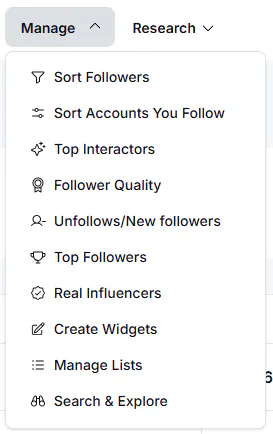
For your own followers, we have different views, including "top interactors", it is per platform (not aggregated). For analysis of other accounts we only show top followers (by follower count, not engagement). The manage section of Fedica is available for X, Bluesky, Mastodon and Pixelfed
Report
The “Top Interactors” angle feels more useful than another reach dashboard. Knowing who actually keeps showing up is a better starting point for relationships than a bigger impressions number. How are you separating genuine interest from people who simply comment on everything?
There are two parts to managing engagement, a) the inbox where you need to see each comment/reply/quote and respond to those that need to
b) measure the engagement, and with those you can view how many engagements each of them made, filter by type of engagement and also view their creds (followers etc)
More importantly, you can intersect all that with your audience, for example, you can find which of your followers is most engaged, or who doesn't engage with you
Fedica
Thanks so much for your feedback Antonio!
Very happy to hear that you enjoy our audience analysis. It's one area that we have been building since 2010
Also I appreciate your comment about not having a unified community inbox in the free plan, unfortunately our inbox is only available in the Grow plan and higher but thank you for making a note of that, very helpful.