
DebtDrone
Autonomous technical debt hunting with AI-generated PRs
13 followers
Autonomous technical debt hunting with AI-generated PRs
13 followers
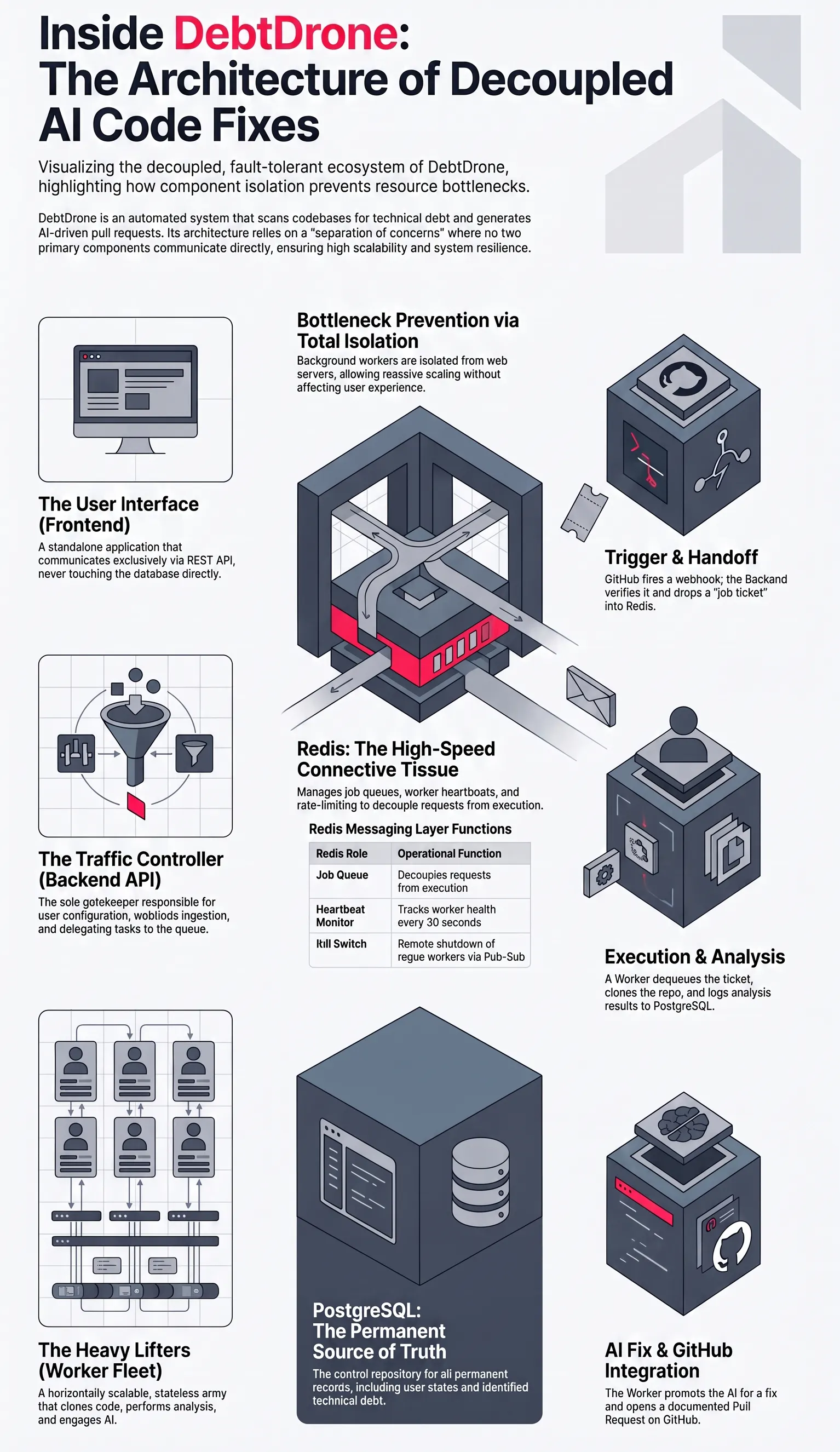
DebtDrone autonomously scans your repositories across GitHub, GitLab, and Azure DevOps to find technical debt — then prioritizes it by real business and engineering impact, not just linter noise. Instead of adding another item to a backlog nobody triages, DebtDrone opens AI-generated pull requests to fix the highest-impact issues directly. Built for engineering teams who'd rather review a PR than manage a debt spreadsheet.
Interactive


Free Options
Launch Team

LightfieldAI-native CRM that builds itself and does work for you
Promoted


the auto-PR idea is genuinely cool but i'd love to see a way to scope it to a specific folder or service, kind of like how dependabot lets you group updates. otherwise fixing debt in a legacy monolith vs the new microservice would feel very different in risk
One thing that would make this really useful for my team — let DebtDrone open draft PRs by default and only promote them to ready-for-review once CI passes, so we're not reviewing fixes that break the build in the first place.
This is genuinely cool, the auto-PR angle is way more useful than yet another dashboard. One thing though, it would help a lot if you could scope the analysis per service or directory instead of the whole repo. Big monorepos have totally different risk profiles per team and a single ranked list ends up being kind of useless for everyone except the platform crew.
The GitHub integration picked up real issues from my repos right away, and I loved that it skipped the trivial linter complaints. Opening a fix PR instead of just flagging the debt is a genuinely smart move.
Tried it on a side repo and it actually opened a sensible PR instead of just listing 200 lint warnings. The impact scoring feels tuned by someone who's been on call.
Love the PR-first approach, way more actionable than yet another dashboard. One thing that would make this even better for my team: let us scope the scans with a config file in the repo so we can exclude legacy directories or files under active refactor, otherwise the AI ends up opening PRs in spots we've intentionally parked.