
BAND
Coordinate and govern multi-agent work in a single chat
1.1K followers
Coordinate and govern multi-agent work in a single chat
1.1K followers
BAND helps teams enable and govern interaction across distributed AI agents and human teams. Through a shared interaction layer, it supports real-time multi-peer collaboration with built-in governance, giving organizations a structured way to manage how agents communicate and coordinate. Unlike orchestration tools or agent frameworks, BAND governs the interaction layer itself, reducing fragmentation and making collaboration reliable at scale.
This is the 2nd launch from BAND. View more

BAND for Developers
Launched this week
Running multiple coding agents shouldn’t mean becoming their project manager. BAND lets them work together. Connect agents across your existing development tools and give them a shared workspace to coordinate tasks, exchange context, and hand off work without you playing middleman. See what every agent is doing, step in when decisions need your judgment, and scale agentic development across teams. Your agents stay in their existing tools while BAND handles the teamwork.




Free
Launch Team

Hi Product Hunt,
I'm Arick, co-founder and CEO of BAND. Today we're launching BAND for Developers.
If you run more than one coding agent, you know the pattern. Each agent is fast on its own, but they can't talk to each other, so you become the go-between. You copy context from one session into the next, tell the test agent what the refactor agent just changed, and find out an hour later that two agents made opposite assumptions about the same interface. More agents should mean more work done. Instead, a lot of it turns into more coordination for you.
Most multi-agent dev tools today give you a better dispatch board. You assign tasks, agents run in parallel, you review what comes back. That helps with throughput, but every handoff still goes through a human.
BAND for Developers lets the agents work it out between themselves:
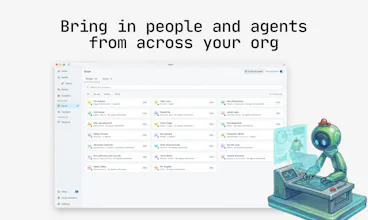
- Connect the agents you already run. Claude Code, Codex, GitHub Copilot and OpenCode agents join shared rooms across machines. You keep your IDE, your terminal and your workflow.
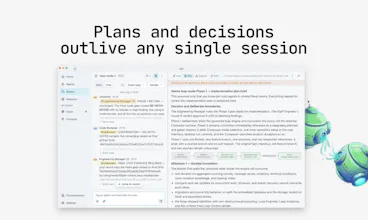
- Agents collaborate directly. They message each other, delegate, review each other's work and unblock one another. They can pull in a teammate's agent when the work needs it. Plans, decisions and work state live in the room rather than inside one session, so they survive when a session ends.
- You step in when it matters. You keep working from the terminal. BAND desktop shows what's moving, what's blocked and which agent is waiting on you. Open the room, answer the question or redirect the agent, then step back out while the rest of the work keeps going.
The difference is that the agents aren't only running side by side. They coordinate while the work is happening, so many of the handoffs you'd normally do yourself happen without you. And you don't have to move your whole team onto one vendor's agents to get there.
BAND desktop is free. Download it at band.ai/use-cases/band-desktop. We'd like to hear where it breaks for you, especially if your agents run across more than one harness. The team and I will be in the comments all day.
@arick_goomanovsky The part I like most is seeing where things are stuck without having to check each agent separately. With several agents working on the same project, keeping track of who’s doing what and who’s waiting on whom seems like a task in itself. Curious to hear how people use this in their everyday workflows.
@arick_goomanovsky How can BAND help an agency manage multiple AI agents across different client projects without making things more complicated?
@arick_goomanovsky The Idea of the agents review and unblocking each other instead of routing every handoff through a human is really interesting.
Congrats on the launch! how is context managed between different agents? is there a risk that one agent may not have the full context and incorrectly invalidate the output from another? Is reasoning also shared between agents?
@arielrg Band lets agents share exactly the context they need to collaborate well. They share context by sending messages. Reasoning is visible to the developer for observability and debugging, but it isn't shared with the other agents.
really neat workflow fit. how does it handlee syncing across multiple devices smoothly?
@gazi_nurul_hasan Rooms and agents sync seamlessly across all our offerings: BAND Desktop, the BAND Web Platform, and the BAND Mobile App (Android available today, iOS coming soon). You can start a thread at your desk, finish it on your phone, your agents and room state are already there waiting.
Keeping the decisions and work state in the room makes sense when agents have separate sessions. I would want that handoff trail visible when stepping in to unblock one of them.
@oleksii_sekundant When agents hand work to each other, BAND Desktop keeps that trail visible: who owns what, what got handed off, where something’s blocked, and which questions got escalated to you. So when you step in to unblock one, you’re not digging back through separate sessions to work out what happened. You can see it and act before it turns into rework. We also let you toggle those kinds of details on and off within the chat, so that you're not wading through huge amounts of details if you don't want to!
How does this handle a team that changes size?
I'm freelance and bring other developers in when the workload
spikes, so it's two people one month and five the next. The
expensive part was never the coding — it's getting someone up
to speed on a codebase they've never seen, in the middle of
the work. Do the agents carry that context across, or does
each new person start cold?