
ApiWatch
API monitoring with alerts, incidents & status pages
7 followers
API monitoring with alerts, incidents & status pages
7 followers
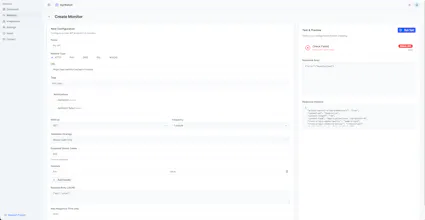
ApiWatch - Modern API Monitoring and Observability Platform. Checks endpoints on a schedule and alerts you when something breaks. Track incidents automatically, see response-time trends, and share a clean status page with customers. Supports HTTP checks and common failure signals (timeouts, status codes, keyword mismatch) so you know not only that it’s down—but why.




@evgenygil707
The “logs looked fine, but users were feeling it” pain point is so real. Building a tool that adds why to the what is exactly what devs need.
Smart focusing on scheduled HTTP + keyword checks—that’s the sweet spot between too simple and overcomplicated.
How are you thinking about reaching teams before they hit downtime frustration? Is it content-driven, or more community-focused?
Best of luck with the launch!
@olajiggy321
Thanks a lot—really appreciate you calling that out.
Re: reaching teams before the first painful outage: the plan is a mix of both.
Content-driven: short, practical posts (e.g., “reduce false positives with X fails in Y minutes”, “keyword checks that catch 200 OK failures”) and simple checklists teams can copy.
Community-focused: hanging out where builders already talk reliability (Product Hunt, Reddit, Indie Hackers, devops circles) and iterating fast based on real incidents people share.
Also leaning into integrations as distribution (Slack/webhooks + Terraform/API config) so teams can adopt it the moment they’re setting up a new service.
I have some people already using it and backed by a company of my friend, so it will be completely free w/o any limits. At least for now i see it like this
@evgenygil707
A mix of content, community, and integrations is smart — it gives you both inbound trust and natural distribution loops. Especially smart to lean into Terraform/API config integrations for adoption at setup time.
If helpful, I do free 24-hour audits for developer tool founders — no pitch, no strings.
I’ll map out where reliability-focused builders and ops teams spend time online, and identify content, community, and integration angles that can accelerate your mix of channels.
Happy to help if it’s useful. Either way, rooting for ApiWatch.