API UP

API UP

A SaaS platform that lets you create and host APIs instantly

2 followers

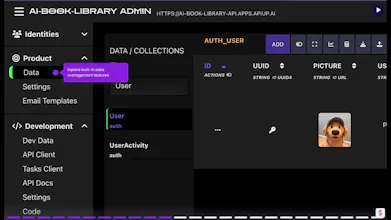
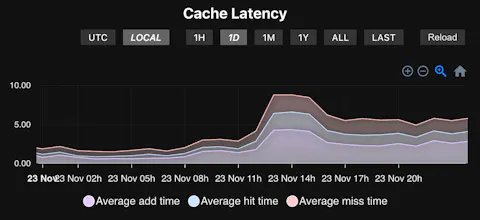
What you get • AI-assisted API code generation • Self-managed APIs with infrastructure fully configured • Scales automatically (deploy anywhere later if you want) • Admin UI for Product, Dev, and Platform/Ops teams • Clean-code templates using the Command pattern • Robust CLI to bootstrap features fast • SDKs for Web & Mobile • Monitoring, logs, metrics, auth, and versioning built-in
Interactive
API UP gallery image
Free Options
Launch tags:APISaaSDeveloper Tools
Launch Team / Built With
Intercom
Intercom
Startups get 90% off Intercom + 1 year of Fin AI Agent free
Promoted

What do you think? …

Paulo Cheque
Maker
📌
After more than 20 years building APIs and Web products, I kept facing the same pain: every project spent weeks or months rebuilding the same infrastructure before any real feature shipped. Auth, routing, caching, logging, metrics, versions, deployments, CI, error handling… all repeated, all fragile, all slowing teams down. I wanted a way to skip all of that and focus only on the actual business features. What problem were you trying to solve? Developers don’t need another API boilerplate or framework — they need ready-to-run APIs. The problem was clear: • Too much time wasted on infra and boilerplate • Fragmented tools: CLI here, dashboard there, metrics elsewhere • Hard to maintain clean code structure as APIs grow • Ops and Dev teams constantly reinventing the same engine • “Hello World” is easy, production APIs are not API UP solves this by providing API as a Service: fully managed infra + clean architecture templates + automation + SDKs. You write the commands (your business logic), and everything else works out-of-the-box. How did your approach evolve while building it? The first idea was just to build a “clean command-based API framework”. But after many prototypes, it became clear that: • Teams wanted something already deployed • Infrastructure needed to be auto-generated • UI + CLI + AI generation had to live together • Multi-tenancy and scaling must be builtin • And developers needed to create features in minutes, not hours So the project evolved from a framework into a full SaaS platform. The UI, Admin, CLI, AI code generation, and API engine all grew into one integrated system — giving developers a place where APIs simply exist and run, without the usual overhead.